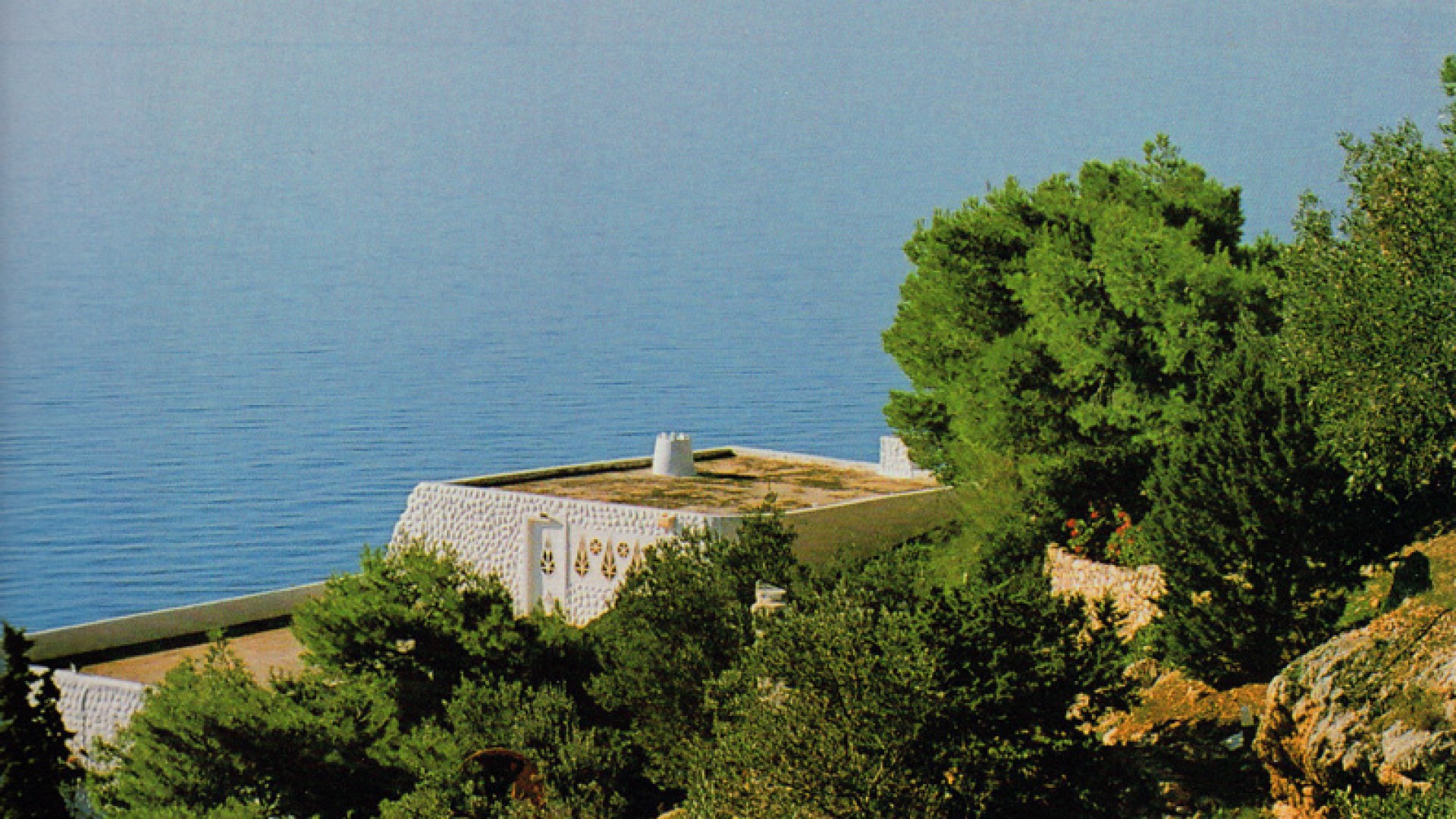
Skironio Museum Polychronopoulos
Skironio Museum Polychronopoulos is a cultural foundation and contemporary art museum dedicated to preserving and promoting the artistic legacy of sculptor Kostas Polychronopoulos while encouraging innovative artistic expression and environmental awareness.
Established as a non-profit institution, the museum focuses on supporting contemporary artistic practices such as sculpture, installations, performance art, and printmaking, with particular emphasis on both Greek and international artists whose work explores new aesthetic and social ideas.
Since 1976, the Skironio Museum has hosted exhibitions and projects by important contemporary artists including Giorgos Zongolopoulos, Vlassis Caniaris, Nikolaos Vlavianos, Tetsuo Harada, Mauro Staccioli, and Jo Pomodoro. At the same time, the museum has developed an important collection of contemporary artworks by Greek and international creators, supporting both established and emerging artists and performers. Through its exhibitions and collaborations, the museum has become an active platform for artistic experimentation, dialogue, and cultural exchange.
The museum is located at the 50th kilometer of the old Athens–Corinth National Road, in the historic area known since antiquity as the “Skironian Rocks.” It also operates the Skironio Center in Kifisia, an open-air sculpture park situated within a 9,500-square-meter olive grove with centuries-old trees. This space hosts part of the Foundation’s collection of contemporary sculptures and art installations, creating a unique interaction between art and the natural environment.
Founded as a public-benefit institution and officially operating under presidential decree since 1983, the Skironio Museum has collaborated with organizations and institutions such as UNESCO, the Museum of Contemporary Art of Łódź, the Municipality of Milan, the Hellenic American Union, the IFA, and the Italian Institute. For its founder, Kostas Polychronopoulos, the Skironio Museum was conceived not simply as a museum but as a monumental conceptual sculpture and a “structure habitable” — a living artistic environment built stone by stone that functioned simultaneously as a home, studio, meeting place, and creative vision.
Today, the museum serves as an open cultural space where artists, especially younger generations, can exchange ideas and develop creative projects within a landscape of terraced gardens, pathways, vegetation, and monumental sculptures. The site also features a large open-air stone amphitheater inspired by ancient Greek theaters, with a capacity of approximately 600 people, reinforcing the museum’s role as a dynamic center for artistic events, performances, and cultural dialogue.