
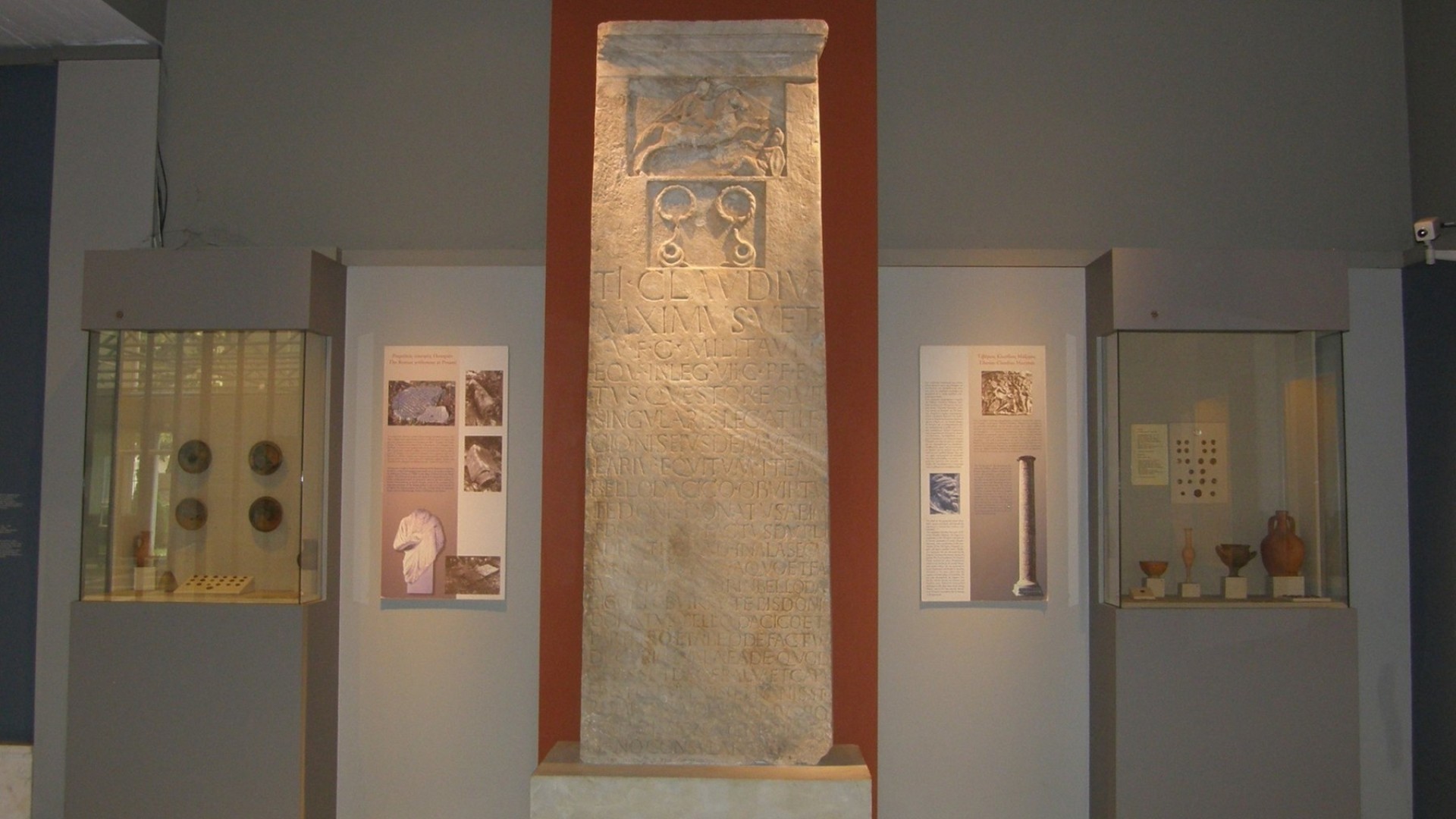
Archaeological Museum of Drama
The Archaeological Museum of Drama is housed in a modern building and aims to present the cultural identity of the wider region of the Regional Unit of Drama through time.
Its collections include findings dating from the Middle Paleolithic period (around 50,000 years ago) up to more recent historical periods.
The museum’s exhibits reflect the long and continuous human presence in the area, showcasing artifacts from prehistoric hunter-gatherers, early farming communities of the Neolithic period, Bronze and Iron Age societies, as well as classical Greek, Roman, and Byzantine times. These finds come from excavations across the Drama region, including caves, settlements, burial sites, and ancient sanctuaries.
The exhibition is organized chronologically and thematically, helping visitors understand the evolution of life in the region—from early human activity and the development of agriculture and technology, to the influence of ancient Macedonian kingdoms, Roman rule, and the later Byzantine period. Special emphasis is given to the role of Drama as an important regional center connected with Philippi and the wider Macedonian and Thracian world.
Overall, the museum serves as a cultural gateway to the deep and complex history of Drama, preserving and presenting archaeological evidence that highlights the region’s significance in the broader history of Macedonia and southeastern Europe.