Archaeological Museum of Mycenae
The Archaeological Museum of Mycenae is located within the archaeological site of Mycenae itself.
It was designed both to preserve the rich archaeological material discovered in the citadel and its surrounding area, and to function as an interpretive exhibition space that enhances the visitor’s experience of the site.
The museum is housed in a modern, purpose-built structure at the foot of the Mycenaean hill, in close proximity to the ancient acropolis. Its architectural design ensures a direct visual and conceptual connection with the ruins, as parts of the archaeological remains are visible through large windows along the visitor’s route from the entrance of the site. The building extends over three levels and covers approximately 2,000 square meters. A significant part of the museum is dedicated to storage and conservation of excavated material, reflecting both ongoing and past archaeological research in the area.
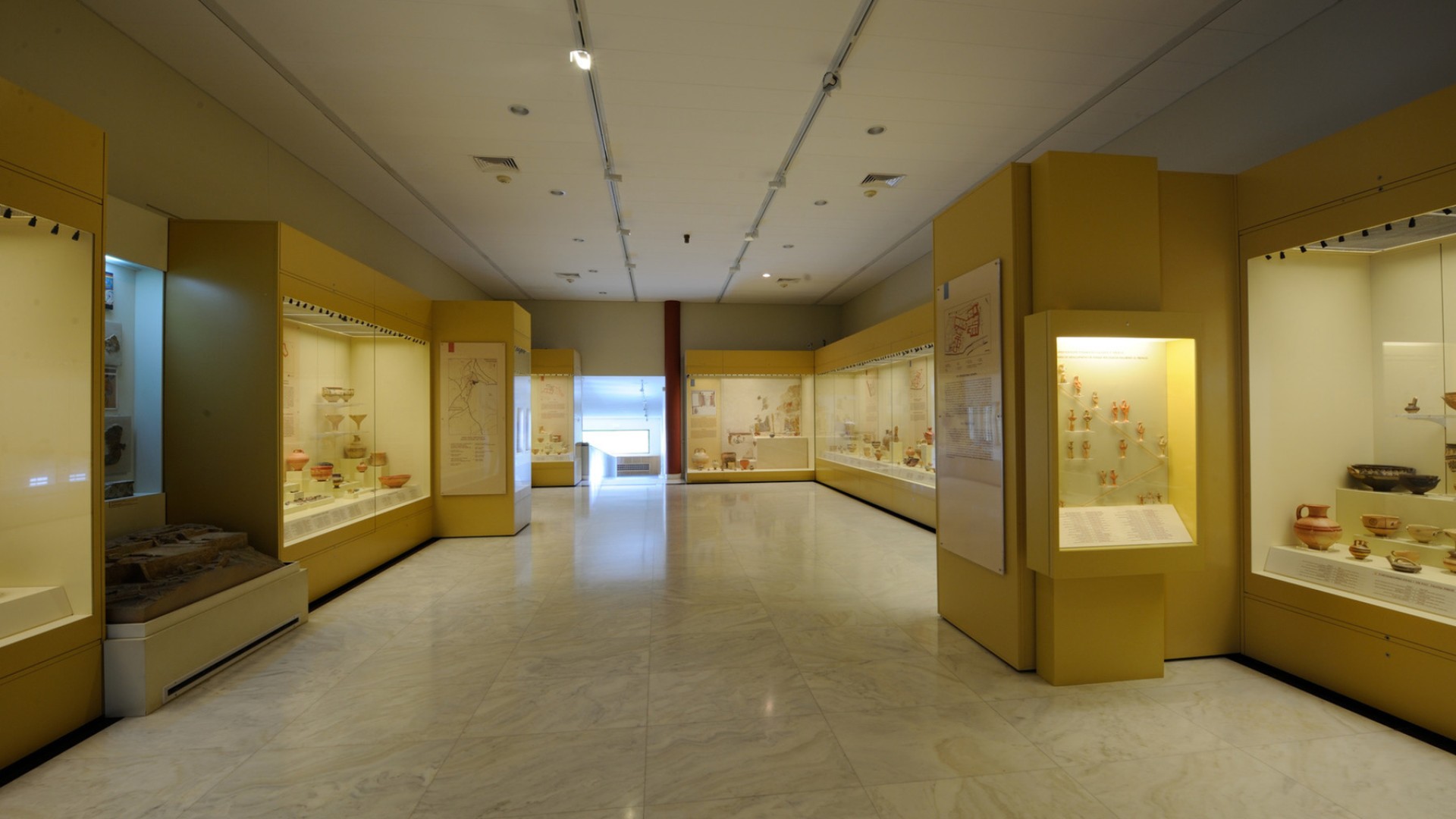
The exhibition space occupies roughly one quarter of the museum and is arranged in three main galleries on two levels. Visitors first enter a spacious lobby where a model of the acropolis is displayed, accompanied by informative panels and visual material presenting the history of Mycenae and the history of excavations. The exhibition begins in the first gallery, followed by two additional halls connected by inclined corridors that guide the visitor through the display in a continuous flow.
The permanent exhibition is organized into four thematic sections. The first two focus on Mycenaean life and funerary customs, presenting finds from settlement contexts and tombs, including material from the famous Grave Circles A and B as well as chamber tomb cemeteries in the wider region. The third section presents the use of the site during historical times, while the fourth explores the distinctive achievements and activities of Mycenaean civilization.
The museum also includes extensive storage facilities, conservation laboratories for pottery and metal objects, as well as offices and a research library. These facilities support ongoing study and preservation of the archaeological material.
The idea of creating a museum within the archaeological site of Mycenae was first proposed by the archaeologist George Mylonas. Construction began in the mid-1980s and was completed in stages, with the final building works finished in 1997. The museum opened to the public in 2003, after the relocation of additional archaeological material from Nafplion and the National Archaeological Museum in Athens.
Today, the Archaeological Museum of Mycenae serves as an essential interpretive center for one of the most important civilizations of the Aegean Bronze Age, presenting its history in close connection with the landscape from which it emerged.