Byzantine and Post-Byzantine Collection of Chania
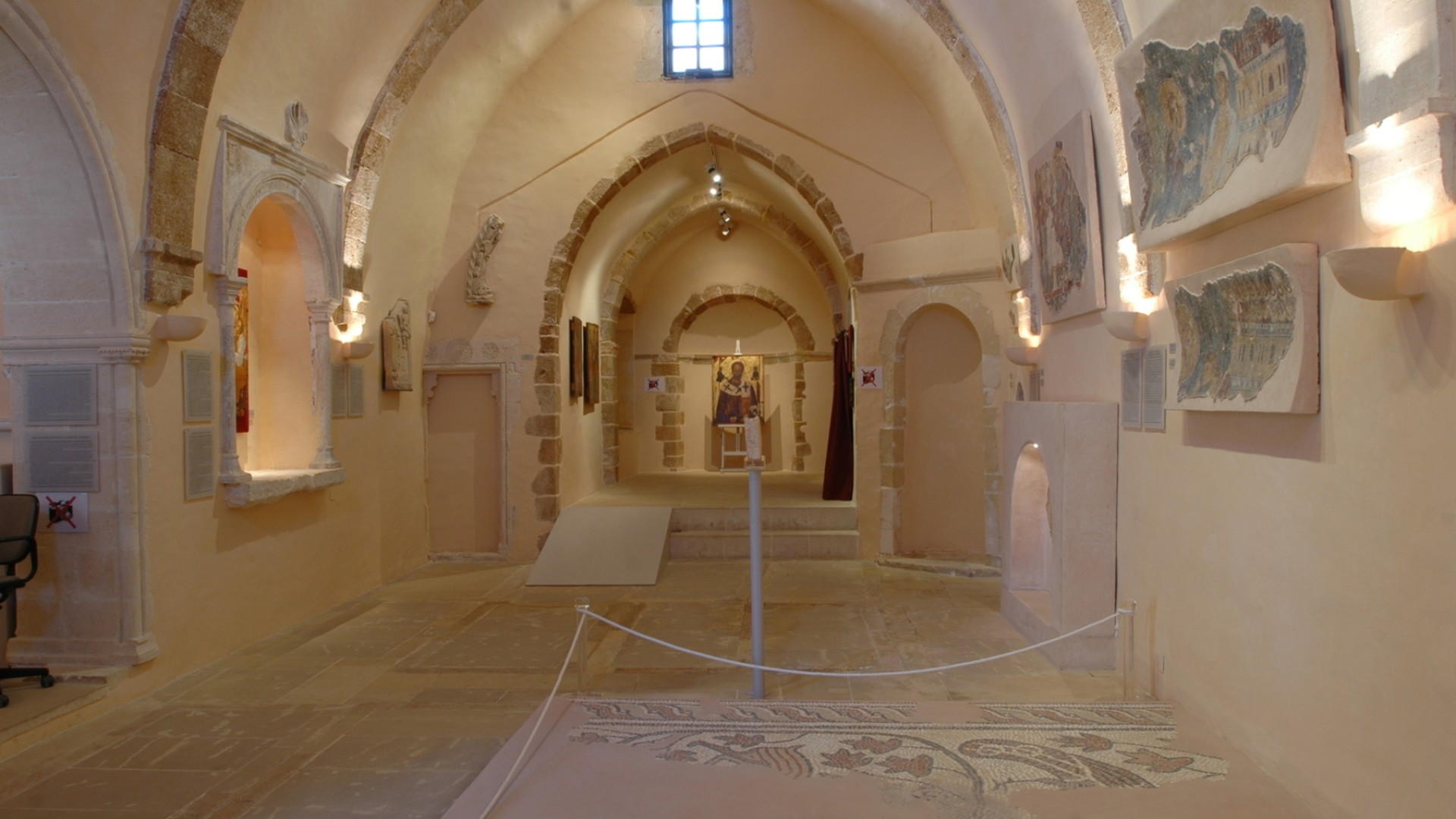
The Byzantine and Post-Byzantine Collection of Chania is housed in the catholicon (main church) of the former monastery of San Salvatore, a significant 15th-century monument located on the western side of the Venetian fortifications of Chania, next to the corresponding bastion.
The complex originally belonged to a Franciscan monastery, and parts of the cloister, where the monks’ cells were once located, are still preserved on the southern side of the building.
The church itself reflects several construction phases. Its earliest form dates back to the 15th century and consisted of a small vaulted space on the eastern side. In the following century, it was extended westwards, maintaining the vaulted architectural style. During the late Venetian period (mid-17th century), additional spaces were added to the north, featuring cross-vaulted ceilings and limited Late Gothic decorative elements. Later, during the Ottoman period, the building was converted into a mosque, with structural modifications including the creation of a mihrab.
Today, the monument has been carefully restored, revealing its different historical layers and preserving its architectural identity. The exhibition highlights the cultural and artistic development of the Chania region from the Early Christian period through the Byzantine and Post-Byzantine eras, up to the Ottoman period.
The collection includes mosaics, funerary inscriptions, wall paintings, icons, architectural sculptures, ceramics, small-scale artworks, and coins. These objects come mainly from long-term archaeological excavations carried out in the region, as well as from donations and collections.
The exhibits are organised into thematic sections—such as mosaics, inscriptions, frescoes, icons, sculptures, ceramics, and coins—and presented in chronological order. Maps and explanatory panels help visitors understand the origin of the artefacts and their historical context.
The aim of the exhibition is to present the artistic and historical identity of the Chania region through its material culture, offering a clear overview of its development across centuries and making the monument itself part of the historical narrative.