Archaeological Museum of Isthmia
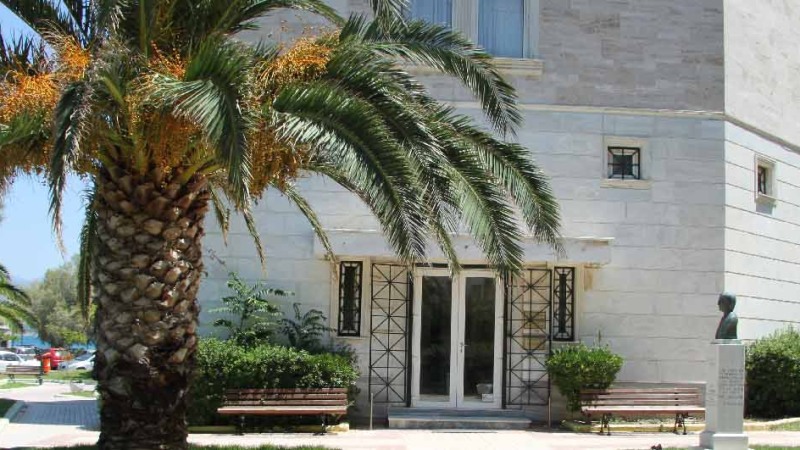
The Archaeological Museum of Isthmia is located within the archaeological site of the Isthmian sanctuary of Poseidon and serves as an important exhibition space for finds from the wider Corinthian region.
The building was designed by the architect Pavlos Mylonas, constructed in 1970, and opened to the public in 1978.
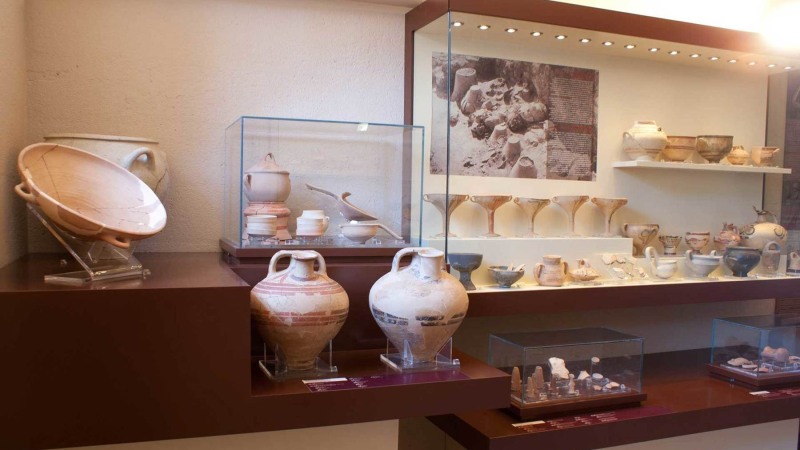
The museum displays artifacts uncovered through excavations at key sites in the area, including Mycenaean cemeteries, the Sanctuary of Poseidon and the Sanctuary of Palaemon, the Roman bath complex, the Justinianic wall, the hill of Rachi Isthmia, and the ancient port of Kenchreai. Of particular importance are the glass panels (opus sectile glass inlays) from the Temple of Isis at Kenchreai, which are among the museum’s most outstanding exhibits.
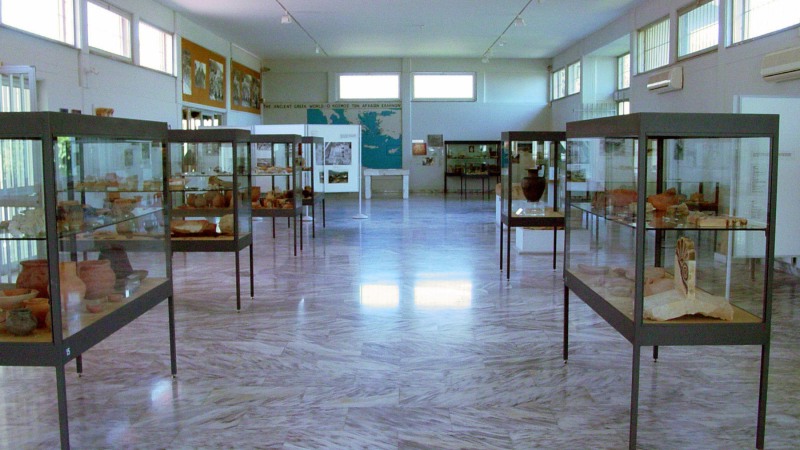
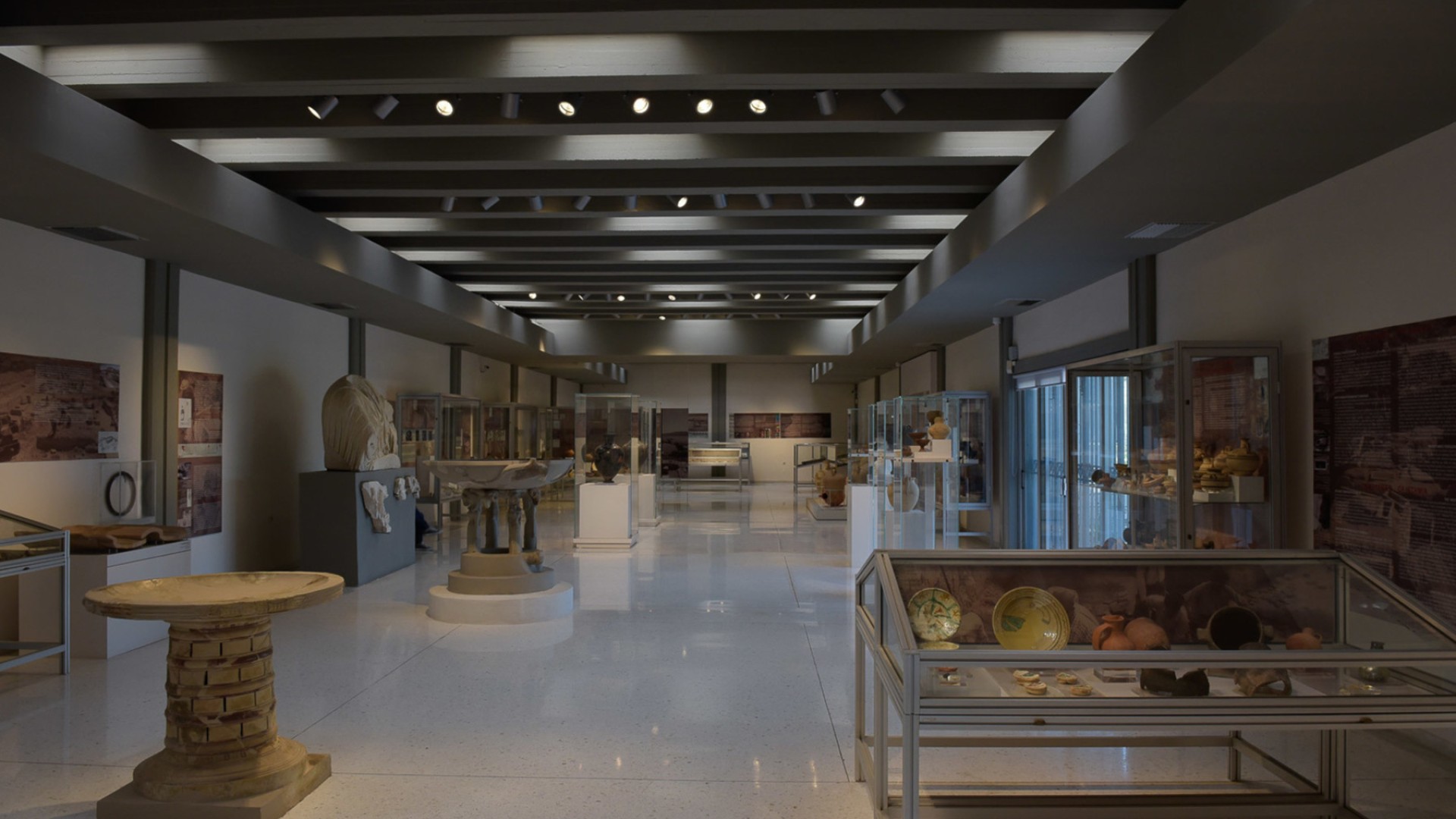
The collections are organized thematically and include finds from the Sanctuary of Poseidon, the Sanctuary of Palaemon, the Hellenistic settlement of Rachi, and the ancient harbor of Kenchreai. Together, these exhibits highlight the long and significant history of Isthmia as a major religious, commercial, and strategic center in antiquity.
The Archaeological Museum of Isthmia plays a key role in the study and presentation of ancient Corinthia, connecting the region’s monuments with its historical development from the Mycenaean to the Roman period.