
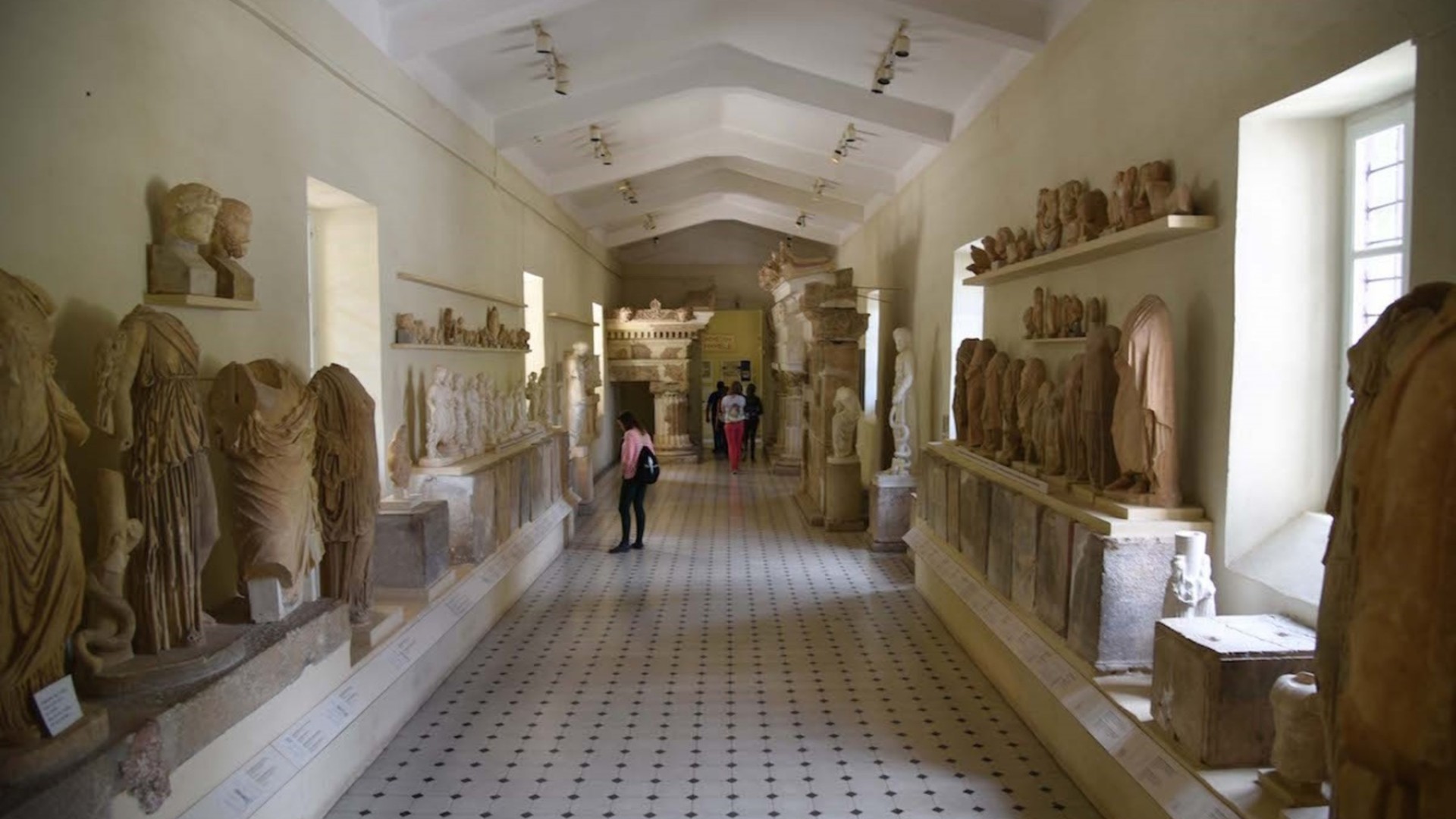
Archaeological Museum of Epidaurus
The Archaeological Museum of Epidaurus is one of the oldest museums of ancient Greek architecture and houses the important finds uncovered during the extensive excavations of the Sanctuary of Asklepios in Epidaurus.
Located within the archaeological site of the sanctuary, the museum preserves and presents artifacts that date from the Archaic to the Roman period, reflecting the religious, artistic, and medical importance of ancient Epidaurus.
The museum was established by the Archaeological Society of Athens and constructed between 1898 and 1900 in order to accommodate the numerous discoveries made during the excavations carried out from 1881 to 1928 by the archaeologist Panagis Kavvadias. It officially began operating in 1909 and today remains one of the oldest archaeological museums in Greece.
The building is situated between the ancient Theatre of Epidaurus and the Sanctuary of Asklepios, harmoniously integrated into the natural landscape of the sacred area. Architecturally, it is an elongated structure consisting of a central entrance hall and two long exhibition galleries. A later addition on the southern side serves as a shelter for a large number of inscriptions.
The museum’s collections include a wide variety of exhibits such as inscriptions, medical instruments, architectural decorations, reliefs, statues, votive offerings, and large architectural fragments from important monuments of the sanctuary. Among the most significant exhibits are parts from the Propylaea, the Temple of Asklepios, the Temple of Artemis, and the famous Tholos of Epidaurus. Particularly noteworthy is the unfinished Corinthian capital discovered near the Tholos, which provides valuable insight into ancient Greek architectural techniques.
The museum also displays casts of important sculptures now kept in the National Archaeological Museum of Athens, including statues of Hygieia, Aphrodite, and Asklepios, as well as sculptures from the pediments and decorative elements of the sanctuary’s temples.
Beyond its archaeological importance, the museum is also significant for the history of museology in Greece. The original exhibition arrangement, designed by Panagis Kavvadias in the early 20th century, reflects the museum practices of that period, with densely arranged displays intended to accommodate the large number of findings.
Today, the Archaeological Museum of Epidaurus offers visitors a unique opportunity to explore the architecture, religion, healing practices, and artistic achievements of one of the most important sanctuaries of the ancient Greek world.