
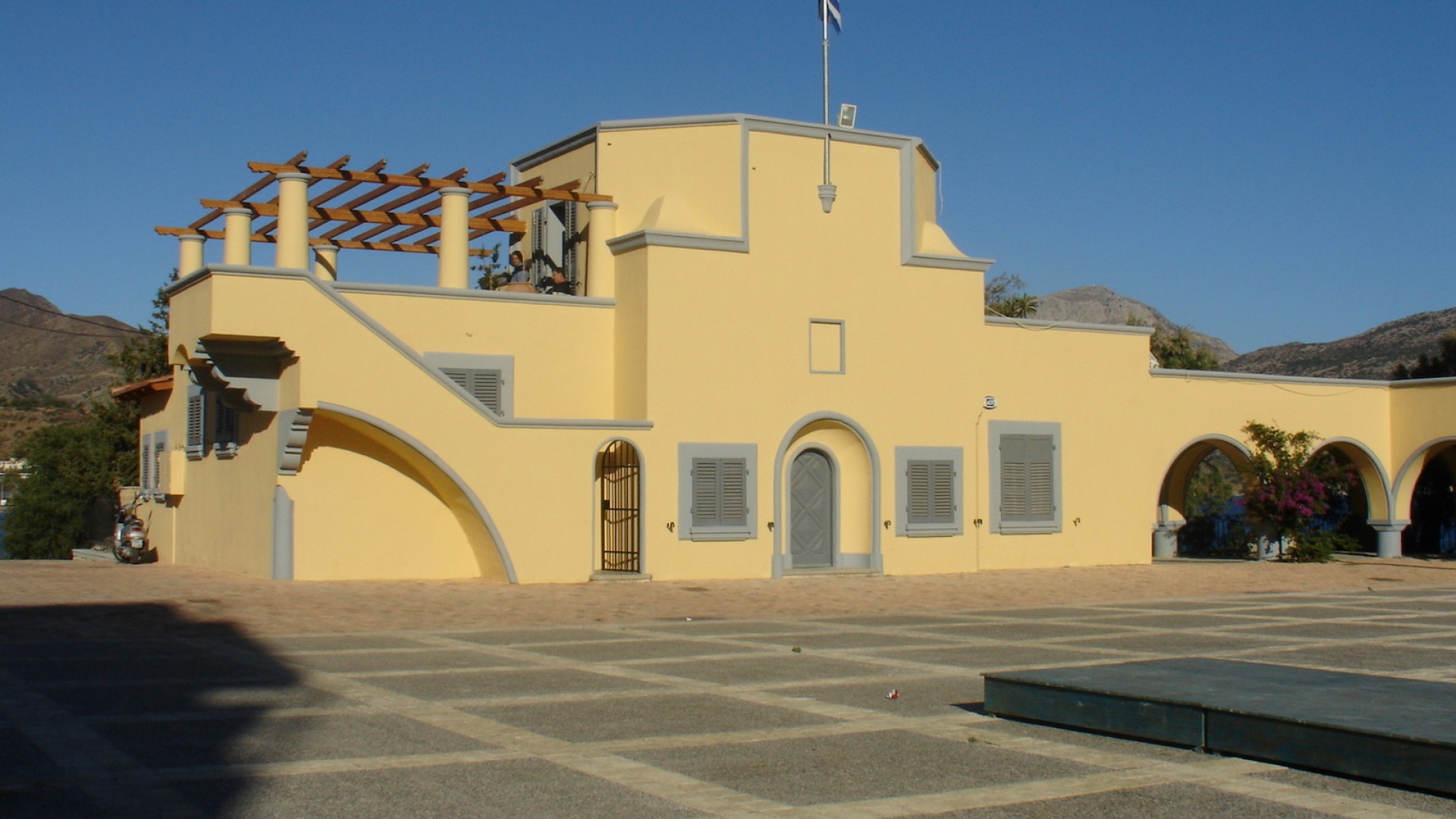
Archaeological Museum of Karpathos
The Archaeological Museum of Karpathos is housed in the western wing of the Eparchy building complex in Pigadia, a remarkable example of Italian-era architecture in the Dodecanese.
The museum presents the long historical and cultural development of Karpathos, from prehistoric times to the Byzantine and post-Byzantine periods, through carefully organized thematic sections and important archaeological finds from across the island.
The exhibition begins with an introduction to the history of Karpathos through chronological and historical displays, accompanied by visual presentations of the island’s monuments and archaeological sites. The prehistoric section includes Neolithic artifacts such as obsidian blades, pottery fragments, and a cast of a female figurine now housed in the British Museum. Visitors can also explore findings from a Minoan farmhouse in southern Karpathos and discoveries from the Minoan-Mycenaean settlement of Pigadia, where excavations uncovered ceramic kilns, burial assemblages, and evidence of everyday life and craft production. These exhibits highlight the island’s agricultural economy, trade relations, religious beliefs, and burial customs during prehistoric times.
The second section focuses on the historical periods of Karpathos and presents finds from the island’s three ancient cities: Karpathos, Arkeseia, and Vrykous, as well as Potidaion, today’s Pigadia. Among the exhibits are Hellenistic pottery, Geometric vase fragments, Classical burial objects, sculptures, and a model of a Roman cistern discovered at Lefkos. Through these objects, the museum illustrates the political organization, urban development, and cultural life of ancient Karpathos.
The final section is dedicated to the Early Christian and Byzantine periods. It includes amphorae, coins, architectural fragments, and visual presentations of mosaic floors from early Christian basilicas and settlements across the island. The exhibition also highlights the artistic and economic prosperity of Karpathos during this era. Special attention is given to the rare iconless churches of Olympos dating to the 8th and 9th centuries, as well as a detached 13th-century fresco depicting the Deesis. Historical references to the period of Venetian rule under the Cornaro family, piracy in the Aegean, and old maps created by travelers of the 15th and 16th centuries enrich the visitor’s understanding of the island’s later history.
The museum itself is part of the historic Eparchy complex, built between 1926 and 1936 during the Italian occupation of the Dodecanese. The three-building complex, arranged around a central square in a U-shaped layout, is a characteristic example of Italian administrative architecture combining elements of the International Style with oriental eclectic influences. The buildings feature flat roofs, arcades, pergolas, and mixed stone-and-concrete construction techniques typical of the Italian period. Declared a protected historical monument in 1997, the complex remains one of the most important architectural landmarks of Karpathos.
Today, the Archaeological Museum of Karpathos serves not only as a center for preserving the island’s archaeological heritage but also as an important cultural institution that connects the ancient past of Karpathos with its historical and architectural identity.