Byzantine Museum of Kastoria
The Byzantine Museum of Kastoria was founded in 1989 and operates under the jurisdiction of the Ephorate of Antiquities of Kastoria
It was established after years of efforts to properly house and preserve the city’s rich collection of portable Byzantine icons, which had previously been kept for protection in the church of Agios Spyridon.
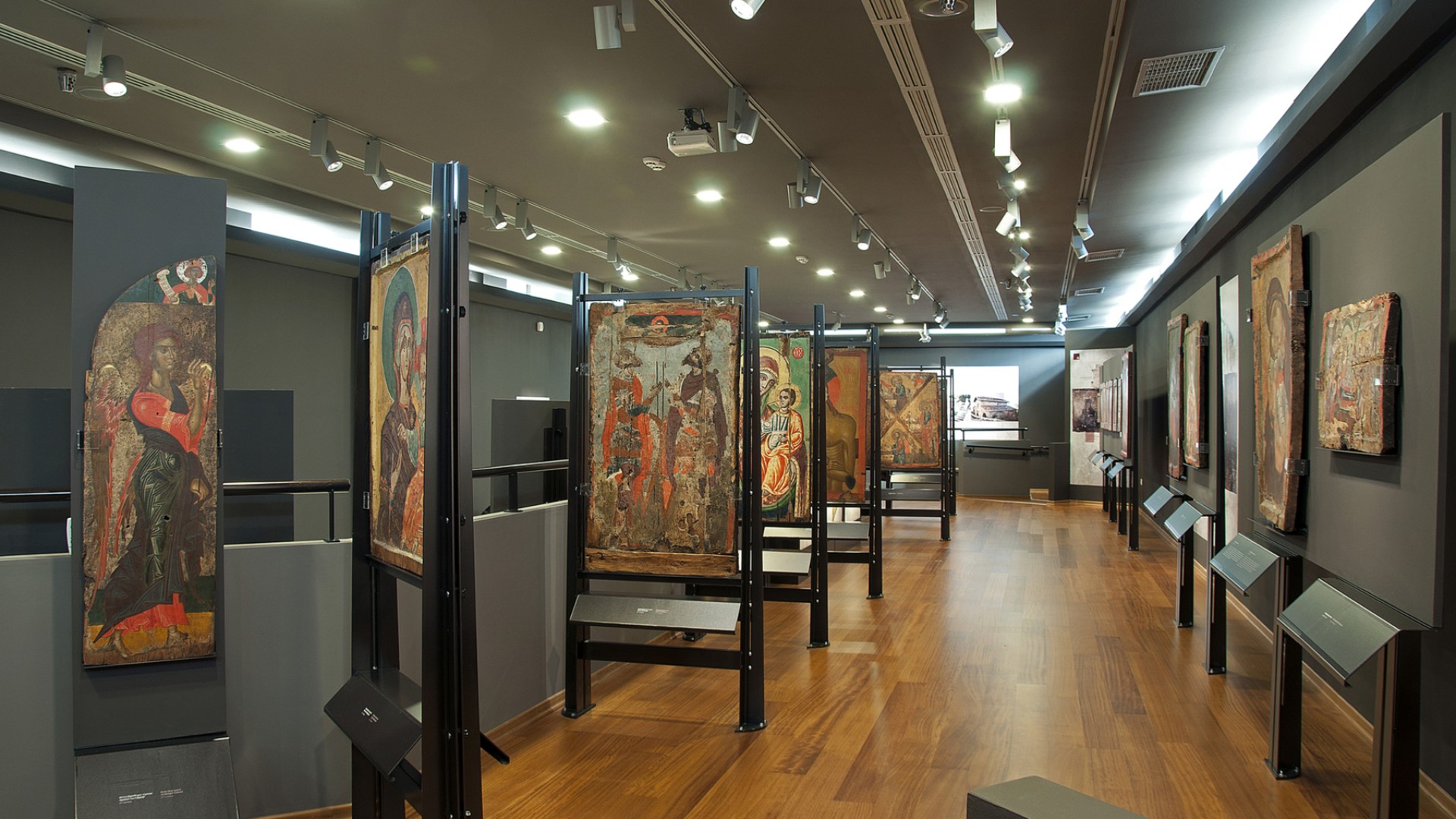
Alongside the preservation and exhibition of these icons, the creation of conservation workshops was considered essential for the proper study and maintenance of the collection. From its inception, the museum has focused almost exclusively on portable icons and parts of iconostasis doors, aiming to highlight Kastoria’s importance as a major centre of Byzantine and post-Byzantine painting.
The original exhibition, opened in 1989, underwent significant redevelopment over time, as earlier displays lacked sufficient interpretive and educational material. A new museological study, approved in 2010 and implemented through funding from the “NSRF Macedonia–Thrace 2007–2013” programme, led to a modernised exhibition approach.
Today, the museum presents a carefully curated collection that includes Byzantine icons, templon doors, fragments of wall paintings, and objects of minor arts. The exhibition emphasises the historical and social context of the works, the continuous artistic tradition of Kastoria from the 9th to the 19th century, and the unique role of icons in Byzantine culture.