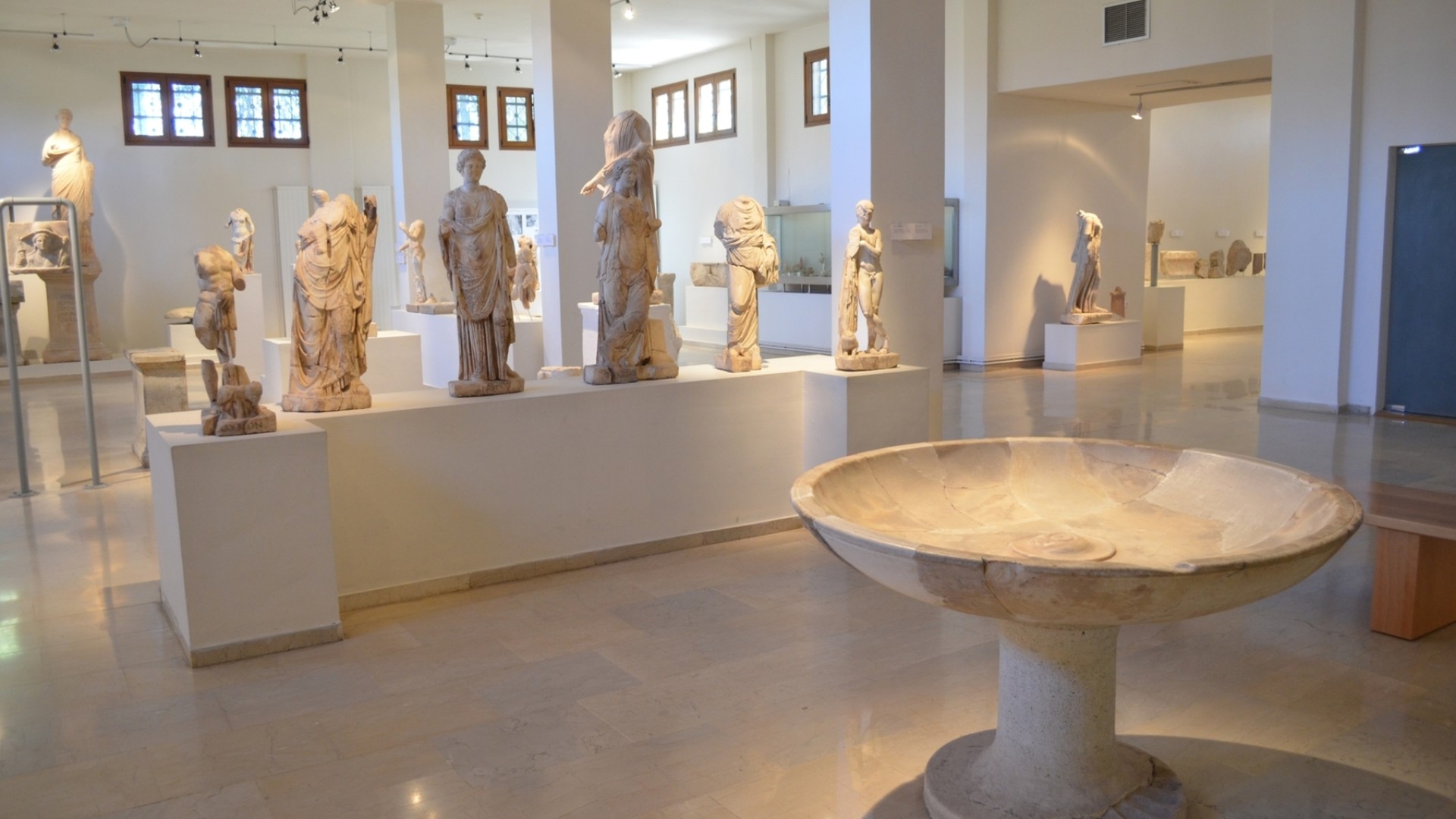
Archaeological Museum of Dion
The Archaeological Museum of Dion is located within the archaeological site of Dion in Pieria, Central Macedonia, and houses the remarkable finds uncovered during excavations in the ancient city and the surrounding region.
The museum presents the history, religion, daily life, and artistic achievements of ancient Pieria through collections that span from prehistoric times to the early Christian period.
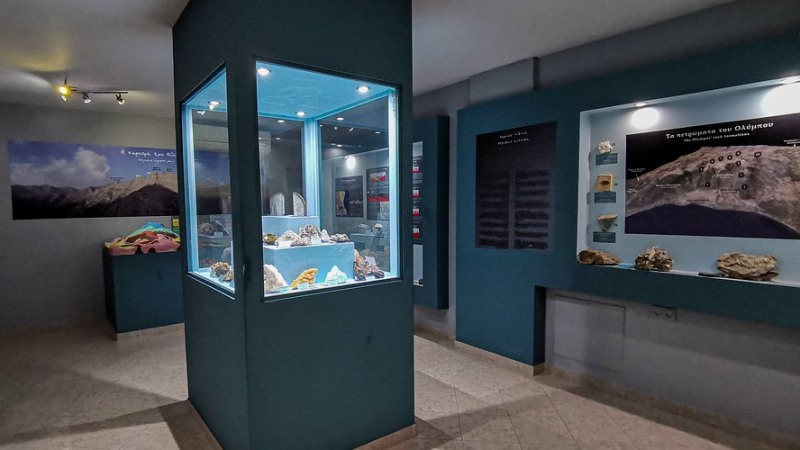
Founded in 1983, the museum was created to showcase the discoveries from the ancient fortified city of Dion, which flourished from the 6th century BC until the 5th century AD. Important artifacts from Mount Olympus, ancient Leibethra, and other archaeological sites in Pieria are also included in the collections. The first excavations in Dion were carried out between 1928 and 1931 by Georgios Sotiriadis, while large-scale excavations were later continued under the direction of Dimitrios Pandermalis and the Aristotle University of Thessaloniki.
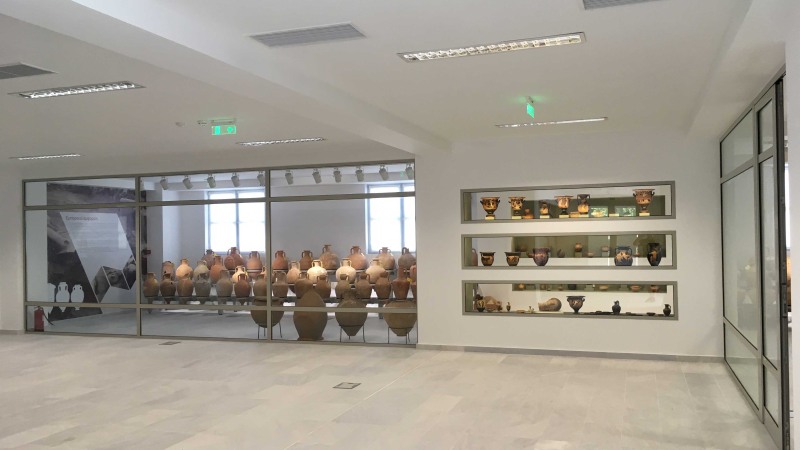
The museum exhibition is organized according to the archaeological context of the findings. Objects from the urban centre, sanctuaries, baths, public buildings, and necropolis of ancient Dion are grouped into thematic sections corresponding to their place of discovery. Through statues, mosaics, inscriptions, coins, pottery, tools, and funerary objects, visitors gain a vivid understanding of the religious and social life of the city.
Among the museum’s most famous exhibits is the Hydraulis of Dion, the oldest known hydraulic musical instrument ever discovered in the world. This extraordinary artifact, displayed in a dedicated room, demonstrates the technological sophistication of the ancient Greeks and is associated with descriptions by Hero of Alexandria and Vitruvius.
Other highlights include the impressive statues of Dionysus, Isis, Aphrodite Hypolympia, and the Daughters of Asclepius, many of which were found in the Sanctuary of Isis and the ancient baths. The museum also preserves remarkable funerary offerings from Macedonian tombs, wooden figurines, architectural elements, and important coin collections, including a gold stater of Philip II of Macedon and silver tetradrachms of Alexander the Great.
The basement level focuses on everyday life in ancient Dion. Exhibits include household pottery, ancient locks and keys, tools used by craftsmen, and cult objects that reveal the routines and occupations of the city’s inhabitants. Exceptional mosaics from the House of Dionysus, especially the famous Dionysus Mosaic, demonstrate the high artistic quality of Macedonian mosaic art.
The museum also contains early Christian artifacts and inscriptions, illustrating the transition from the pagan world to Christianity in the region. Educational spaces and guided tours for children make the museum an important cultural and educational centre for visitors of all ages.
Today, the Archaeological Museum of Dion stands as one of the most significant museums in northern Greece. Combined with the nearby archaeological park and the landscape beneath Mount Olympus, it offers a unique journey through the religious, artistic, and historical heritage of ancient Macedonia.