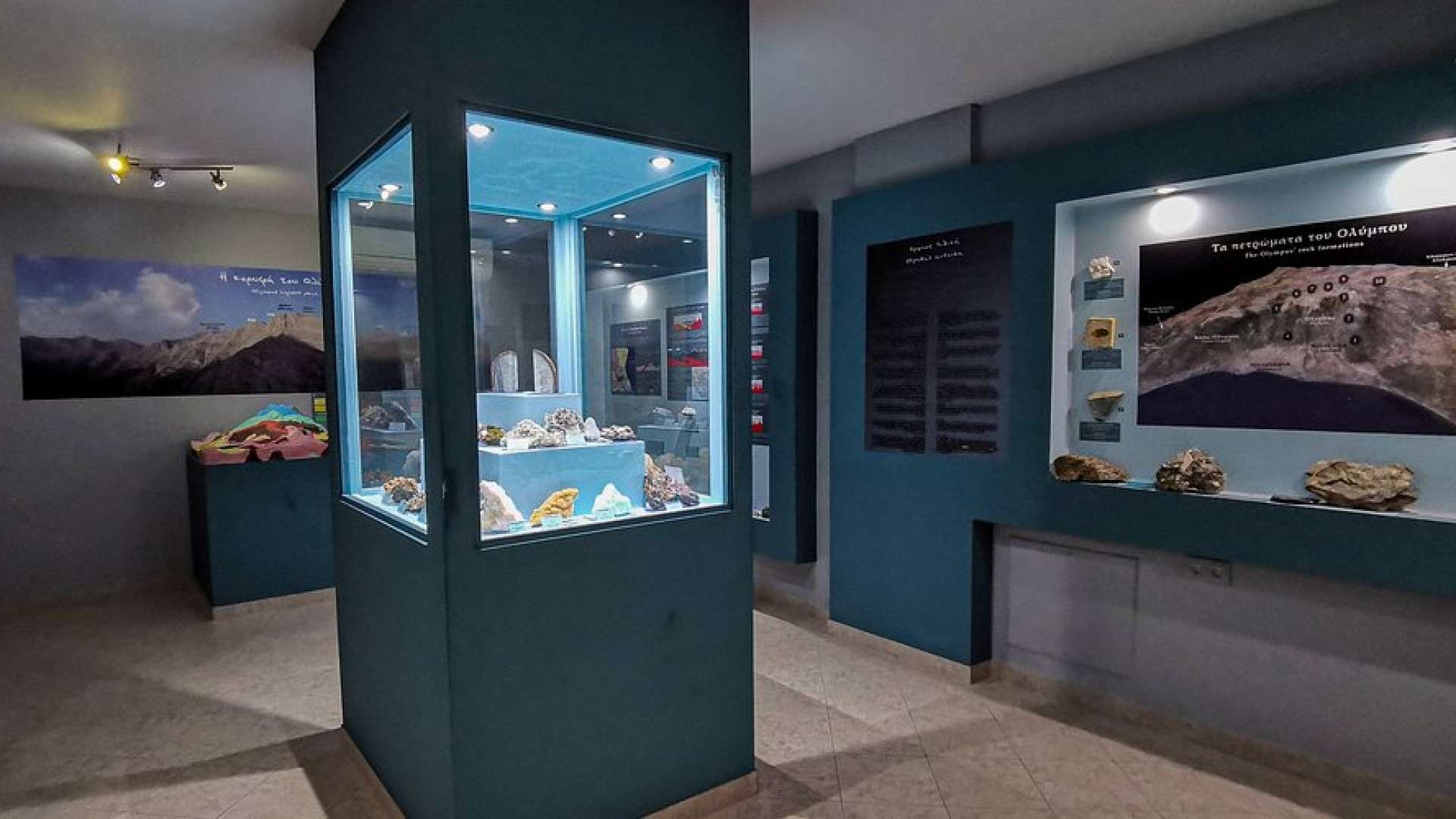
Olympus Geological History Museum
The Museum of the Geological History of Olympus presents the geological evolution of Mount Olympus through millions of years, offering visitors a fascinating journey into the natural history of Greece’s most famous mountain.
Through minerals, rocks, fossils, scientific exhibits, and educational material, the museum explains how Olympus was formed and how geological processes continue to shape its landscape today.
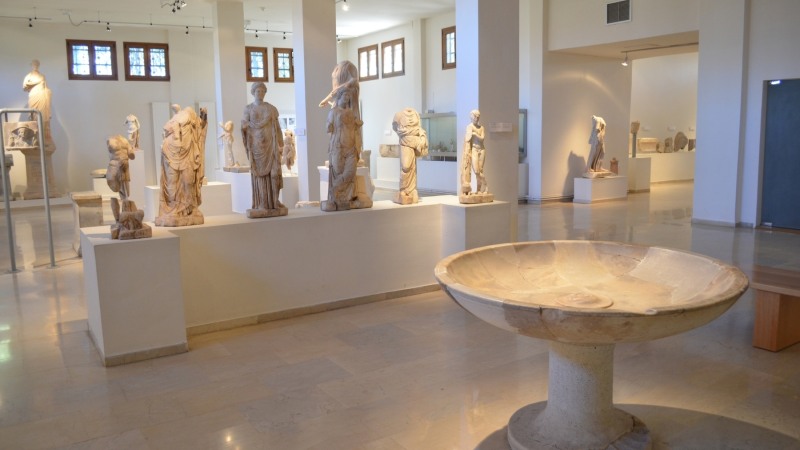
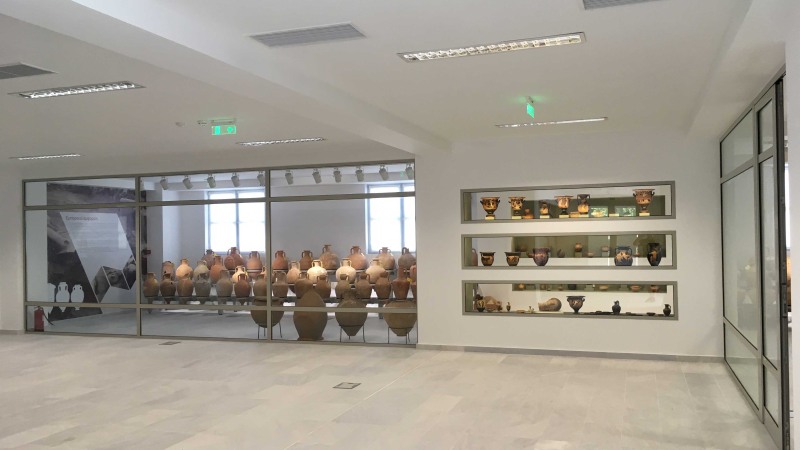
The exhibition includes important samples of rocks and minerals from Olympus, as well as fossils from the wider region that reveal the evolution of flora and fauna over geological time. Visitors can learn how glaciers influenced the mountain’s morphology, how erosion transformed its peaks and valleys, and how caves were created inside the mountain through natural geological processes.
A particularly interesting section of the museum is dedicated to the minerals mentioned in the ancient text “Peri Lithon” (“On Stones” or “Lithika”), attributed to Orpheus, who according to tradition lived in the ancient city of Leibethra at the foothills of Olympus near present-day Leptokarya in Pieria. This connection between geology, mythology, and ancient literature gives the museum a unique cultural dimension.
In addition to the geological exhibition, the museum also hosts artistic works inspired by Olympus and Orpheus, combining science, mythology, and art within the same cultural space.
The museum highlights the importance of geology as the science that studies the Earth, its rocks, minerals, structure, and natural processes. Through its educational displays, visitors discover how geology helps scientists understand the history of the Earth, climate changes, tectonic movements, earthquakes, and the formation of mountains and oceans. The museum also explains the role of geology in modern society, including mineral exploration, water resources, environmental studies, and the prediction of natural disasters.
Historical references within the exhibition trace the origins of geological thought from ancient Greece to modern science. The works of Theophrastus, especially “Peri Lithon”, are presented as some of the earliest studies of minerals and stones. The museum also refers to important historical figures such as Pliny the Elder, Avicenna, and Georgius Agricola, whose work contributed significantly to the development of geological science.
Today, the Museum of the Geological History of Olympus serves as an important educational and cultural centre for visitors interested in natural sciences, environmental studies, and the unique geological identity of Mount Olympus. Combining scientific knowledge with mythology and artistic expression, the museum offers a complete and engaging experience for visitors of all ages.