
Archaeological Collection of Stavros
The Archaeological Collection of Stavros in Ithaca presents important finds from northern Ithaca, covering a wide chronological period from the Early Bronze Age to the Roman era.
The exhibits come from four main archaeological sites: the hill of Pilikata, where the museum building is located, the village of Stavros, the Cave of Loizos, and the area of Treis Lagkades.
The collection includes clay vessels, figurines, and stone tools from the Early Bronze Age settlement at Pilikata, as well as pottery from the Mycenaean settlement of Treis Lagkades. From the village of Stavros, visitors can see grave offerings from Classical and Hellenistic tombs.
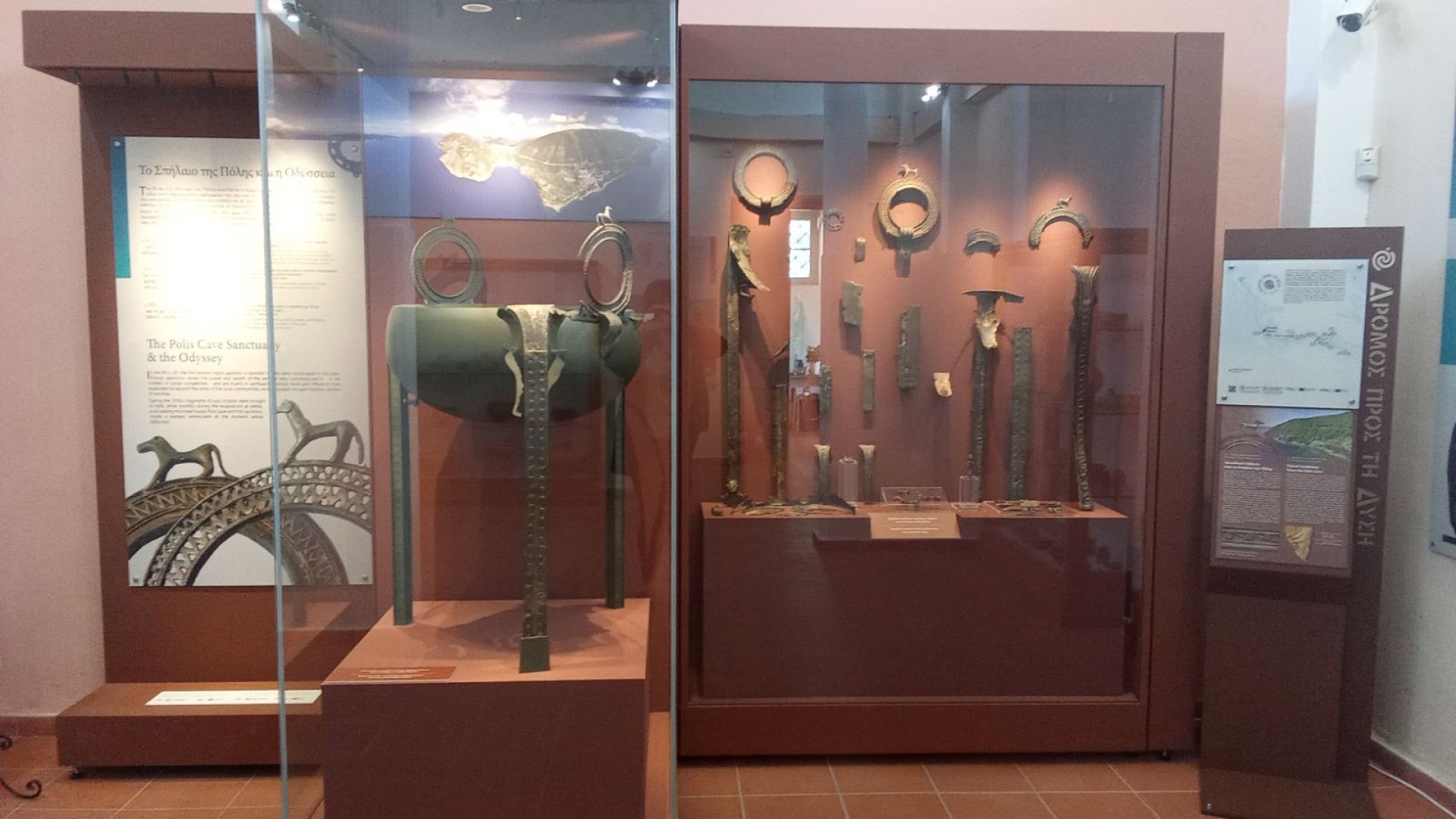
One of the most remarkable parts of the exhibition comes from the Cave of Loizos, where discoveries dating from the Mycenaean to the Roman period were uncovered. Among them are fragments of bronze Geometric tripods with elaborate decoration, which are linked to Homeric tradition. Particularly important is a fragment of a Hellenistic mask inscribed with the words “ΕΥΧΗΝ ΟΔΥΣΣΕΙ” (“A vow to Odysseus”), providing evidence of the worship of Odysseus in Ithaca.
Housed in a small single-room building, the Archaeological Collection of Stavros offers visitors a fascinating journey through the island’s ancient history and highlights Ithaca’s strong connection to the world of Homer and Odysseus.