Byzantine Museum of Monemvasia
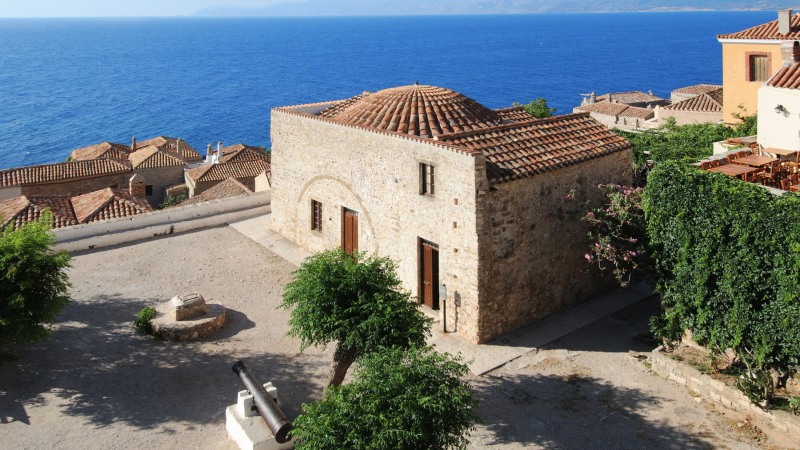
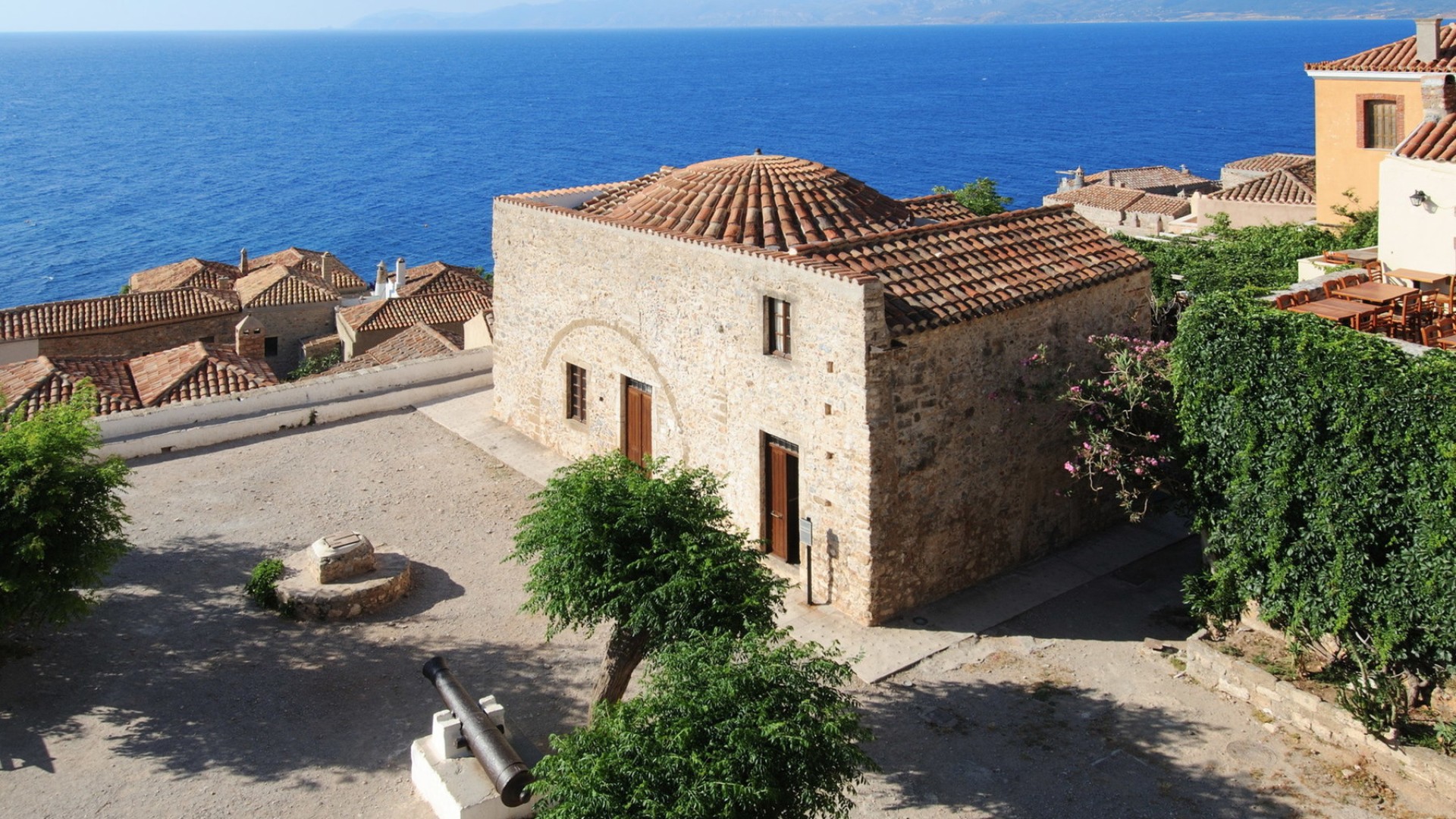
The Archaeological Collection of Monemvasia is housed in a historic 16th-century building that originally functioned as an Ottoman mosque within the Castle of Monemvasia.
Over the centuries, the building underwent several transformations: during the second Venetian occupation it was converted into a public building, while after the Greek War of Independence it served as a prison and later as a coffee house. Since 1999, it has housed the Archaeological Collection of Monemvasia, inaugurated by the Greek Minister of Culture, Elisavet Papazoi.
The exhibition aims to illuminate the history and identity of the fortified town of Monemvasia, one of the most important urban and commercial centers of the eastern Peloponnese since the 6th century AD. Thanks to its strategic position along major maritime trade routes of the Mediterranean and the Black Sea, Monemvasia developed into a prosperous naval and commercial center. The town became famous for its renowned “Malvasia” wine, its flourishing artistic and intellectual life, and its strong ecclesiastical tradition.
The permanent exhibition presents archaeological finds collected through excavations and surveys within the castle. The exhibits span a long historical period, from the Early Christian era to the late years of Ottoman rule, revealing important aspects of both the public and private life of Monemvasia’s inhabitants.
Among the most notable exhibits are sculptures, coats of arms, inscriptions, architectural fragments, ceramics, and miniature works of art, all of which demonstrate the town’s cultural and commercial connections with other regions of Greece and abroad. Particularly impressive are the Venetian coats of arms, including the Lion of Venice, as well as objects related to water storage and supply systems, which were essential for life inside the castle.
The exhibition has an educational and informative character and is accompanied by bilingual explanatory texts, offering visitors a comprehensive understanding of the long and remarkable history of the “renowned town” of Monemvasia. Today, the Archaeological Collection serves as an important cultural landmark and complements the experience of exploring the Castle itself, which functions as a living open-air museum.