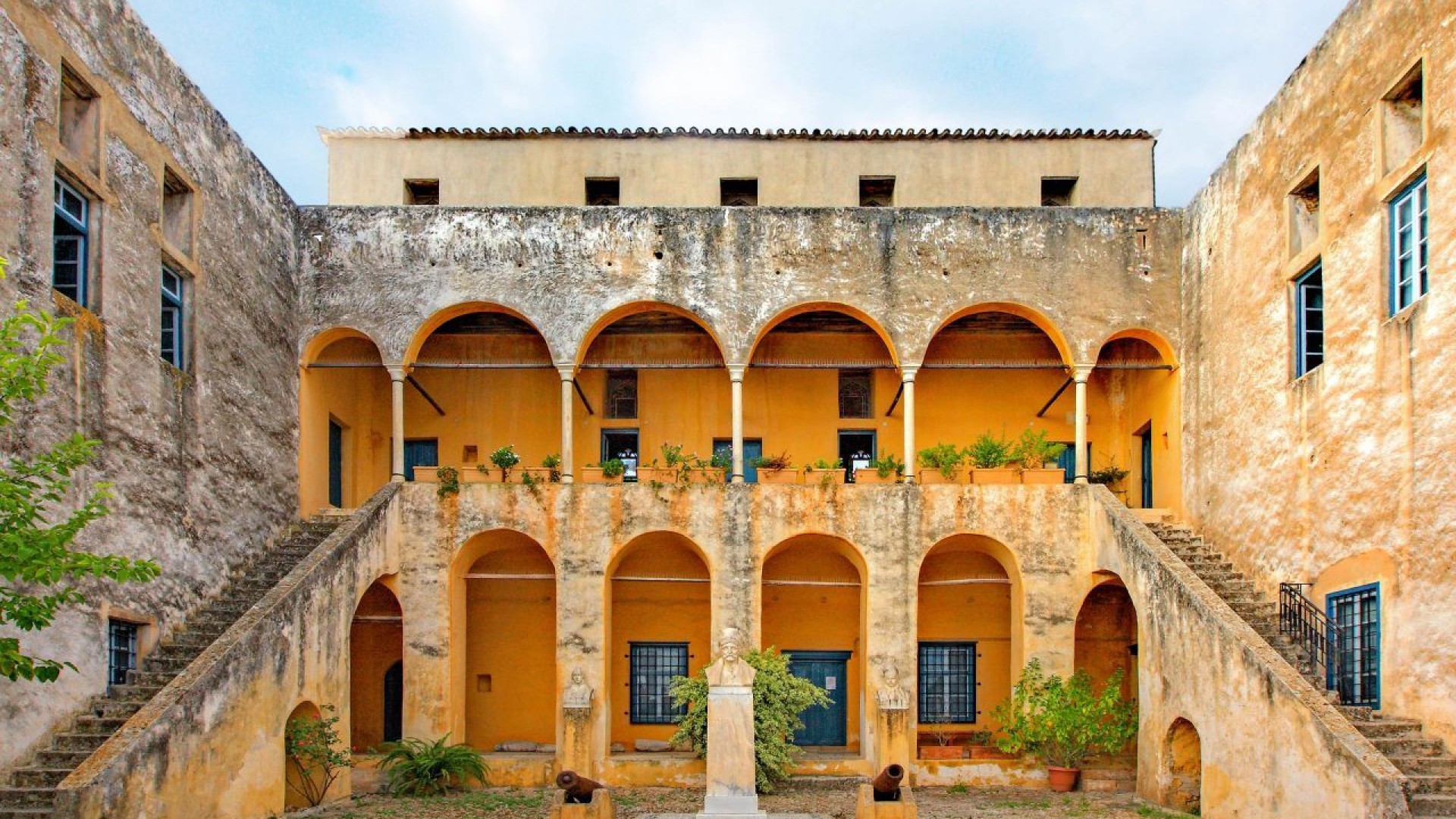
Spetses Museum
Museum of Spetses is housed in the historic mansion of Chatzigiannis Mexis, one of the most important political figures of Spetses during the Greek War of Independence.
Built between 1795 and 1798, the mansion is an impressive example of traditional island architecture, featuring a Π-shaped layout with a ground floor and two upper levels. Arcaded galleries supported by stone pillars and elegant columns soften the imposing appearance of the building, while the richly decorated interiors reflect the wealth and maritime prosperity of Spetses during the late 18th century.
The interior spaces of the mansion preserve the atmosphere of a noble Spetsiot residence. On the ground floor are the private rooms of Chatzigiannis Mexis, including his office, dining room, and treasury room. The first floor contains spacious guest rooms and women’s quarters, while the second floor features the “great ontas,” the main reception hall of the house, distinguished by its remarkable carved wooden ceiling. The architecture and decoration of the mansion provide valuable insight into the lifestyle and social status of the island’s naval aristocracy.
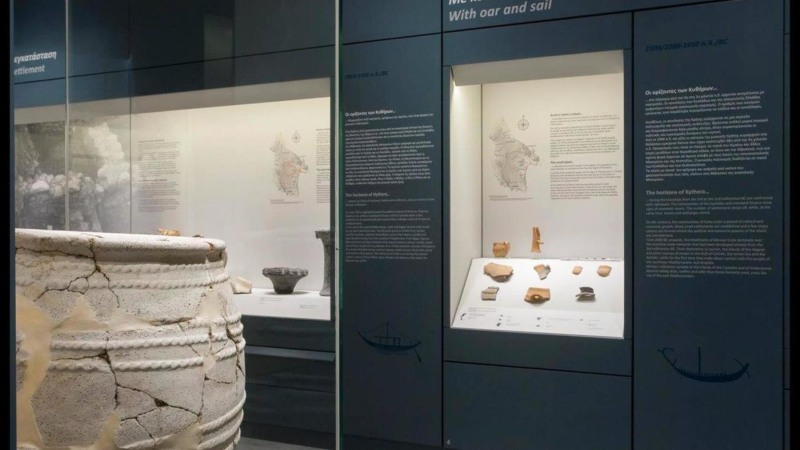
The museum’s collections represent more than 4,000 years of the cultural history of Spetses. Its archaeological collection includes coins, pottery, and findings from various historical periods discovered across the island and enriched through important donations, including the collection of Adonis Kyrou. The museum also preserves a significant number of religious icons and ecclesiastical objects, many of which originate from donations and private collections.
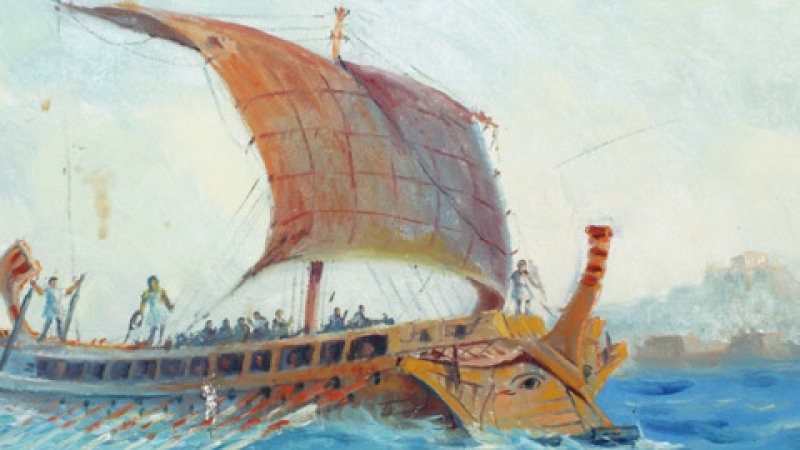
Particularly important are the exhibits connected to the Greek War of Independence and the contribution of Spetses to the Revolution of 1821. Among the museum’s most valuable treasures are the revolutionary flag of Spetses, the bones of the heroine Laskarina Bouboulina, portraits and weapons of revolutionary fighters, historical documents, personal belongings, and paintings of ships that testify to the island’s naval strength and patriotic role during the struggle for independence.
The museum also presents objects of everyday life, traditional costumes, embroidery, carved furniture, sea chests, ship ornaments, and examples of domestic and maritime woodcarving, illustrating the social and cultural life of the island before and after the Revolution. Ceramic objects from the museum’s collection evoke the daring commercial voyages of the Spetsiot sailors across the Eastern Mediterranean and Western Europe during the late 18th century.
The creation of the museum is closely connected with the efforts of academic and professor Georgios A. Sotiriou, whose initiative led to the donation of the Mexis mansion to the Greek state in 1938 by the last heirs of the family, Kalomoira Mexi and Niketa Thermisioti-Katsina. Since then, the Greek Ministry of Culture has continued to preserve and enrich the museum’s collections while supporting archaeological excavations and research that contribute to a deeper understanding of the history and heritage of Spetses.