
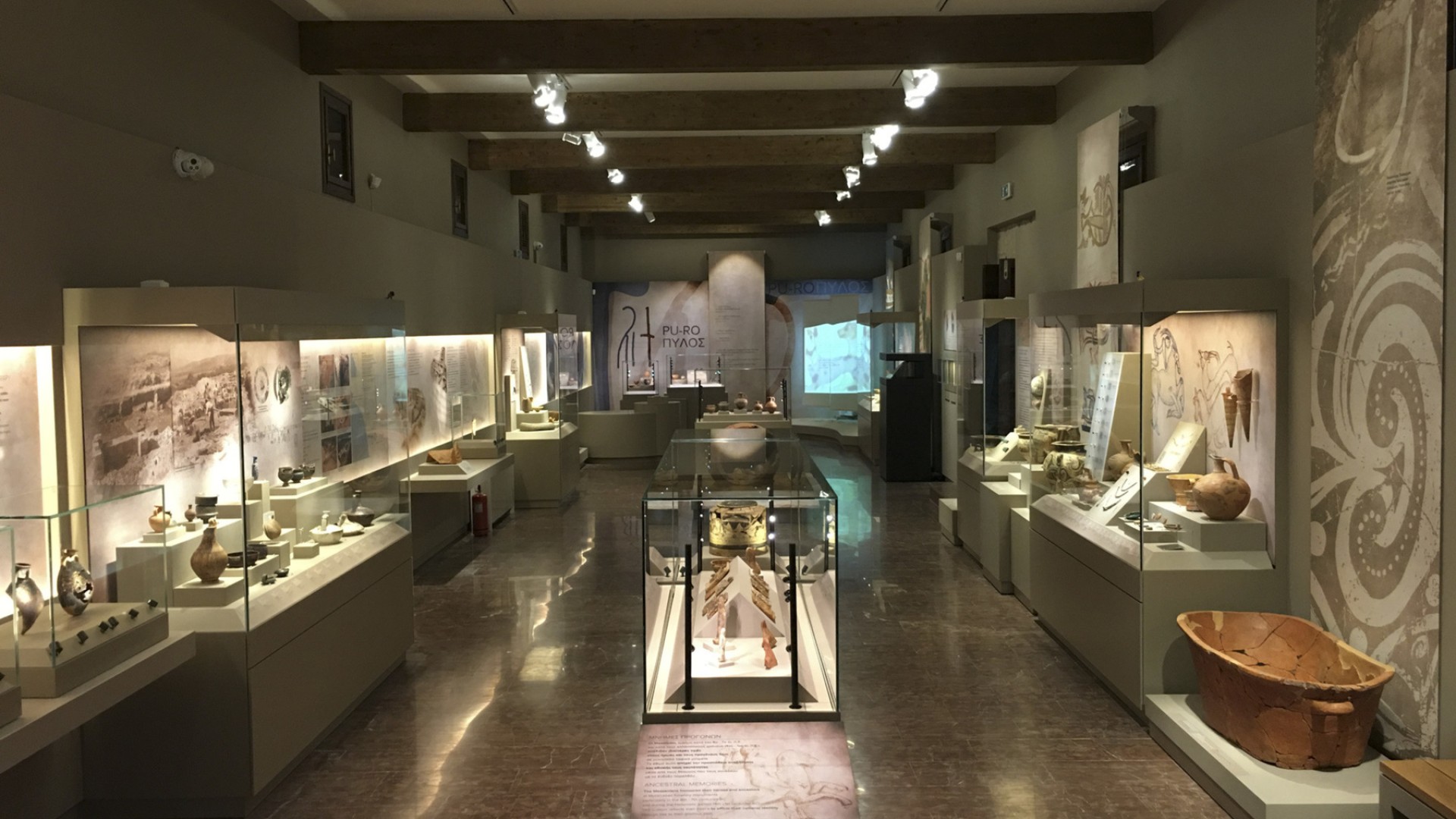
Archaeological Museum of Pylos
The Archaeological Museum of Pylos is housed in the historic Maisonos Building inside the fortress of Niokastro in Pylos, one of the best-preserved Ottoman castles in Greece
Its modern permanent exhibition, titled “In the Footsteps of Pylos…”, presents the archaeological history of the region of Pylia from prehistoric times to the Roman period through important findings discovered across the area.
The museum is the continuation of the former Antonopouleion Archaeological Museum of Pylos, which operated in the town center from 1961 thanks to a donation by the Greek-American dentist Christos Antonopoulos. As archaeological discoveries increased over the years and the old building became insufficient, the museum was transferred to the renovated Maisonos Building, where it officially reopened to the public in 2018. The impressive stone-built building was originally constructed in 1828 by the French expeditionary corps led by General Nicolas-Joseph Maison, following the Battle of Navarino and the liberation of the area. Throughout its long history, the building served as military barracks, an administrative center, a storage facility for antiquities, and a conservation workshop before becoming the modern archaeological museum of Pylos. The museum exhibition is organized around two main thematic routes: the coastal areas of Pylia and the inland region. Through these sections, visitors explore the continuous human presence in the Navarino Bay area and the wider region from the Paleolithic era through the Mycenaean period and into historical times. Special emphasis is placed on the Mycenaean kingdom of Pylos and the Palace of Nestor at Ano Englianos, widely identified as Homeric Pylos. The exhibition includes important finds from Mycenaean tholos tombs, prehistoric settlements such as Iklaina and Romanos, as well as Hellenistic and Roman cemeteries of the region. Among the museum’s most notable exhibits are gold jewelry, seal stones, pottery, bronze vessels, and funerary offerings from the tholos tombs of Pylia. Modern digital and audiovisual applications enrich the visitor experience and help illuminate the history of ancient Pylos, the Mycenaean world, and the Battle of Navarino. Today, the Archaeological Museum of Pylos stands as one of the most important cultural institutions in Messenia, combining archaeology, history, and modern museology within a unique historic setting.