Paleolithic Museum of Rethymno
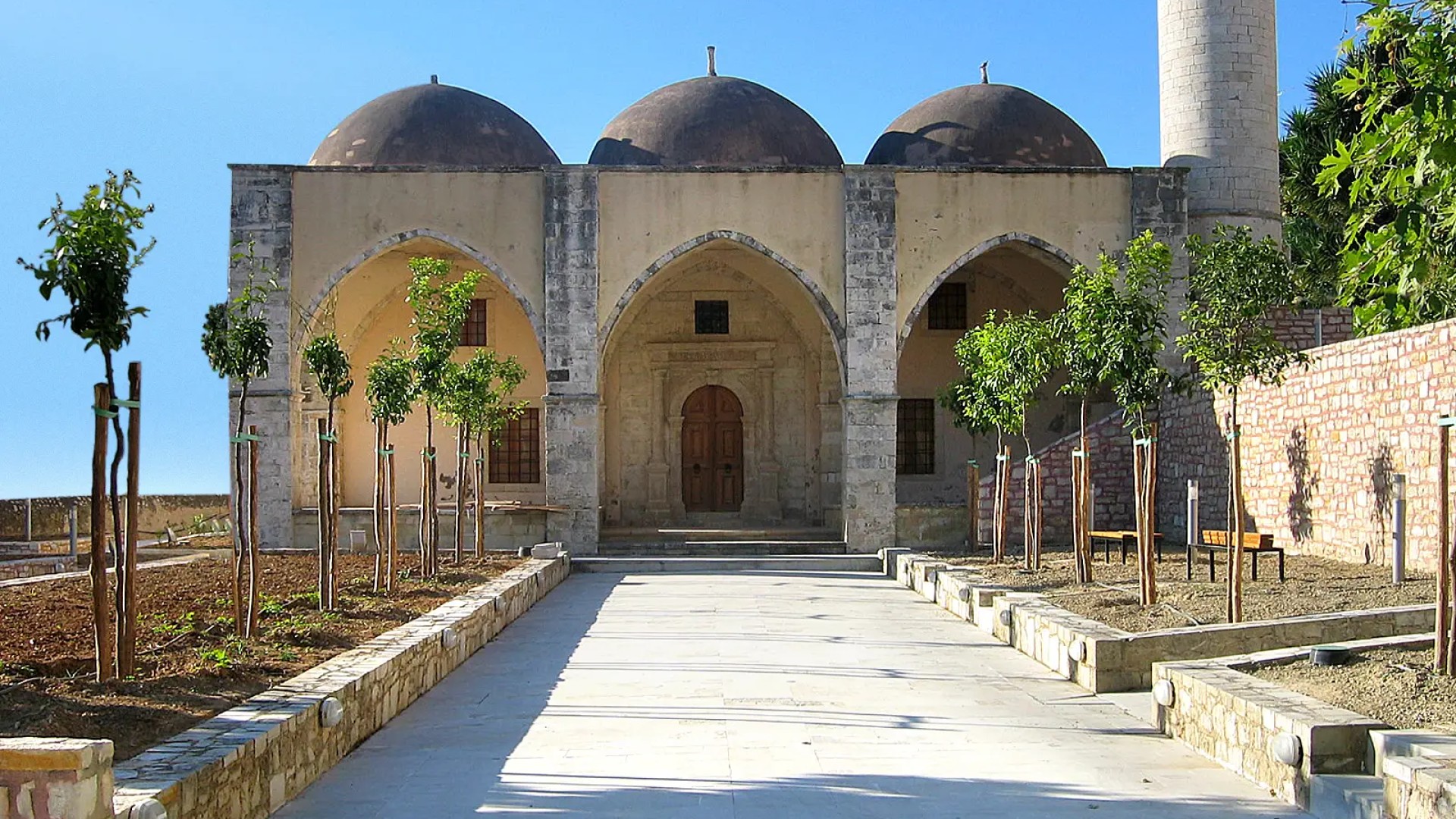
The Palaeontological Museum of Rethymno is housed in the historic building of the Mastaba Teke, a remarkable monument featuring nine domes, a series of adjoining cells, and an “Hegoumeno’s residence.”
The building itself is an important architectural landmark of the city of Rethymno and has been carefully restored to host the museum.
The property was granted by the Ministry of Culture to the Natural History Museum of Crete – Goulandris Natural History Museum. Following restoration works and a detailed museological study, the site was transformed into a modern exhibition space dedicated to palaeontology and the geological history of Crete.
The museum’s collection was provided by the Municipality of Rethymno and scientifically studied and presented by professors of the National and Kapodistrian University of Athens, initially Nikolaos Symeonidis and later Georgios Theodorou and his research team. The exhibition highlights the geological evolution of Crete over the past 300 million years, illustrating major environmental and climatic changes through time.
Among the most impressive exhibits are fossils of endemic Cretan mammals, including dwarf elephants, dwarf hippopotamuses, and various species of Cretan deer. Particularly notable is the Rethymno horned deer (Candiacervus ropalophorus), which has become a symbol of the museum.
The museum also features a surrounding garden of approximately 2.5 acres, showcasing native Cretan flora such as plane trees, olive trees, carob trees, Cretan date palms, lavender, dittany, and rosemary, creating a small natural oasis that complements the exhibition.
At present, the museum remains closed to the public until further notice.