Sarakatsani Folklore Museum
Sarakatsani Folklore Museum is a museum dedicated to the history and culture of the Sarakatsani people, a traditionally nomadic Greek population.
It was founded in 1979 in the city of Serres, in Central Macedonia, and since 1997 it has been housed in a specially designed building.
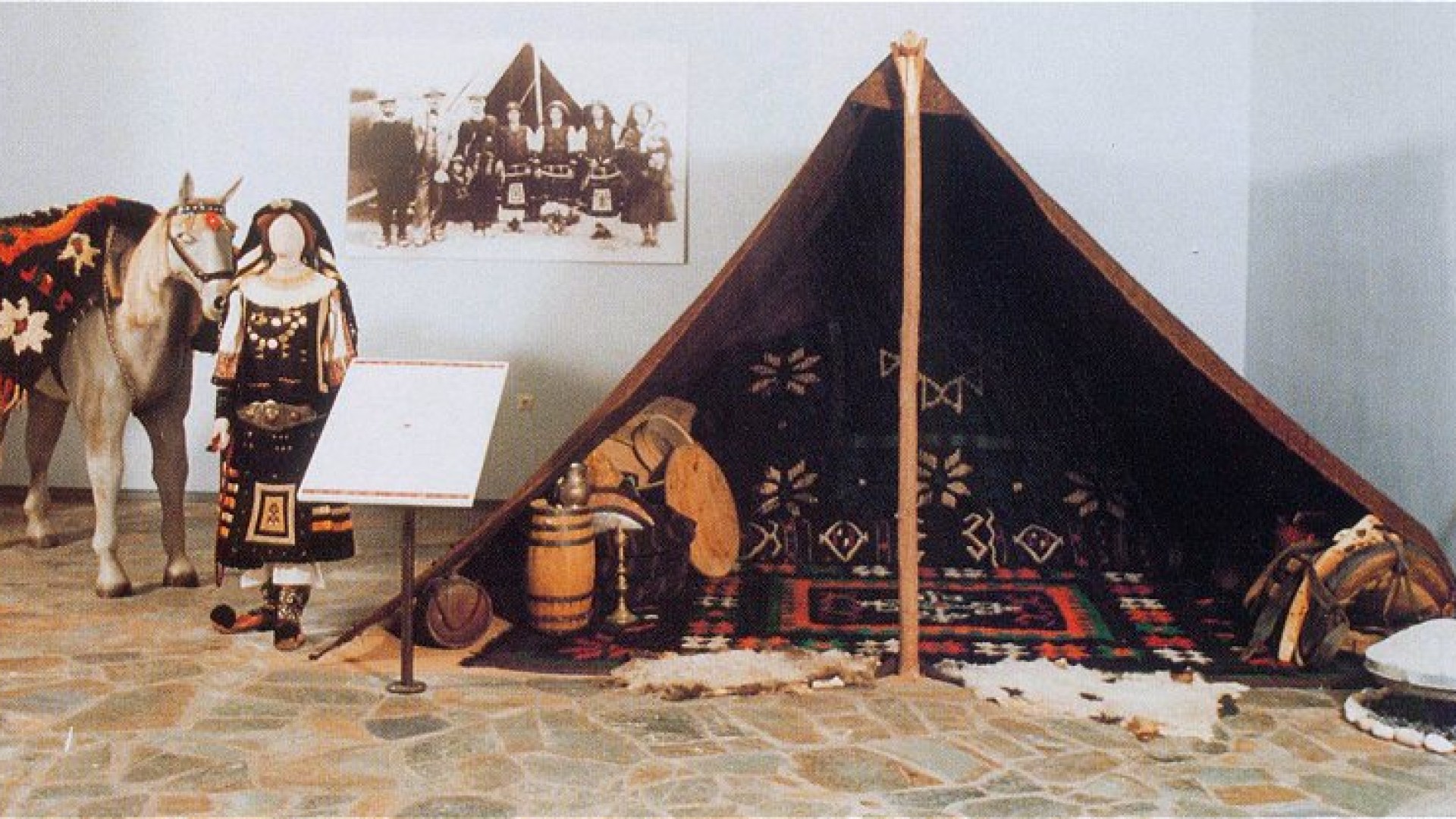
The museum’s exhibition is organized across two levels. On the ground floor, visitors can see reconstructions of traditional Sarakatsani dwellings, known as Tsiatoura. These were temporary huts made of woven reeds or straw, reflecting the nomadic lifestyle of the Sarakatsani during their seasonal migrations. The reconstructed huts date mainly to the interwar period, when their primary activities included cheese production and textile crafts.
On the upper floor, the exhibition focuses on traditional tools and equipment used in weaving and textile production, allowing visitors to follow the entire process from spinning wool to the final woven fabrics. Alongside clothing items, such as traditional Sarakatsani costumes, the museum also displays woven blankets known as flokates.
Since 1998, the museum has also offered educational programs for primary school students, introducing children to Sarakatsani life, traditional weaving techniques, and their way of living in temporary shelters. In addition, the museum preserves a photographic archive documenting life across Greece between 1906 and 1950, as well as a collection of traditional songs and music recordings.