Museum of the Royal Tombs of Aigai (Vergina)
The Museum of the Royal Tombs of Aigai is located in Vergina, in the region of Imathia, northern Greece, and is considered one of the most important archaeological museums in the world.
The museum shelters the royal tombs of ancient Aigai, the first capital of the Macedonian kingdom, together with the extraordinary treasures discovered within them.
The museum was created after the monumental discovery of the royal tombs in 1977, an archaeological event that transformed the study of ancient Macedonia. Among the most significant finds are the tombs traditionally associated with Philip II, father of Alexander the Great, and members of the Macedonian royal family. The discovery also revealed unique wall paintings, including the famous frescoes of the “Abduction of Persephone” and the “Royal Hunt,” which are among the very few surviving original paintings from classical antiquity.
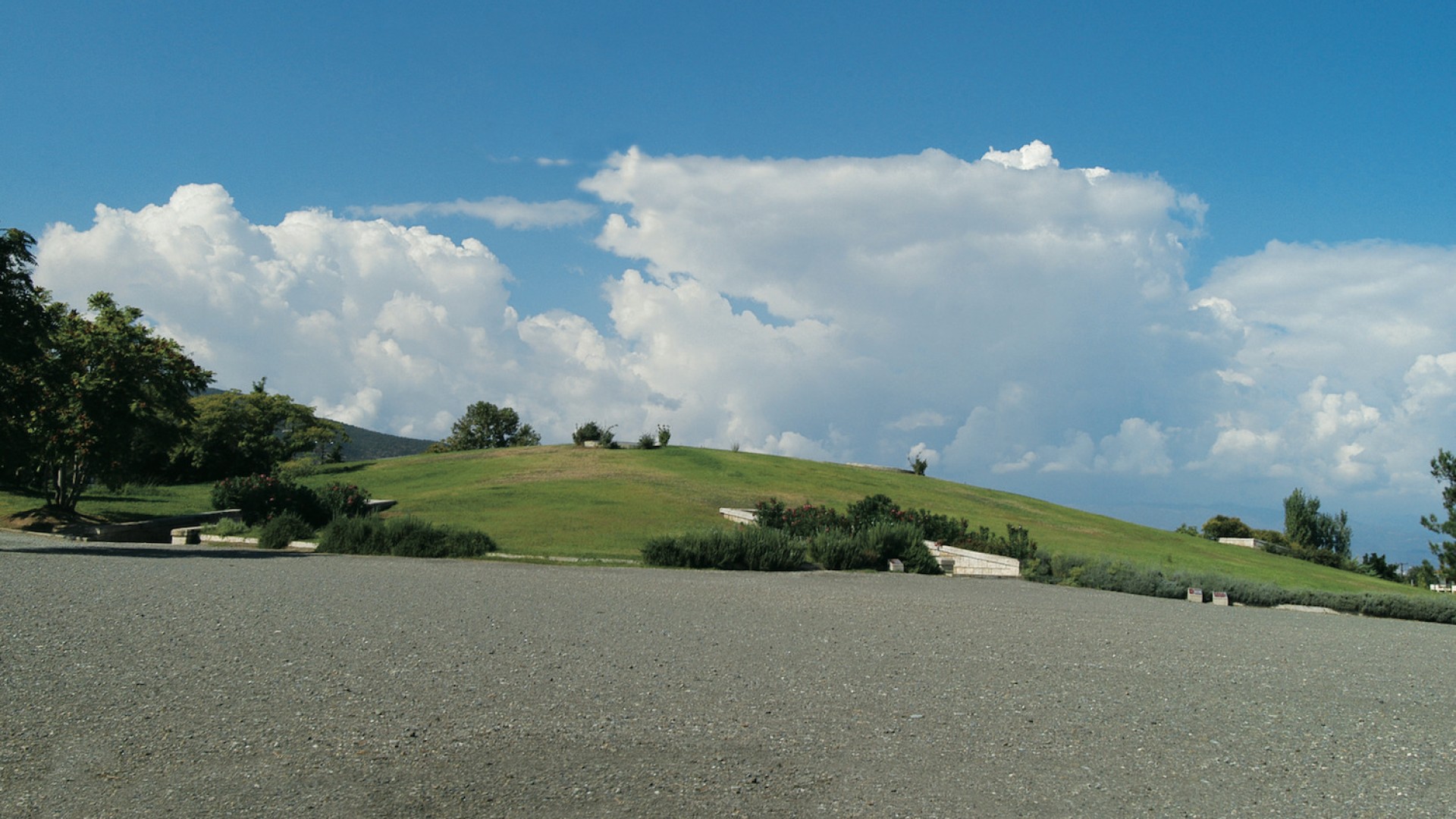
To protect the tombs and their fragile wall paintings, a large underground protective structure was constructed in 1993. The building maintains stable levels of humidity and temperature through advanced climate-control systems, ensuring the preservation of the monuments and their treasures. Externally, the museum resembles an ancient burial mound covered with earth, recalling the appearance of the Great Tumulus that originally concealed the royal tombs.
Inside the museum, visitors experience a dimly lit, atmospheric environment designed to evoke the sacred world of the dead. The exhibition combines modern museological design with advanced conservation technology, using materials such as metal, glass, and aluminum to create secure display conditions while emphasizing the emotional and symbolic character of the space.
The treasures displayed include gold wreaths, weapons, armor, jewelry, funerary objects, and ceremonial artifacts of exceptional craftsmanship. One of the most famous exhibits is the golden oak wreath, a masterpiece of ancient goldsmithing that symbolizes the wealth and power of the Macedonian dynasty.
A distinctive feature of the museum is that the treasures remain beside the tombs where they were discovered. Rather than removing the finds to another location, the museum preserves the direct relationship between the burial monuments and their contents, allowing visitors to experience the archaeological context in an authentic and powerful way.
Today, the Museum of the Royal Tombs of Aigai forms part of the Polycentric Museum of Aigai, together with the central museum building and the wider archaeological site. It stands as an outstanding monument of ancient Macedonian civilization and one of the most moving museum experiences in Greece, combining archaeology, architecture, history, and memory in a unique setting.