Natural History Museum of Crete
The Natural History Museum of Crete is one of Greece’s leading institutions for environmental research, biodiversity studies, and natural history education.
Founded in 1980 as part of the University of Crete, the museum operates within the School of Sciences and Engineering and plays an important role in the study and protection of the natural environment of Crete, Greece, and the wider Eastern Mediterranean region.
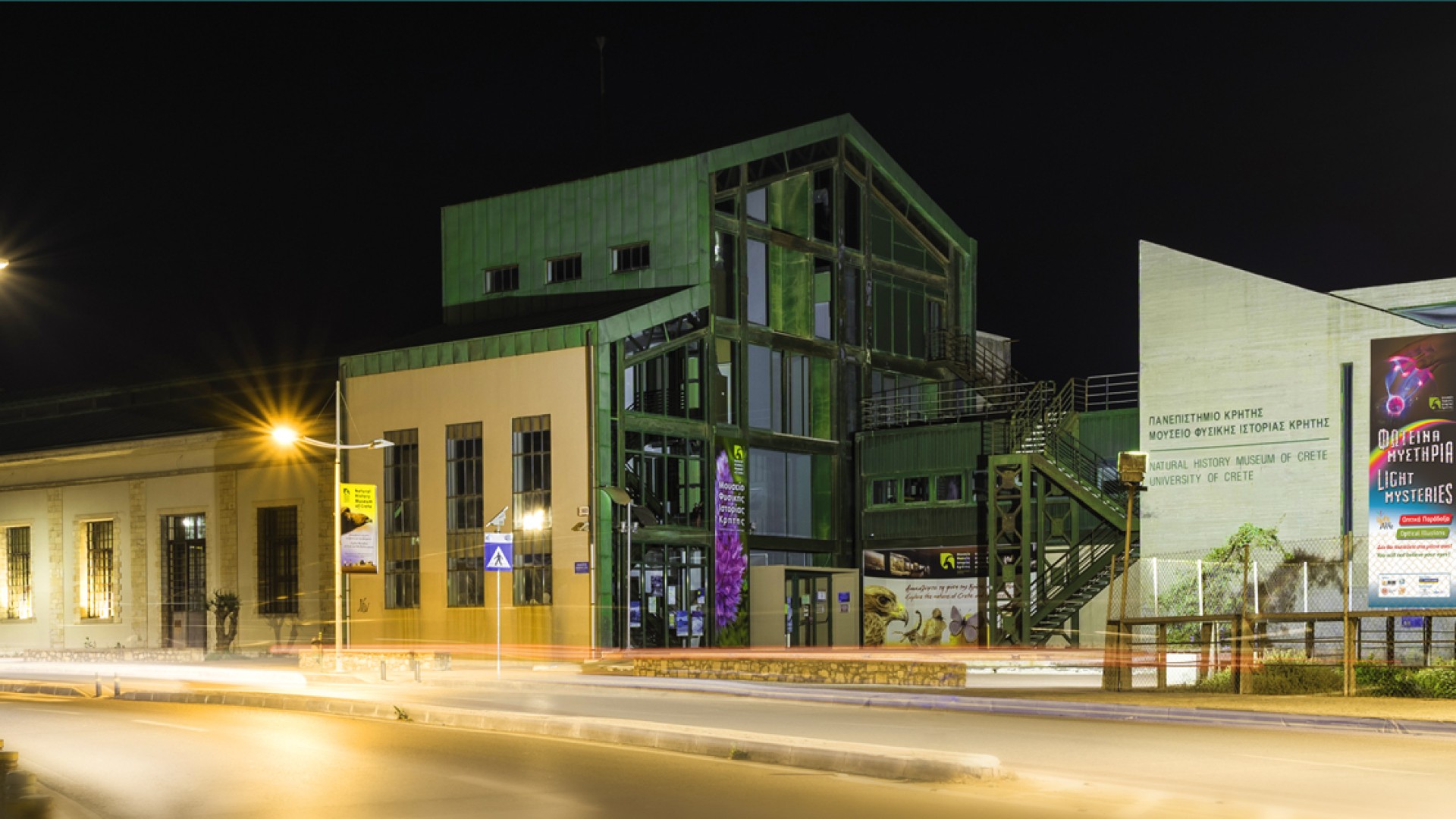
Located on the waterfront of Heraklion, the museum is housed in the restored former electricity power station of the city, an important industrial building dating back to the early 20th century. Today, the renovated complex combines science, education, and culture within exhibition spaces covering approximately 6,000 square meters, making it one of the largest natural history museums in the country.
The museum is organized into several scientific divisions dedicated to botany, geology, paleontology, zoology, genomics, and biodiversity research. Through its collections and research activities, it studies ecosystems, species, fossils, minerals, and habitats, with a special focus on environmental conservation and the protection of endangered species in the Mediterranean region.
Its permanent exhibition explores the unique natural environment of Crete and its relationship with the ecosystems of Greece and the Eastern Mediterranean. Using interactive displays, visual material, scientific exhibits, and educational installations, the museum presents topics related to geology, climate, biodiversity, evolution, and ecology in an accessible and engaging way for visitors of all ages.
In addition to its exhibitions, the Natural History Museum of Crete develops educational programs, seminars, lectures, and environmental awareness initiatives for schools, students, families, and the wider public. The museum also operates an Environmental Training Center that promotes environmental education and sustainable thinking through hands on learning experiences and scientific outreach activities.
The institution actively participates in international scientific collaborations and research networks. It is the only natural history museum in Greece that is a member of CETAF, the Consortium of European Taxonomic Facilities, and also represents Greece in DiSSCo, one of Europe’s largest scientific collection infrastructure projects focused on the digitization and study of natural history collections.
Beyond its scientific mission, the museum also emphasizes social inclusion, sustainable urban development, and environmental ethics. Through its research, exhibitions, and community initiatives, it aims to encourage public awareness about contemporary environmental challenges and inspire a stronger connection between people and the natural world.
Today, the Natural History Museum of Crete stands as a major center for science, education, and environmental research in Greece, offering visitors a deeper understanding of the biodiversity and ecological importance of Crete and the Eastern Mediterranean.