Archaeological Museum of Igoumenitsa
The Archaeological Museum of Igoumenitsa is a modern regional museum that has been operating since late 2009 in a newly constructed building at the northern entrance of the city.
The decision to establish the museum was made in 1989, while its final location was confirmed a few years later on land granted by the Municipality of Igoumenitsa. Construction began in 1999 and was completed gradually through European funding programs, until the museum officially opened to the public in December 2009.
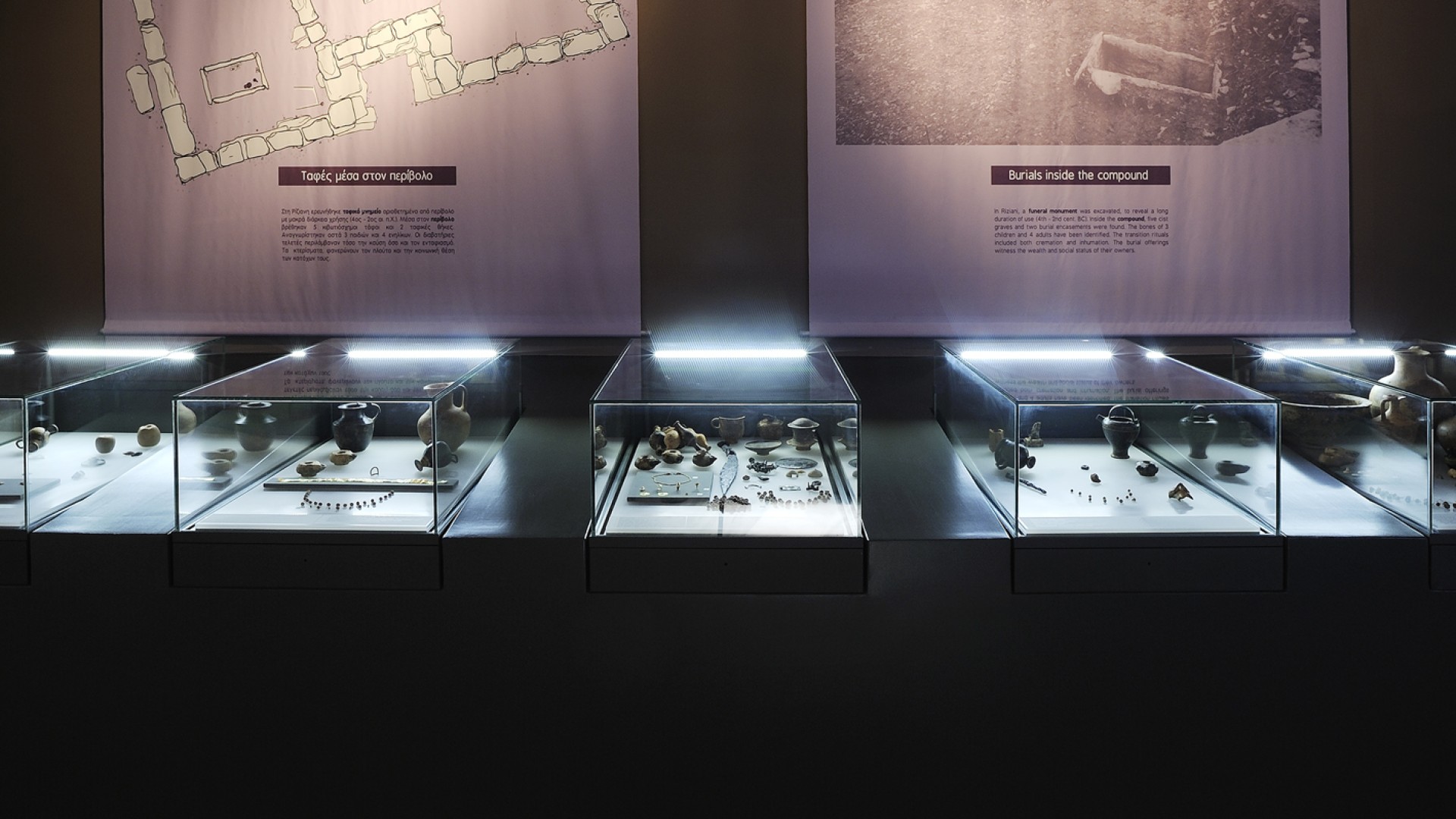
During the foundation works of the building, a section of a Roman cemetery (1st–4th century AD) was uncovered, associated with the coastal settlement of the modern Ladokhori area. Some of these findings are now included in the permanent exhibition, enriching the presentation of ancient burial customs.
The permanent exhibition, titled “Land of the Thesprotians,” covers an extensive chronological range from the Middle Palaeolithic period to the late Roman era, with a smaller number of Byzantine and post-Byzantine artifacts. Through five thematic sections and more than 1,600 exhibits, the long history of Thesprotia is presented, with particular emphasis on the Hellenistic period, a time of significant prosperity for the region. The artifacts come from archaeological excavations carried out throughout Thesprotia from the 1960s to the present day.
The museum also features modern facilities, including a multipurpose hall, audiovisual rooms, a small amphitheater, and an outdoor terrace for temporary exhibitions and cultural events. It serves as an important cultural hub for the city, while also functioning as an information center for archaeological sites in the wider region. In addition, it supports research and scientific work through conservation laboratories, archives, and a specialized library.
Today, the Archaeological Museum of Igoumenitsa is a vibrant cultural institution and is among the first certified public museums in Greece.