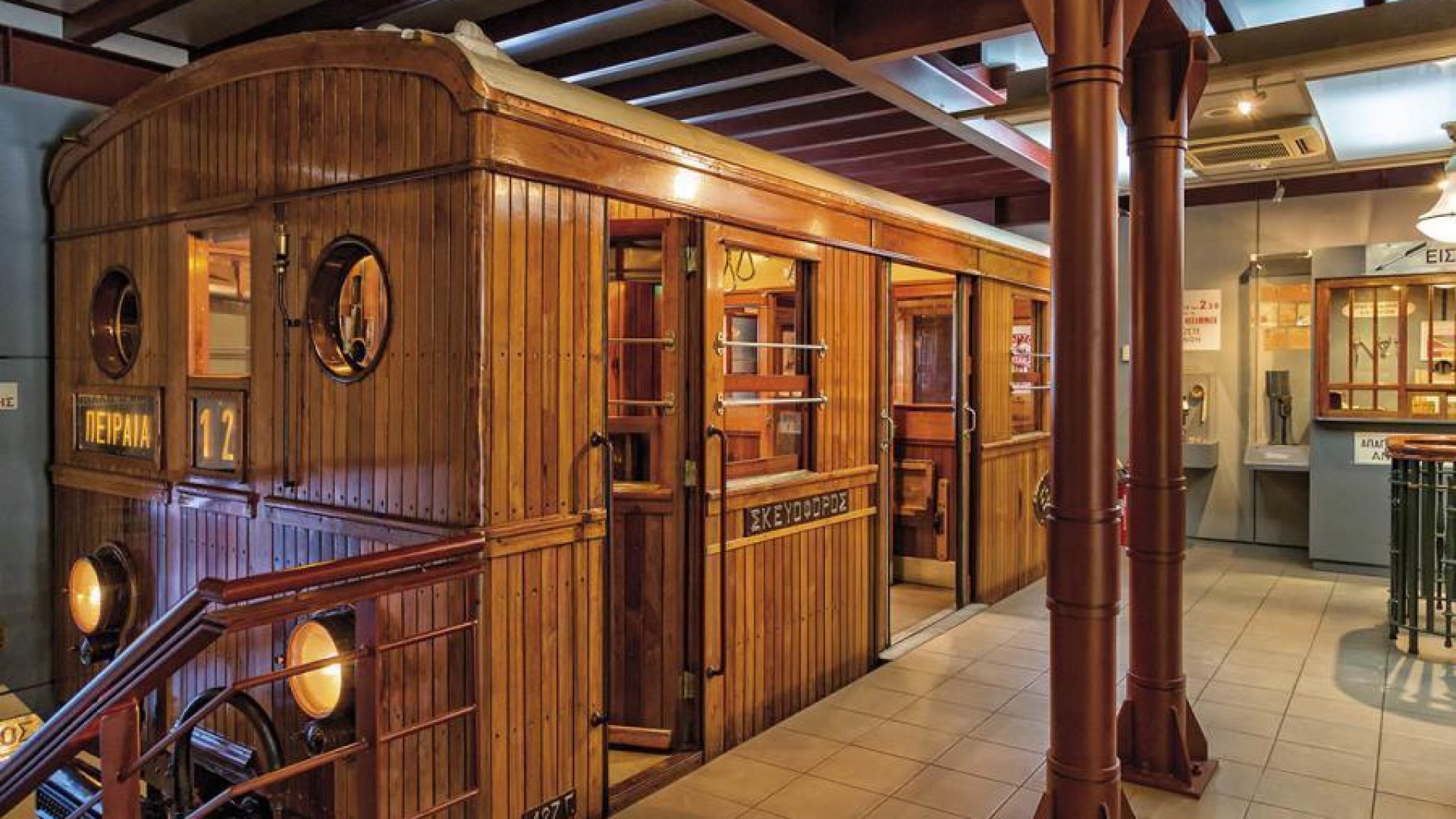
Electric Railways Museum of Piraeus
The Museum of Electric Railways in Piraeus is dedicated to preserving and presenting the history of the Athens & Piraeus Electric Railway Company (ΗΣΑΠ), one of the most important transport networks in Greece.
The idea for the museum was first envisioned in 1990 by Manolis Fotopoulos, an employee of the company, who later began actively working on its creation after his retirement in 1995. His goal was to collect, preserve, and highlight the history of the electric railway as well as the contribution of its workers.
Starting with very limited resources, Fotopoulos gathered historical material from warehouses, storage areas, scrapyards, and even discarded items from various institutions. Together with retired colleagues, he collected uniforms, photographs, tools, books, newspapers, and personal equipment used by railway employees. The growing collection eventually included large industrial objects such as wagons, rails, and technical equipment, which were stored with the hope of creating a permanent exhibition space.
After years of effort, a suitable location was granted within the Piraeus Station complex of the Electric Railway. Between 2003 and 2004, architectural studies and construction works were carried out to transform the space into a museum. This was followed by the cataloguing and documentation of the collection, as well as the preparation of a museographic study to guide the exhibition design. The museum officially opened in November 2005.
Since its inauguration, the Museum of Electric Railways has continued to grow, housing thousands of objects including equipment, documents, and photographs that document the evolution of the railway system in Athens and Piraeus. Its collection also preserves rare historical material related to urban transport in Greece, offering insight into the development of public transportation and the daily life of railway workers.
Today, the museum serves as an important cultural and historical archive, highlighting the technological progress of the electric railway from its early beginnings as a steam-powered line in the 19th century, through electrification in the early 20th century, and its later expansion across the Athens metropolitan network.