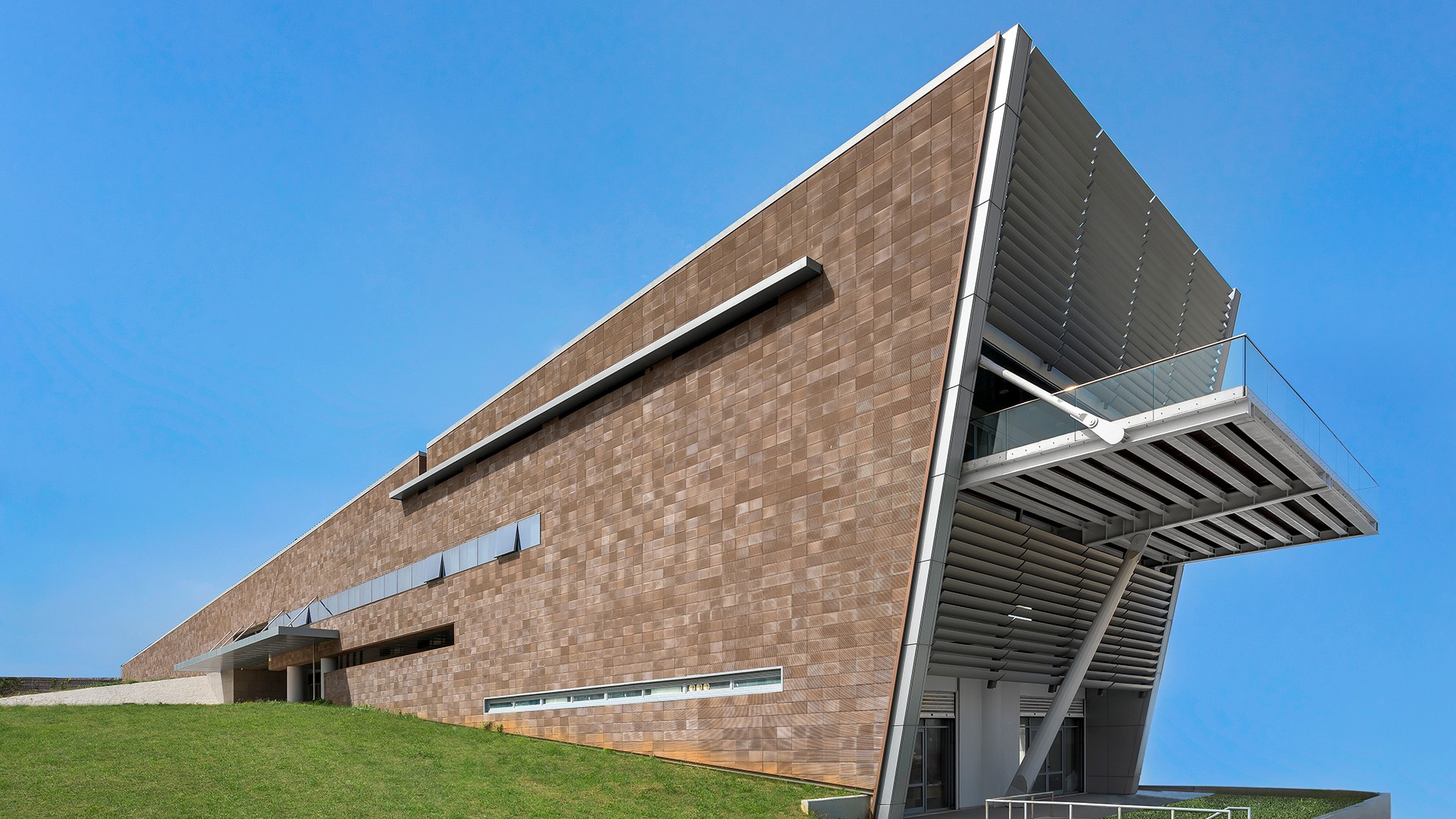
Archaeological Museum of Chania
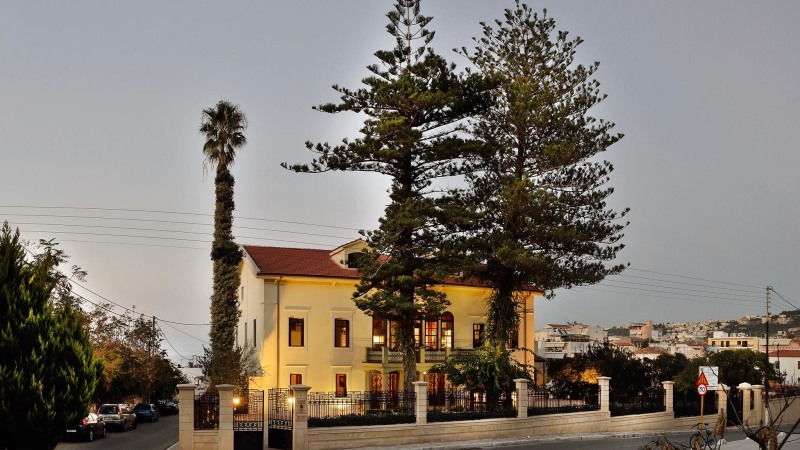
The New Archaeological Museum of Chania is located in the Halepa district, one of the most historically significant areas of Chania after the Venetian old town.
Halepa developed into an important political and diplomatic centre during the 19th and early 20th centuries, hosting foreign consulates, international institutions, and notable residences, including the home of Eleftherios Venizelos. Today, it remains a cultural landmark area with restored mansions and institutions dedicated to history and research.
The need for a new, larger archaeological museum in Chania was first formally expressed in the early 1990s. After a long process of site selection, a plot west of the Church of Agia Magdalini was chosen. The land was transferred to the Greek Ministry of Culture in 1996, and in 2005 the architectural design by Theophanis Bobotis and his collaborators was selected through a closed competition.
The museum is built on a site of approximately 11.5 acres, with a total building area of around 6,000 square metres. Its elevated position offers panoramic views over the city of Chania and the Cretan Sea. Architecturally, the building consists of two linear volumes that emerge from the ground and form an internal courtyard, inspired by the concept of an ancient Greek megaron. The design symbolically connects the museum with the archaeological layers of Crete, as many of the exhibits originate from the island’s rich underground cultural heritage.
The exhibition spaces are arranged on the ground floor and part of the upper level, surrounding the central courtyard. They are designed with simplicity, height, and flexibility in mind, allowing for both current and future museological presentations. Visitors follow a circular route through the galleries, creating a continuous and immersive experience.
Additional facilities include temporary exhibition spaces with independent access, administrative offices, a museum shop, storage areas, conservation laboratories, study rooms, and a multipurpose auditorium. The upper level also hosts educational spaces, a collection hall, and a café with panoramic views over the sea and city.
The museum is designed as a modern cultural organism that combines exhibition, research, education, and public engagement. Through its architecture and functions, it aims to serve as a landmark for Chania and a dynamic space for preserving and presenting the archaeological heritage of Crete, while meeting the needs of contemporary museum practice.