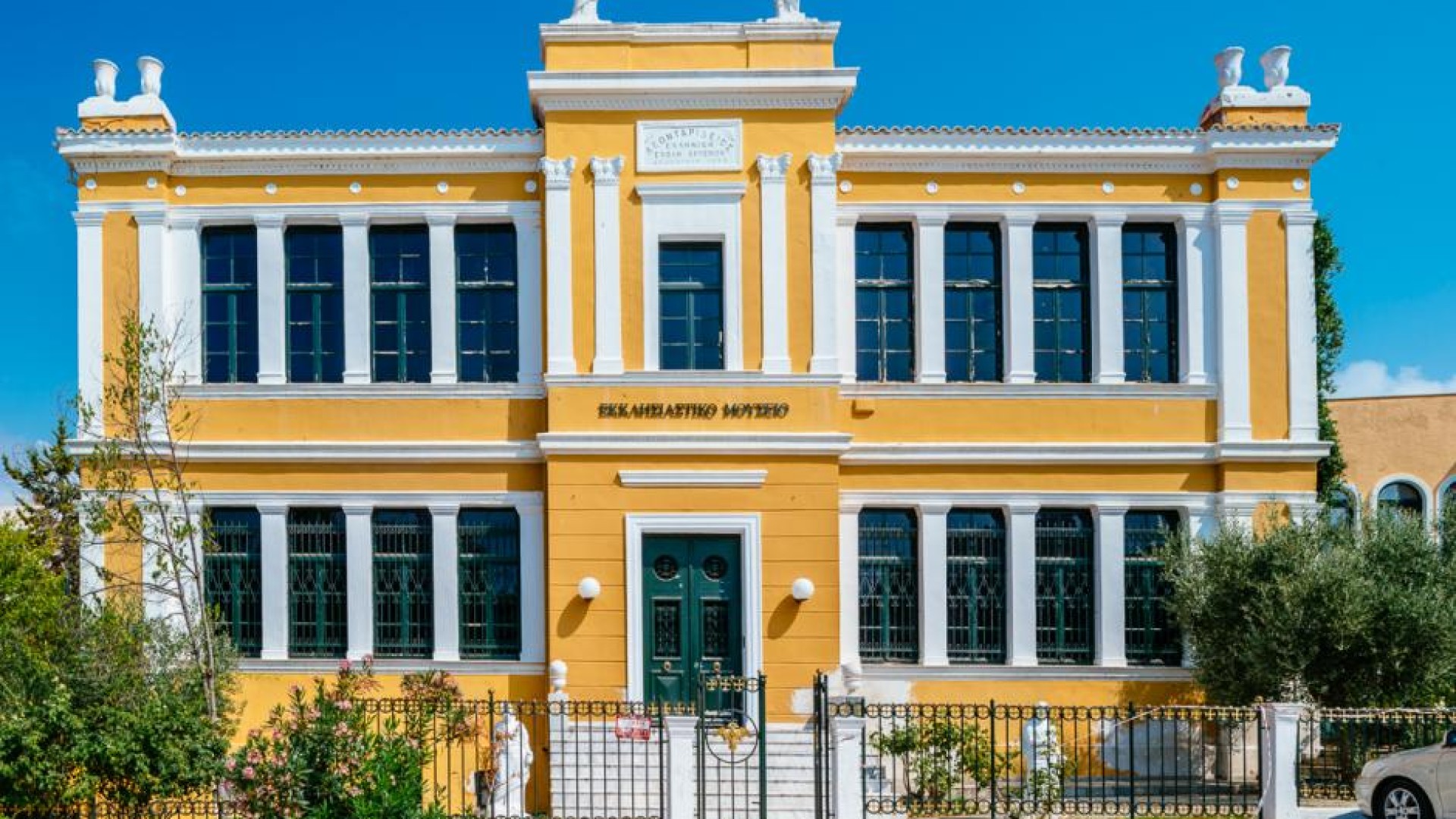
Alexandroupolis Ecclesiastical Museum
The Ecclesiastical Museum of the Holy Metropolis of Alexandroupolis was founded in 1976 by the then Metropolitan of Alexandroupolis, Anthimos (later Metropolitan of Thessaloniki).
Initially, it was housed in two rooms of the Spiritual Center of the Holy Metropolis, next to the Cathedral of Saint Nicholas.
In 1982, as the collection gradually grew with additional sacred relics and artifacts, it was transferred to the Leontarideios School, a listed historic building that had been declared a protected monument in 1978. In 1998, the museum temporarily suspended its operation in order to carry out conservation work on both the building and its collections. It reopened in May 2000 with an inauguration ceremony performed by Ecumenical Patriarch Bartholomew, following a renewed presentation of the collection based on systematic documentation, study, and a revised museological approach.
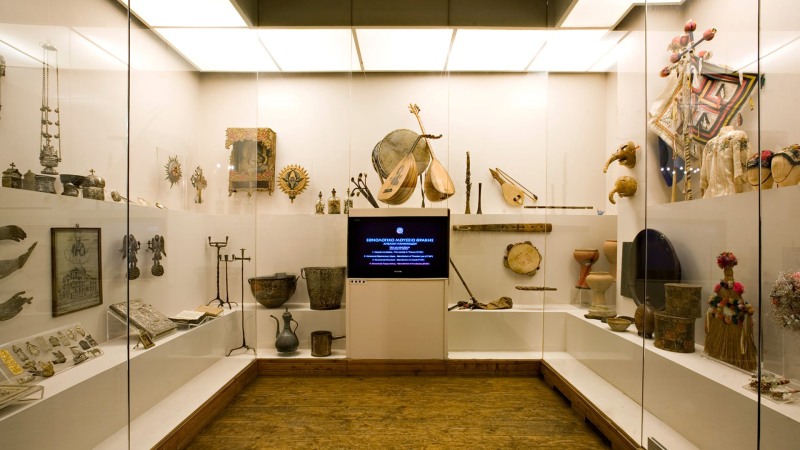
The museum houses a rich collection of ecclesiastical objects gathered from churches and monasteries within the jurisdiction of the Metropolis. The majority of the works date from the 18th and 19th centuries, while a smaller number of rare items—mainly early printed books and portable icons—date from the 15th to the 17th century. The core of the collection consists of portable icons representing various types of Orthodox iconography.
These icons include iconostasis icons (such as Deesis, Twelve Feasts, and Apostles), devotional icons intended for wall display or personal prayer, and smaller icons for private worship. The collection also includes triptychs, fragments of triptychs, a carved wooden altar cross, two processional crucifixes, an icon of the Lamentation of Christ, and other liturgical objects.
The iconographic themes cover the full range of Orthodox doctrine, depicting Christ, the Virgin Mary, and numerous saints associated with the liturgical calendar. Particular emphasis is placed on popular icon types such as the Virgin Kykkotissa and saints like Saint Charalambos, while some rarer themes—such as the Holy Belt—are also represented. Many icons bear dedicatory inscriptions, providing valuable information about painters, donors, and patrons.
The museum operates under the direct supervision of the Holy Metropolis of Alexandroupolis and was created through the initiative of Metropolitan Anthimos of Alexandroupolis and Samothrace. Its purpose is the collection, preservation, conservation, and exhibition of objects that highlight ecclesiastical art and the religious history of the region.
The museum is housed in the Leontarideios School, a neoclassical building dating to 1909, donated by the merchant Antonis Leontaridis. The school originally functioned as a six-grade gymnasium until 1972. The museum’s holdings were assembled through donations from churches and monasteries in the region, contributions from private individuals, and relics brought by refugees who settled in Greece after 1922.