Archaeological Museum of Samothrace
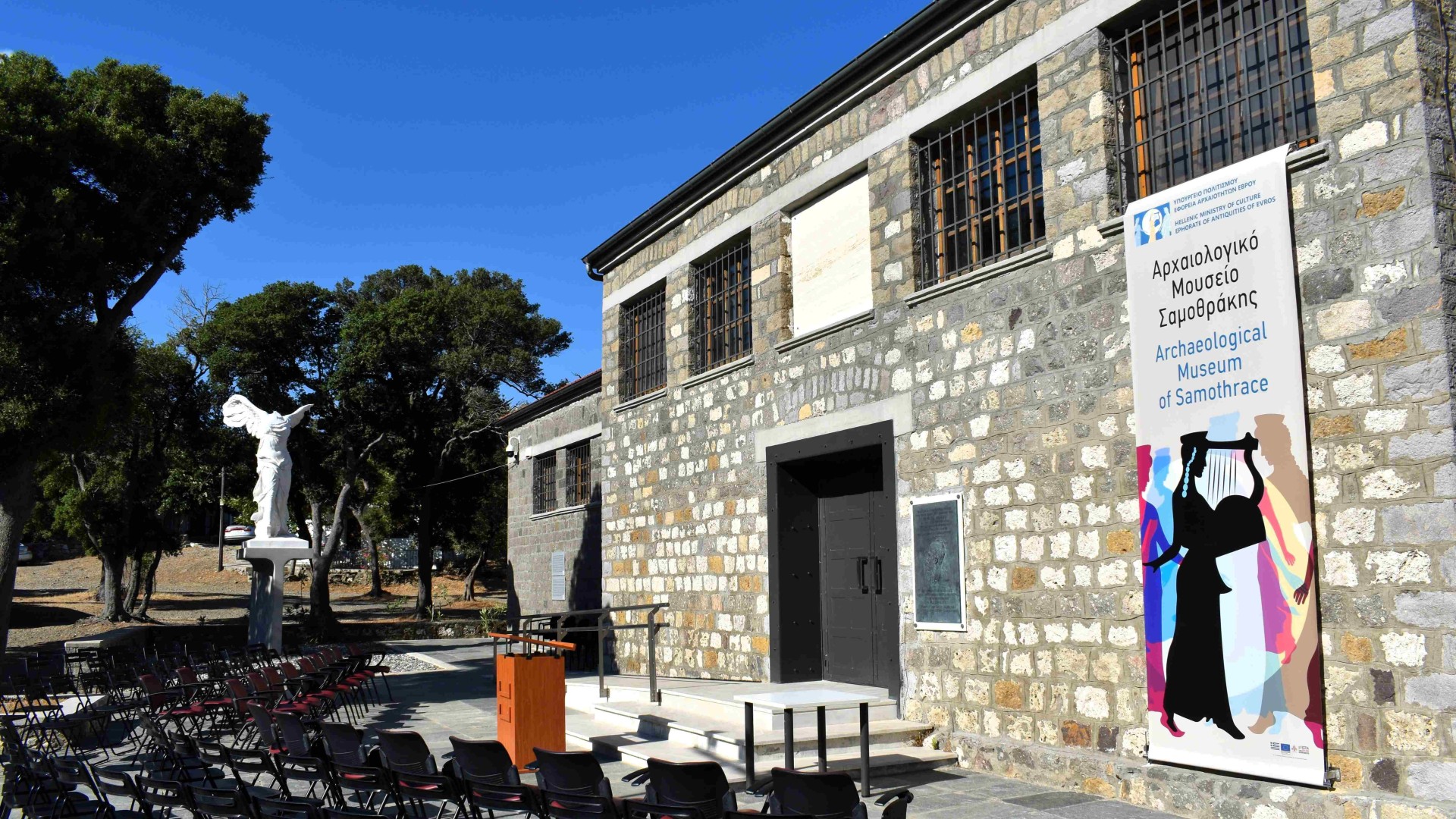
The Archaeological Museum of Samothrace was designed by Stuart M. Shaw (1899–1985) and constructed between 1939 and 1961.
It was later renovated during 2014–2015. The first exhibition opened to the public in 1955, and the museum continues to serve as the main cultural institution presenting the rich archaeological heritage of the island.
The museum’s permanent exhibition is organized into five halls: A, B, C, D, and E. Hall A presents architectural reconstructions that help visitors understand the form and development of ancient structures. Hall B is dedicated to the ancient city of Samothrace and its necropolises, offering insights into daily life and burial practices.
Halls C and D focus on the Sanctuary of the Great Gods, one of the most important religious centers of the ancient Greek world. These sections, titled “Entrance to the Sanctuary” and “Initiation,” present monuments, sculptures, and finds related to the sacred rituals and mystery cult practiced on the island. In the colonnade of the central courtyard, between Halls C and D, inscriptions mainly from the Sanctuary are displayed, providing valuable historical and religious information.
Hall E showcases finds from across the island outside the Sanctuary of the Great Gods. These artifacts date from the Middle Neolithic period (around 5500 BC) to modern times (19th century), illustrating the long and continuous human presence on Samothrace.
Overall, the Archaeological Museum of Samothrace presents a comprehensive view of the island’s archaeological and cultural history, with a strong emphasis on the Sanctuary of the Great Gods and its significance in antiquity.