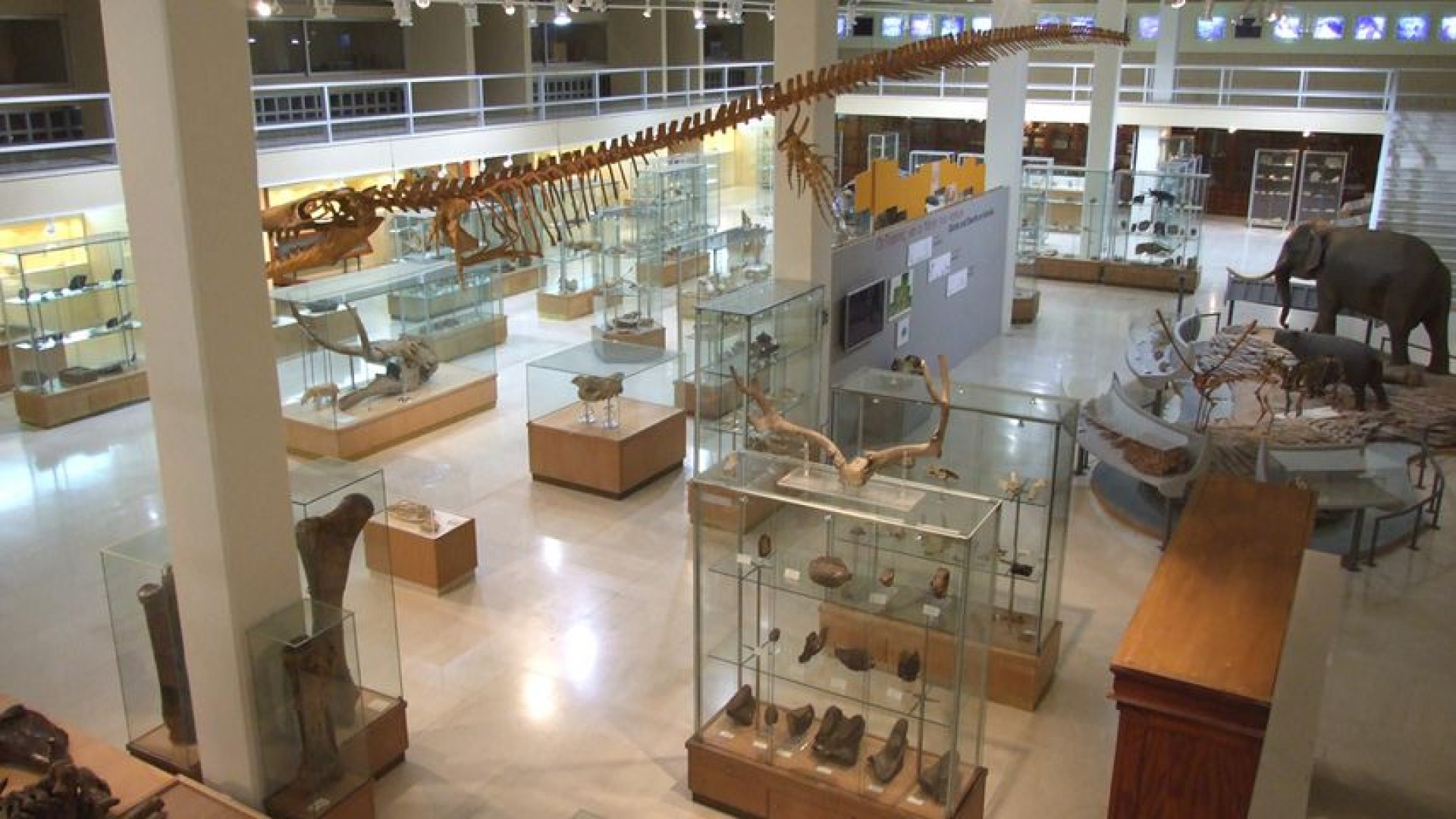
Museum of Geology and Paleontology of the Athens University
The Museum of Geology and Paleontology of the University of Athens is one of the most important natural history museums in Greece and belongs to the Department of Geology and Geoenvironment of the National and Kapodistrian University of Athens.
Its collections include fossils of animals and plants from all over Greece, covering more than 300 million years of the country’s geological history. The exhibits are distinguished by their rarity, excellent preservation, and great scientific value.
The history of the museum dates back to 1835, with the establishment of the Physiographic Society, when the first collections of fossils, rocks, and minerals began to be assembled. In 1858, these collections became part of the University of Athens, while in 1906 the Museum of Paleontology and Geology began its independent course. Since 1981, it has been housed at the University Campus within the facilities of the Department of Geology and Geoenvironment.
The museum’s exhibition halls display some of the most significant paleontological discoveries found in Greece. Among the highlights is the world-famous Pikermi fauna, featuring prehistoric hipparions, saber-toothed cats, hyenas, giraffes, and rhinoceroses that lived around seven million years ago. Visitors can also see reconstructions of endemic animals, such as the dwarf elephant of Tilos, along with fossilized plants, marine organisms, and rare prehistoric species that illustrate the evolution of life on Earth.
The museum serves not only as an exhibition space but also as an important research center. It hosts the Greek Center for Paleontological Research and welcomes researchers, postgraduate students, and scientists from Greece and abroad every year. Its laboratories support scientific studies, fossil conservation, and research projects related to geology and paleontology.
At the same time, the museum has a strong educational mission. It receives daily visits from schools and organizes guided tours, educational programs, and events for children and adults, aiming to promote scientific knowledge and raise awareness about the protection of Greece’s paleontological heritage. Through its activities, the Museum of Geology and Paleontology contributes significantly to the study of natural history and to the understanding of the evolution of the Earth and life itself.