Solomos Museum
The Society for Corfiot Studies (E.K.S.) was founded in 1952 as a cultural association dedicated to the study of the history, folklore, and broader intellectual and artistic production of Corfu and the Ionian Islands.
Among its founders were prominent intellectuals and cultural figures of Corfu, including writers, educators, and artists, who aimed to preserve and promote the island’s rich cultural heritage.
From its early years, the Society has been actively involved in organizing lectures, conferences, and cultural events, as well as publishing scholarly works on Ionian history and culture. It has also played an important role in major academic conferences, such as the Pan-Ionian Conferences, and has contributed significantly to historical research and education in the region.
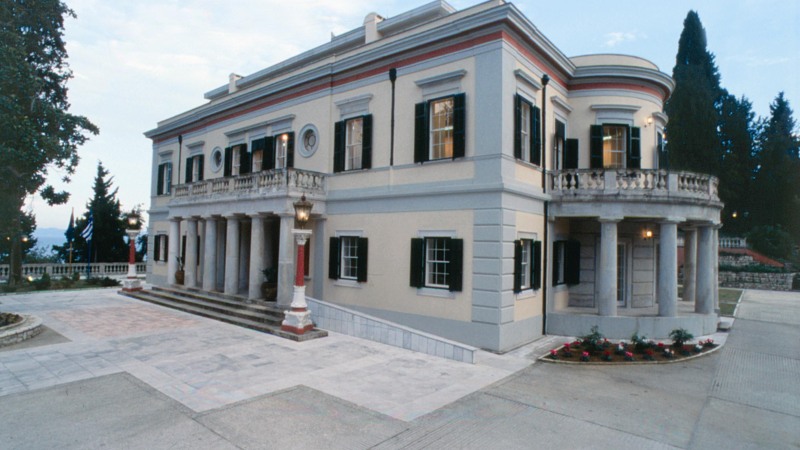
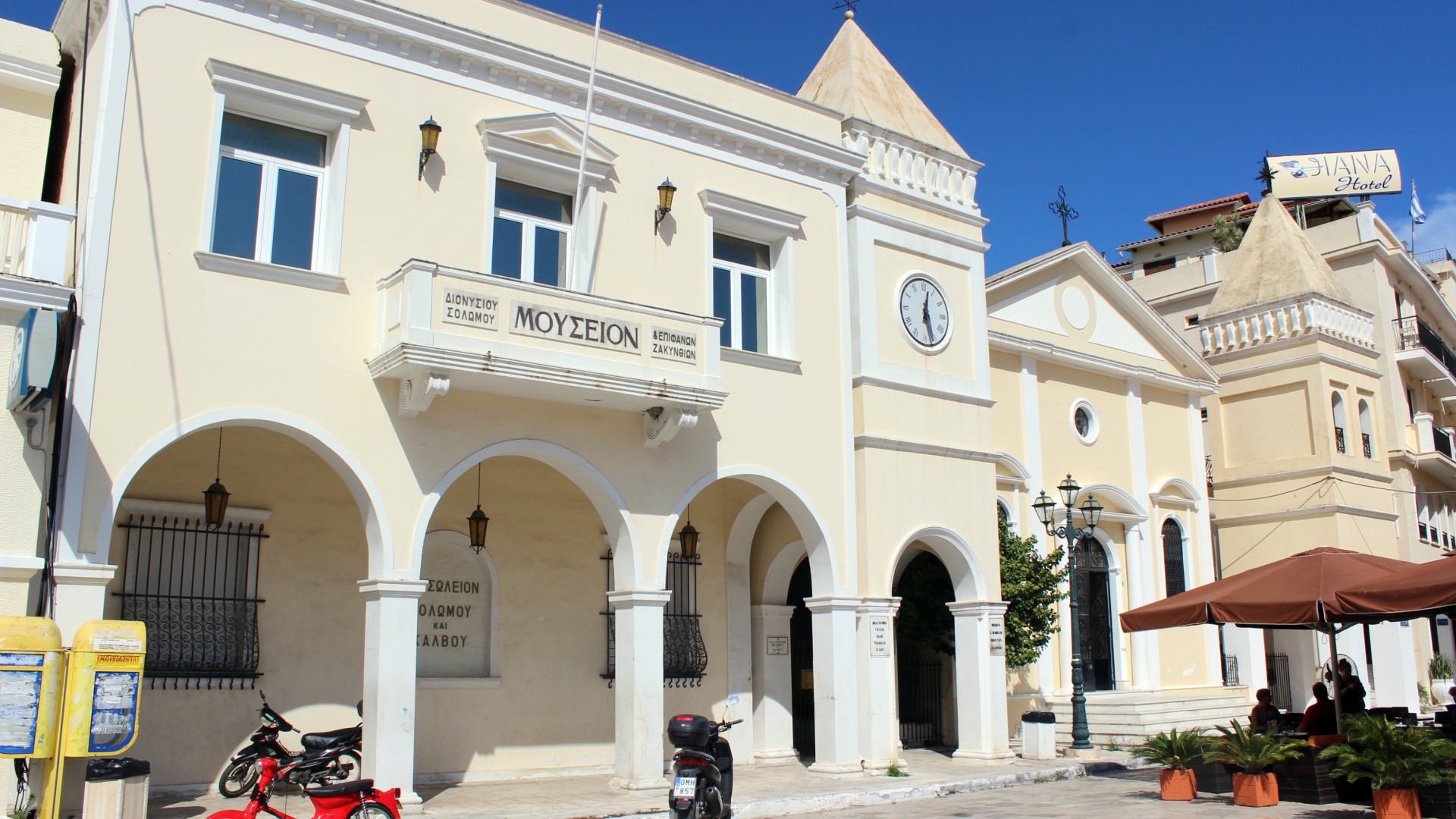
One of its most important achievements is the establishment and support of the Solomos Museum, dedicated to the life and work of Dionysios Solomos, Greece’s national poet. The museum is housed in the restored residence where Solomos spent the last years of his life in Corfu, from 1832 until his death in 1857.
The building was reconstructed after its destruction during World War II bombings and was completed in the 1960s, following architectural plans designed by Corfiot engineers and architects. The museum was gradually developed over time, with major renovations completed in the early 21st century, improving both the building and its exhibition spaces.
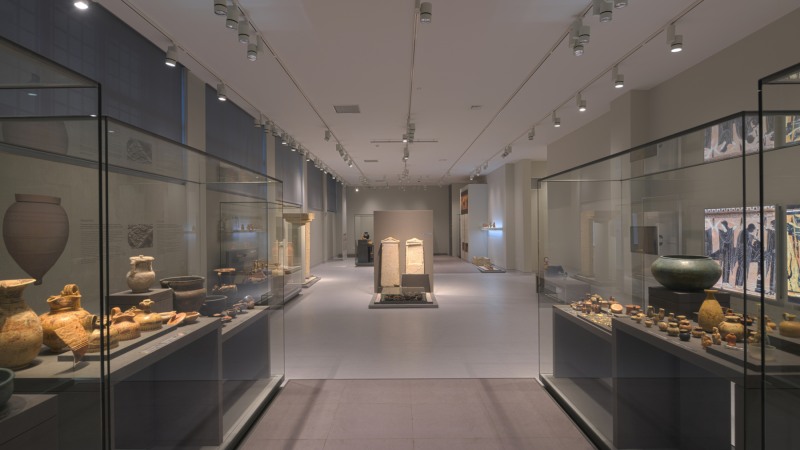
The Solomos Museum presents the life, literary work, and intellectual circle of Dionysios Solomos, as well as the broader tradition of the Ionian (Heptanese) School of poetry and art. Exhibits include manuscripts, portraits, paintings, engravings, personal objects, and rare editions of his works, including materials related to The Woman of Zakynthos and The Hymn to Liberty, the latter of which became the Greek national anthem.
The exhibition also highlights Solomos’ relationships with major intellectual and artistic figures of his time, such as Nikolaos Mantzaros, who composed the music of the national anthem, as well as poets, scholars, and artists of the Ionian cultural tradition.
A key part of the museum is the documentation of Solomos’ life in Corfu, where he spent his most productive years and produced his most important works, including The Free Besieged. His desk and personal items are among the most significant exhibits.
Today, the Museum of the Society for Corfiot Studies and the Solomos Museum functions both as a cultural institution and a research center. It preserves and promotes the legacy of Solomos and the Ionian cultural heritage, while also hosting exhibitions, educational activities, and scholarly events that connect the past with modern Greek cultural identity.