Archaeological Museum of Pella
The Archaeological Museum of Pella is one of the most important museums in Greece and a major reference point for the history of ancient Macedonia
Located at the site of ancient Pella, the birthplace of Alexander the Great, the museum presents the political, artistic, and cultural development of the Macedonian kingdom through exceptional archaeological finds.
The museum opened in 2009 and quickly became one of the most visited cultural destinations in northern Greece. Beyond its permanent collections, it also functions as an important cultural centre, hosting temporary exhibitions, educational programmes, lectures, conferences, and various cultural events.
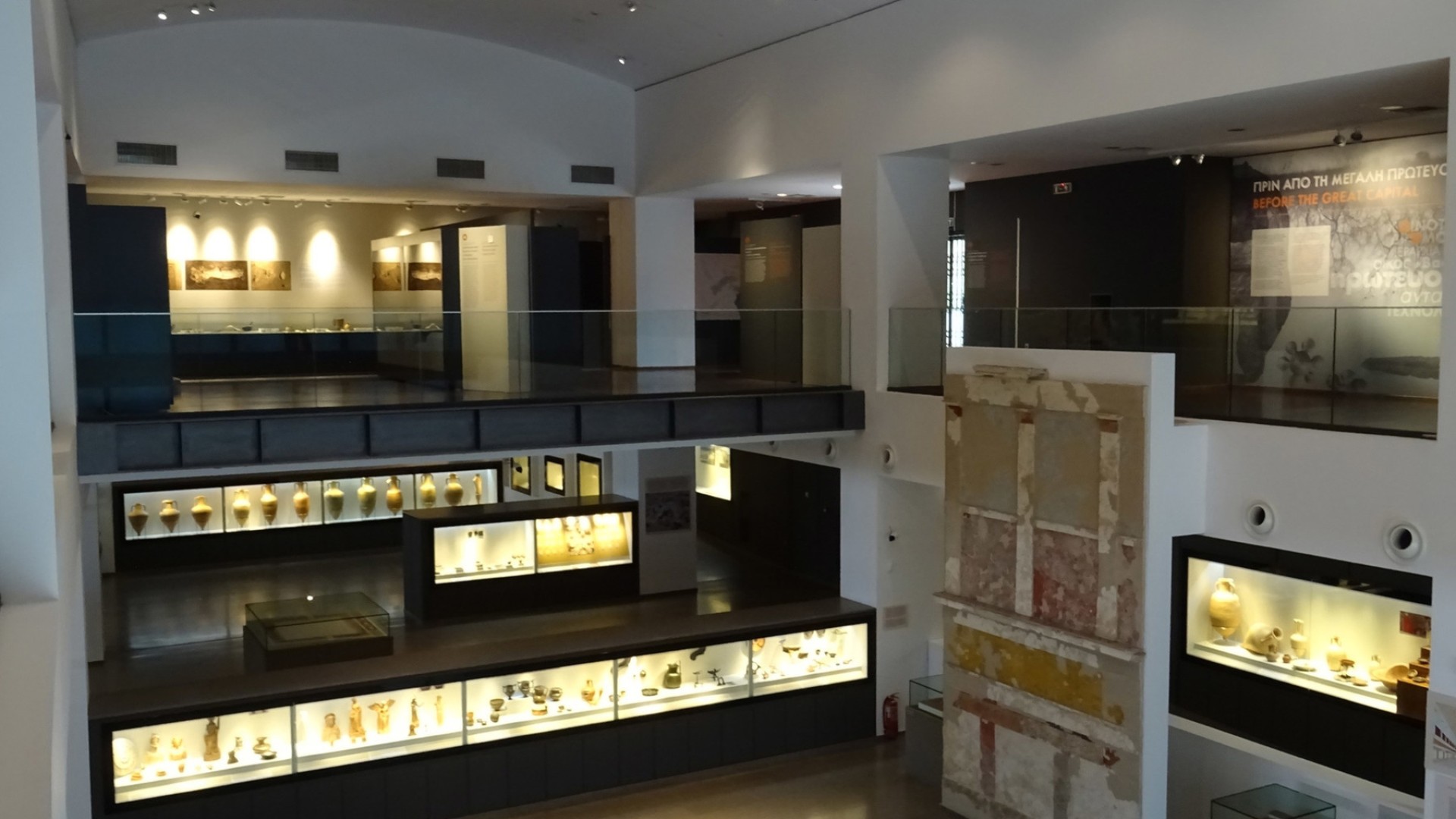
The exhibition is organised chronologically and thematically, allowing visitors to follow the history of the region from prehistoric times to the Hellenistic and Roman periods. Through carefully curated displays, the museum highlights daily life, religion, architecture, burial customs, art, and the political importance of Pella as the capital of ancient Macedonia.
Among the most significant exhibits is a prehistoric burial dating to the 3rd millennium BC, discovered northwest of the ancient Agora. Another remarkable find is the richly furnished male burial from Archontiko of Pella, dating to 550–540 BC, which reflects the wealth and social organisation of the Archaic period.
The museum also houses an impressive Attic red-figure hydria from the late 5th to early 4th century BC, used as a funerary urn, as well as a rare lead curse tablet dating between 400 and 359 BC, containing a magical spell written in ancient Greek.
Architectural remains from the royal palace, including a Doric capital from around 350 BC, demonstrate the monumental scale and refinement of Macedonian architecture. One of the highlights of the collection is the marble head of Alexander the Great, dating to the late 4th century BC, which connects visitors directly with the most famous figure of ancient Macedonia.
Exceptional works of art are also displayed, including the famous mosaic floor depicting a lion hunt from the House of Dionysos. This masterpiece of late 4th-century BC mosaic art reflects the wealth and sophistication of Pella during the Hellenistic age.
Another important exhibit is the reconstructed wall from the “House with the Plasters,” standing five metres high and decorated with painted architectural details that recreate the appearance of elite Macedonian houses. Smaller but equally remarkable objects include the figurine of the sleeping Eros from a child’s burial and a mould used for producing relief skyphoi decorated with scenes from the sack of Troy.
Today, the Archaeological Museum of Pella offers visitors a comprehensive journey through the history of ancient Macedonia. Combining modern museology with extraordinary archaeological discoveries, it preserves and presents the legacy of one of the most influential cities of the ancient Greek world.