.jpg)
Byzantine Museum of Ioannina
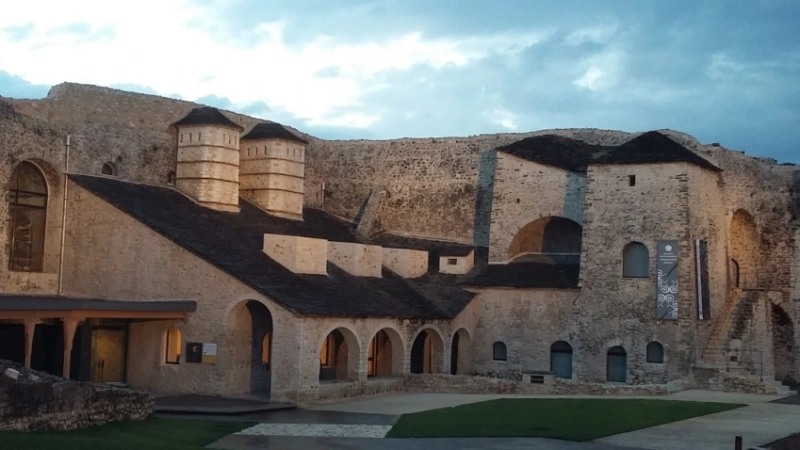
The Byzantine Museum of Ioannina is located within the archaeological site of the castle of Ioannina, on the eastern terrace of the southeastern citadel (Its Kale).
It is housed on the ground floor of the “Royal Pavilion,” a neo-traditional building constructed in 1958 by the Greek army, based on the designs of architect Alexandros Baltatzis. This site originally hosted a military hospital built over the ruins of Ali Pasha’s palace (seraglio), which was destroyed by fire in 1870. In 1978 the building was handed over to the Ministry of Culture, and since 1995 it has functioned as the Byzantine Museum of Ioannina.
The museum features a spacious entrance hall, where a notable exhibit is a detached late-19th-century wall painting depicting the victory of Emperor Constantine over Maxentius at the Milvian Bridge. The exhibition space is organised into seven galleries, presenting artefacts from across Epirus in chronological order, covering the period from the 4th to the 19th century. These collections highlight the artistic and historical development of the region.
The galleries include exhibits from the Early Christian period, such as architectural sculpture, pottery, coins, and small objects from sites like Kastritsa, Photiki, Glyki, Ladokhori, and Nicopolis. The Byzantine period section features important finds from Arta, the capital of the Despotate of Epirus, as well as Ioannina itself. Particularly notable are rare glazed clay icons from the late 13th century and a stone inscription related to Thomas Preljubović, reflecting the turbulent history of the region in the 14th century.
Additional sections present material from the Ottoman period, including portable icons, wooden iconostasis fragments, ceramics, coins, seals, and manuscripts, showcasing the flourishing post-Byzantine artistic tradition in Epirus.
The museum also includes three annexes within the castle complex: the Fethiye Mosque, the “Treasury,” and the “Dimitris Konstantios” hall. These spaces host exhibitions on Ottoman-period Ioannina, collections of Epirus silverwork, and temporary exhibitions and cultural events.
Today, the Byzantine Museum of Ioannina plays an important cultural and educational role, hosting exhibitions, lectures, musical and theatrical performances, and educational programmes for schools, organised by archaeologists of the Ephorate of Antiquities.