
Archaeological Museum of Lefkada
The Archaeological Museum of Lefkada houses the cultural treasures of the region of Lefkada and presents the island’s long historical development from the Middle Palaeolithic period (around 200,000–35,000 BC) up to the late Roman era (4th century AD).
It is located within the Cultural Centre of the Municipality of Lefkada and occupies one floor, which includes a vestibule and four exhibition halls.
The museum’s collections come mainly from archaeological excavations carried out across the island, including burial mounds at Nydri (Steno and Skaros), the Choirospilia cave in Evgiros, the cemeteries of the ancient city of Lefkada, as well as other significant sites such as the Asvotrypa cave in Frini and the Cave of the Nymphs in Agia Kyriaki. A large part of the prehistoric material is linked to the early 20th-century research of the German archaeologist Wilhelm Dörpfeld.
The permanent exhibition is organised into four main thematic sections:
Hall A presents aspects of public and private life in ancient Lefkada, including agriculture, trade, household economy, crafts, fishing, weaving, and music, through tools, pottery, and everyday objects.
Hall B is dedicated to religion and worship, showcasing deities such as Artemis, Aphrodite, Hera, and Apollo Leucadius, along with votive offerings, figurines, and ritual objects from sanctuaries, caves, and domestic cult practices.
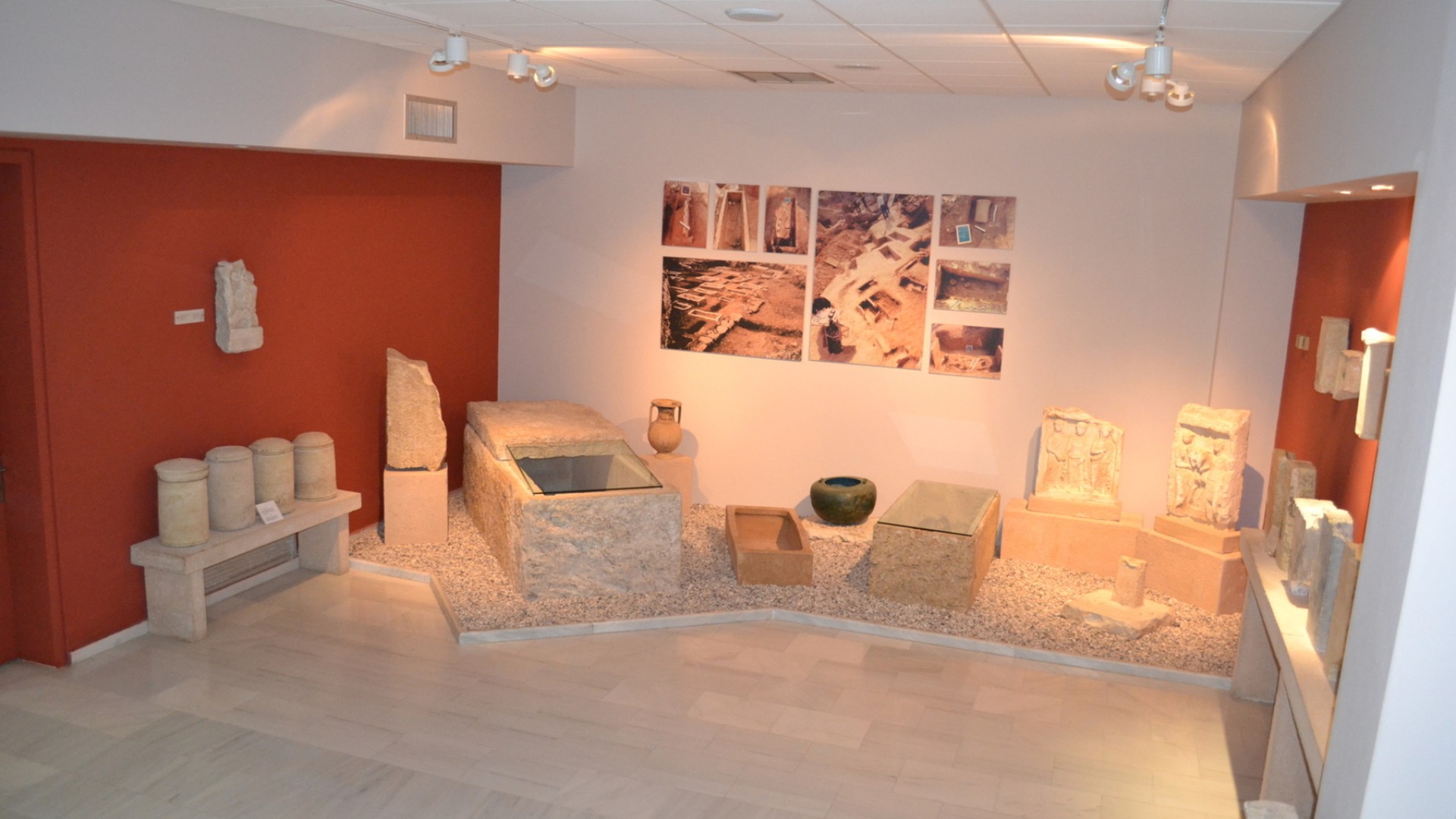
Hall C focuses on funerary customs, displaying grave goods such as pottery, figurines, jewellery, weapons, and a reconstruction of part of an ancient cemetery with tomb types and burial practices.
Hall D is dedicated to the memory and work of Wilhelm Dörpfeld and covers the earliest phases of human presence on the island, from the Middle Palaeolithic and Neolithic periods through the Bronze Age, including findings from the important tumuli excavated at Steno Nydri.
Today, the museum operates under the Ephorate of Antiquities of Aetolia-Acarnania and Lefkada and is actively involved in educational programmes and guided tours for students and visitors, contributing significantly to the study and promotion of the island’s ancient heritage.