Archaeological Museum of Elis
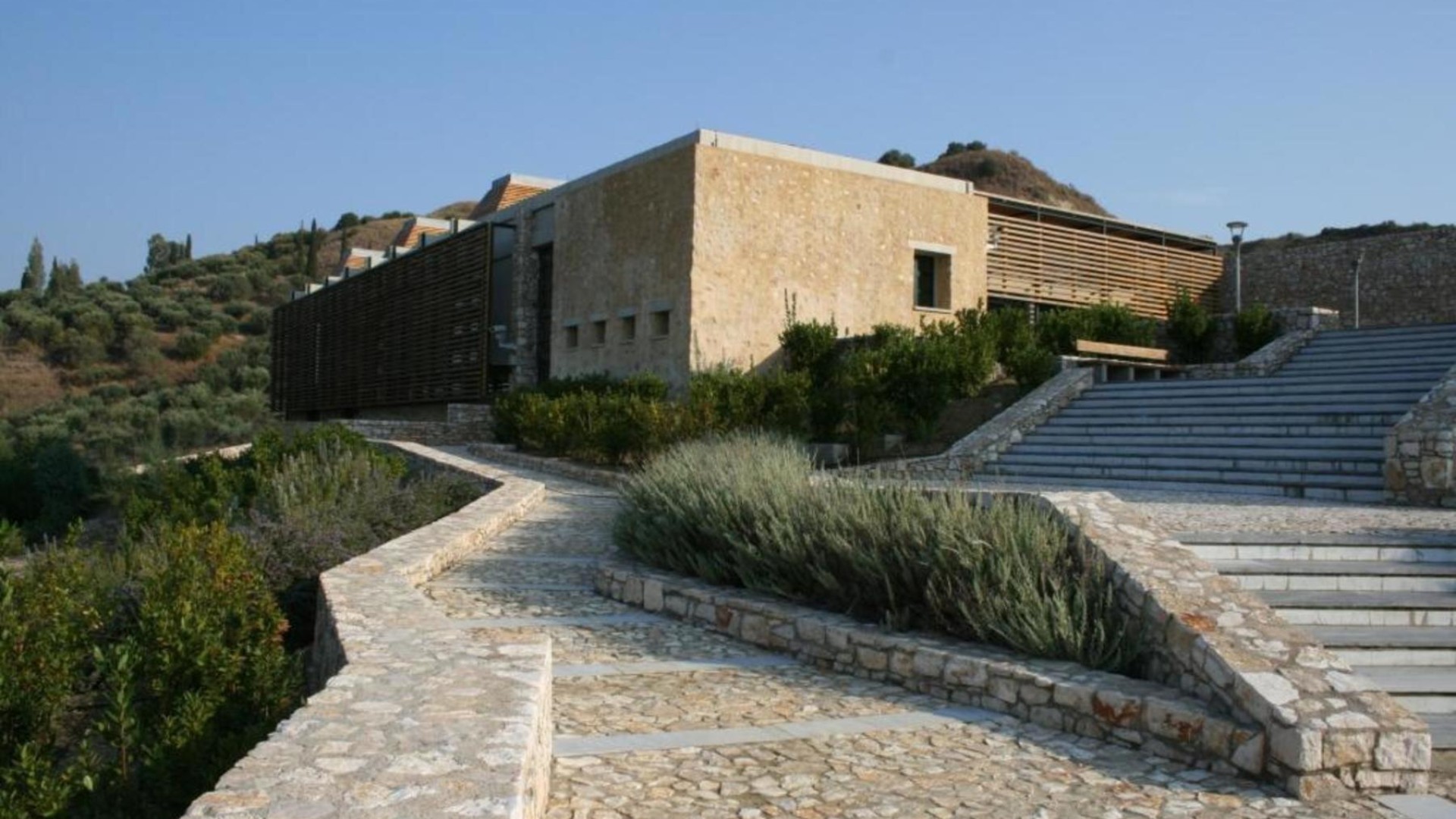
The Archaeological Museum of Elis is located at the foot of the ancient acropolis of Elis, on Kaloskopi Hill, and is a modern museum dedicated to the history and culture of the ancient city, which served as the metropolis of the Olympic Games.
The bioclimatic museum building was constructed between 2002 and 2004, based on designs by architect Dimitris Biris, and officially opened on March 24, 2004.
The museum’s architecture blends harmoniously with the natural landscape and offers panoramic views of the archaeological site, the fertile plain of Elis, and the medieval Chlemoutsi Castle. Visitors can access the museum either on foot or via an elevator, while the spacious outdoor entrance plaza provides an impressive viewpoint over the surrounding area.
The exhibition presents artifacts dating from the Paleolithic period to Roman times, illustrating the long history of the capital city of the Eleans. Through sculptures, pottery, mosaics, inscriptions, and small objects, visitors gain insight into the daily life, professions, religious practices, and public life of the ancient inhabitants.
Among the museum’s most important exhibits are a remarkable 3rd-century AD mosaic floor depicting the Labors of Heracles, a marble statue of Hermes closely resembling the famous Hermes of Praxiteles from Olympia, bronze funerary hydriae, and representative examples of small-scale craftsmanship made from clay, bronze, glass, and bone.
The museum includes three main exhibition halls, a temporary exhibition gallery, an internal courtyard displaying sculptures and architectural elements, as well as modern facilities such as conservation laboratories, storage areas, and educational spaces. The exhibition was organized by the 7th Ephorate of Prehistoric and Classical Antiquities under the supervision of archaeologist Lazaros Kolonas.
Today, the Archaeological Museum of Elis stands as an important cultural destination, connecting visitors with the history of the Olympic Games and the rich heritage of ancient Elis.