
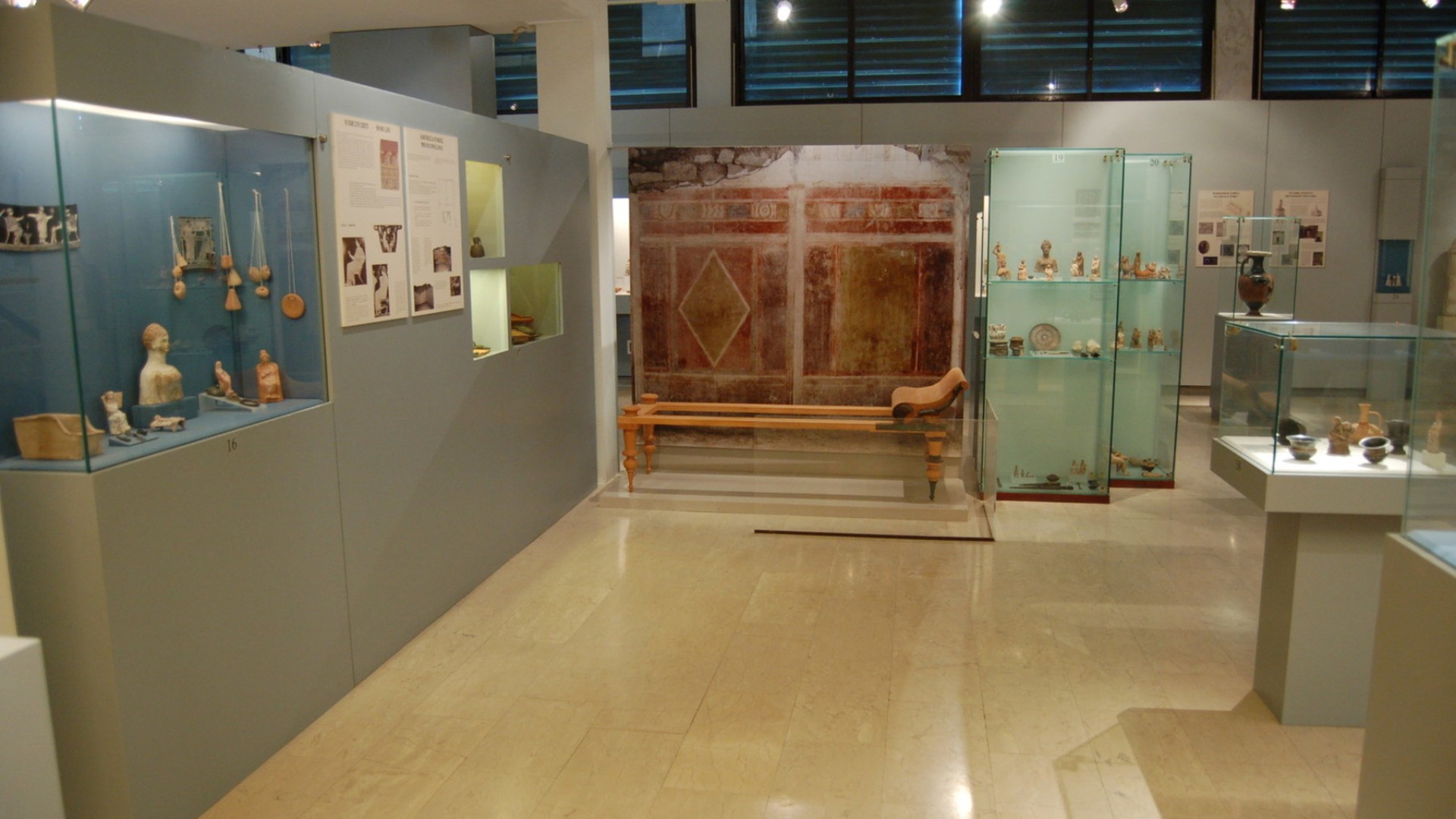
Archaeological Museum of Amphipolis
The Archaeological Museum of Amphipolis is an important archaeological museum that presents the historical development of the ancient city of Amphipolis and the wider Strymon River region
It functions both as an exhibition space and a research center, with storage facilities and conservation laboratories that support the study and preservation of archaeological finds.
The museum’s permanent exhibition allows visitors to explore the long history of the area, from prehistoric times to the Byzantine period. Its collections include artifacts from Neolithic settlements, Archaic pottery, burial goods from rich tombs, sculptures, coins, and objects of minor arts, all of which reflect the daily, religious, and public life of the region’s ancient inhabitants.
The exhibition is organized in chronological and thematic sections, presenting the development of the area through major historical phases: the prehistoric settlement of the Strymon region, the founding of Amphipolis by the Athenians in 437 BC, its later incorporation into the Macedonian kingdom under Philip II, and its prosperity during Roman rule. Special emphasis is placed on the city’s sanctuaries, the Gymnasium, and the necropolises, which reveal key aspects of its social and religious life.
During the Early Christian and Byzantine periods, Amphipolis gradually declined as an urban center, while settlement activity shifted to other nearby locations. Despite this decline, the site remained historically significant and continued to play a role in the broader regional landscape.
Overall, the Archaeological Museum of Amphipolis serves as a key institution for preserving and presenting the cultural heritage of the region, linking archaeological discoveries with the historical narrative of one of the most important ancient cities of northern Greece.