
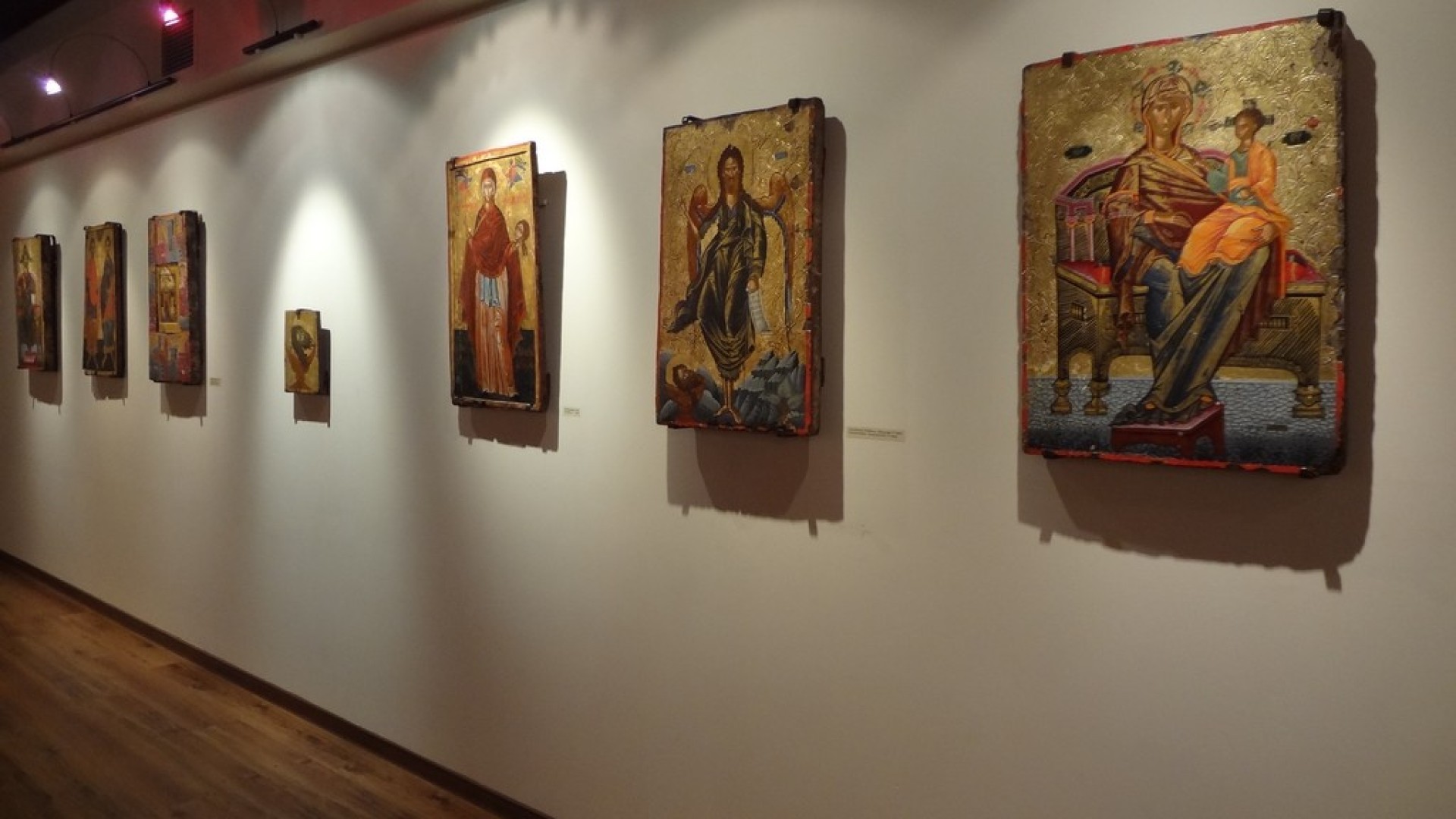
Ecclesiastical Museum of Siatista
The Ecclesiastical Museum of Siatista aims to familiarize the public with ecclesiastical art while also highlighting the historical connections that the mountainous town of Siatista developed with major centers of artistic production
The museum is located on the first floor of a newly built building within the courtyard of the Metropolitan Residence of Siatista. The exhibition space covers an area of 144 square meters. Its collection includes icons, wood carvings, minor art objects, books, and liturgical vestments, all gathered from churches and monasteries in the surrounding region.
The icon collection includes works dating from the 16th century, predating the formation of Siatista itself, as well as 17th-century icons showing Western stylistic influences, such as the icon of the Revelation by Theodoros Poulakis, and works from the 18th century. The minor art objects reflect the various artistic trends of their respective periods. Particularly noteworthy is an embroidered Gospel cover accompanied by a printed text from 1590. Also of great interest is the collection of printed books and manuscripts, including the Zosimas Codex, along with theological and philosophical manuscripts. Most of the books were printed in well-known printing houses of Constantinople and Venice during the 17th and 18th centuries.
The museum also exhibits liturgical vestments representing high-quality embroidery art, all originating from the same workshop. It belongs to the Holy Metropolis of Sisaniou and Siatista, which is responsible for its operation, while the conservation and preservation of the exhibits are supervised by the 11th Ephorate of Byzantine Antiquities.
The building that houses the museum was constructed within the courtyard of the Metropolitan residence in the “Hora” district in the center of Siatista a few years ago, funded by the Holy Metropolis of Sisaniou and Siatista. Over time, it hosted small exhibitions organized by the Metropolis. The current permanent exhibition was completed in 2001 through funding from the Region of Western Macedonia and was implemented with the cooperation of several cultural and archaeological authorities.