Archaeological Museum of Paros
The Archaeological Museum of Paros is one of the most important museums in the Cyclades, showcasing the island’s rich artistic and cultural heritage from prehistoric times to the Roman era.
Built in the 1950s, the museum houses remarkable collections of sculpture, pottery, inscriptions, jewelry, and everyday objects that highlight the historical significance of Paros and the exceptional quality of Parian marble, famous throughout the ancient world.
Paros became renowned in antiquity for its fine white marble, known as “Parian lychnites,” which was highly valued for the construction of temples and sculptures across Greece, including major sanctuaries such as Delos, Delphi, Olympia, and the Acropolis of Athens. The island developed an important school of sculpture during the Archaic and Classical periods, producing celebrated artists and masterpieces admired to this day.
The museum’s collections are displayed in three exhibition halls, a covered stoa, and an open courtyard. Visitors can admire outstanding examples of Parian sculpture, including the famous statue of the Gorgon from the 6th century BC, one of the finest surviving works of Archaic art. Other highlights include statues of kouroi and korai, funerary stelae, reliefs, inscriptions, and the celebrated statue of Nike commemorating the Parian victory over the Athenians.
The museum also presents important finds from the sanctuary of Apollo on the nearby island of Despotiko, featuring marble kouroi and religious artifacts from the Archaic period. Prehistoric collections include objects from the Neolithic settlement of Saliagos and Early Cycladic figurines, while Mycenaean pottery, Classical ceramics, Hellenistic artifacts, and Roman glassware illustrate the long cultural history of the island.
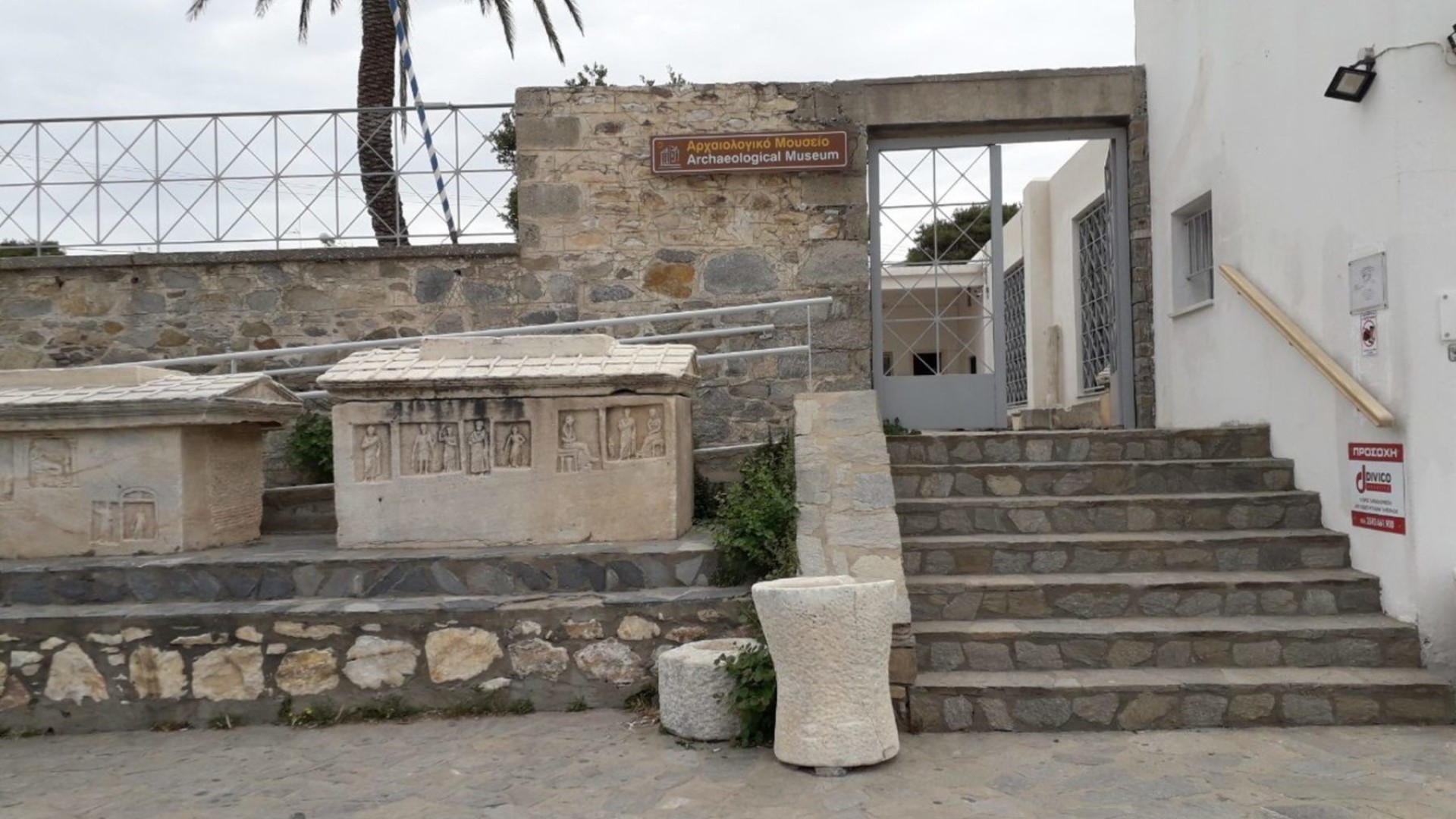
Among the museum’s most significant treasures is the “Parian Chronicle,” an important ancient inscription recording historical events and notable figures from Greek history. The covered stoa and courtyard display architectural fragments, sarcophagi, mosaics, and monumental sculptures, creating a vivid picture of life and art in ancient Paros.
Today, the Archaeological Museum of Paros offers visitors a fascinating journey through the island’s artistic achievements and its central role in the development of Cycladic civilization and ancient Greek art.