Museum of the Monastery of Preveli
The museum of the Holy Monastery preserves a rich and valuable collection of sacred icons and ecclesiastical relics, forming an important testimony to the spiritual and artistic tradition of the monastery.
A significant number of portable icons—approximately 100 in total—have survived through the centuries. These works originate from the decoration of the main church (Katholikon), various chapels, and the Church of St. John the Baptist, from where they were transferred to the inner monastery area for protection and preservation.
The icons date from around 1600 to 1900 AD and include exceptional examples dedicated to saints such as Saint George, Saint John the Theologian, the Virgin Mary (Dexiokratousa), All Saints, Saint Nektarios of Constantinople, Saint Onuphrius, Melchizedek, Abraham, and the Prophet Isaiah. These works stand out for their theological depth, bold composition, and original iconographic approaches, sometimes reaching complex doctrinal expression.
Artistically, the collection reflects the late Cretan School tradition, combining the strict Orthodox style with strong Western, particularly Flemish, influences introduced by masters active in Rethymno and Chania during the first half of the 17th century.
Alongside the icons, the museum also houses a remarkable collection of ecclesiastical vestments, sacred vessels, Gospels, and silverware, all of which enrich the monastery’s cultural and religious heritage. The monastery library contains around one thousand volumes, including rare early printed religious books, handwritten prayer books, Byzantine hymn compositions, property records, and official ecclesiastical documents (sigillia).
According to monastery records, during the Greek Revolution of 1821, important archives and manuscripts were transferred to the island of Kythera and were never returned. An investigation carried out in 1958 did not succeed in locating them.
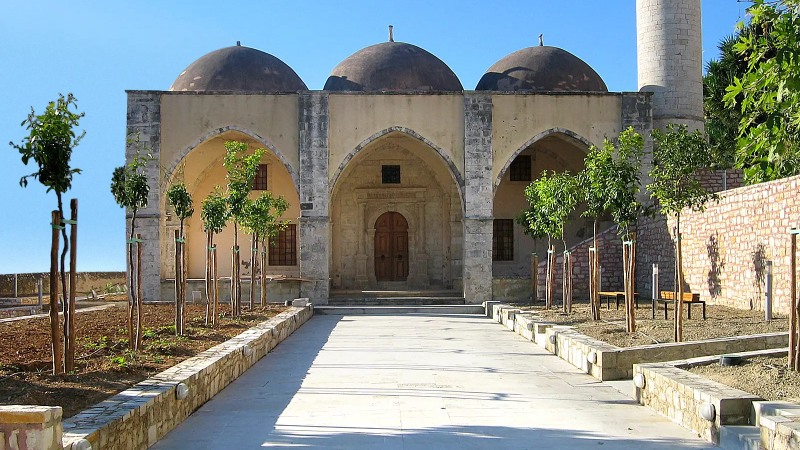
Today, many of these surviving sacred artifacts and icons are displayed in a beautifully arranged museum space within the monastery complex. In the same area, visitors can also view an exhibition dedicated to the Battle of Crete, which was sent to the monastery by the Greek Community of Perth, Western Australia, highlighting the monastery’s connection to more recent historical events and the Greek diaspora.