Byzantine Museum of Zakynthos
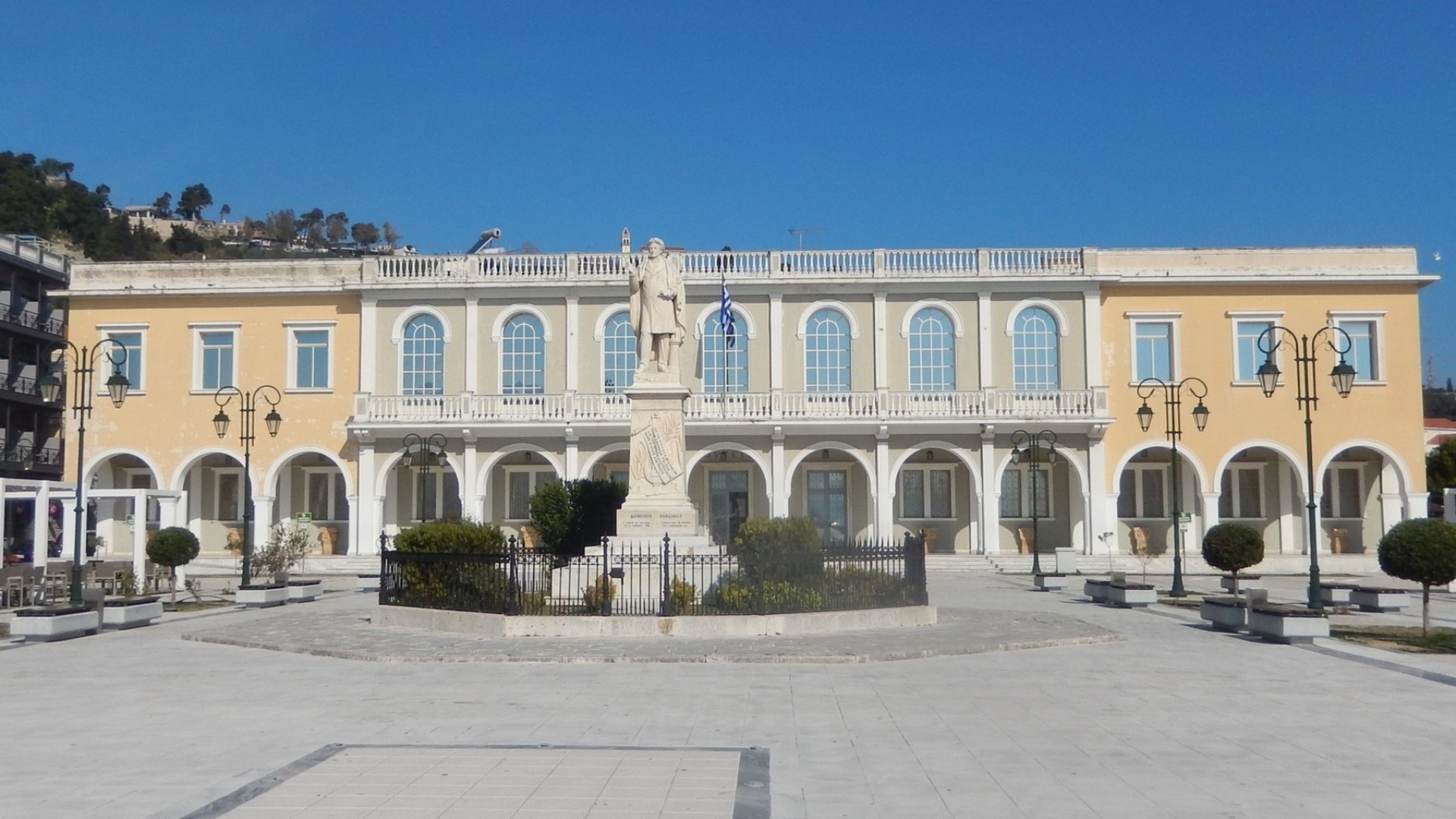
The Museum of Zakynthos is located on Solomos Square, in the heart of Zakynthos Town, and is housed in an impressive neoclassical building constructed in 1959 based on the architectural design of Spyridon Lenggeris
The museum was built to preserve and showcase the cultural heritage of the island, much of which was saved from the devastating earthquake and fire of 1953. Its collection originally included hundreds of artworks and historical objects that represent the island’s rich artistic tradition.
The building itself is an important landmark. At its entrance, visitors encounter architectural fragments from the former “Foskolos” Municipal Theatre, designed by the renowned architect Ernst Ziller. Outside the museum stands a statue of Dionysios Solomos, the national poet of Greece. Inside, one of the most important artworks is The Procession of the Relic of Saint Charalambos by Ioannis Korais, a notable example of post-Byzantine religious painting influenced by Western artistic traditions.
The museum’s collections are displayed across seven exhibition halls, with additional storage areas for archaeological finds. The museum also includes conservation workshops, administrative offices, and spaces for educational and scientific activities. Over the years, it has hosted temporary exhibitions, cultural events, and educational programs, including accessibility initiatives for visitors with special needs.
The history of the museum dates back to the late 19th century, when the first archaeological collection was established on the island in 1882. Later, in 1908, the Museum of Medieval and Byzantine Antiquities was founded, gradually enriching its holdings with religious icons, wood-carved icon screens, and ecclesiastical objects. Unfortunately, much of this heritage was destroyed during the 1953 earthquake and fire, which devastated Zakynthos and caused the loss of countless cultural treasures.
After the disaster, major efforts were made to rescue and preserve surviving artifacts. Under the guidance of archaeologists and conservators, icons, wood carvings, frescoes, and other works were restored and transferred to the newly built museum. The modern Museum of Zakynthos was inaugurated on August 24, on the feast day of Saint Dionysios, the island’s patron saint.
Today, the Museum of Zakynthos stands as a key cultural institution, preserving the island’s artistic and historical identity and offering visitors a comprehensive view of its post-Byzantine and modern Greek heritage, as well as the strong influence of Western European art in the Ionian Islands.