Water Supply Museum
The Water Supply Museum of Thessaloniki is housed in the historic former Central Pumping Station of the city’s old waterworks, located in the Sφαγεία (Slaughterhouses) area.
It is part of the facilities of the Thessaloniki Water Supply and Sewerage Company (EYATH S.A.) and represents one of the most important surviving industrial heritage sites in the city.
The complex was built between 1890 and 1894, about 1.5 km west of Thessaloniki’s historic center. Its construction was part of a major infrastructure project undertaken during the late Ottoman period by the Ottoman Water Company of Salonica, founded in 1888 by Belgian investors and engineers. The pumping station formed a key part of the early modern water supply system, which included artesian wells in the Sindos plain and a network that transported water by gravity to the central facility.
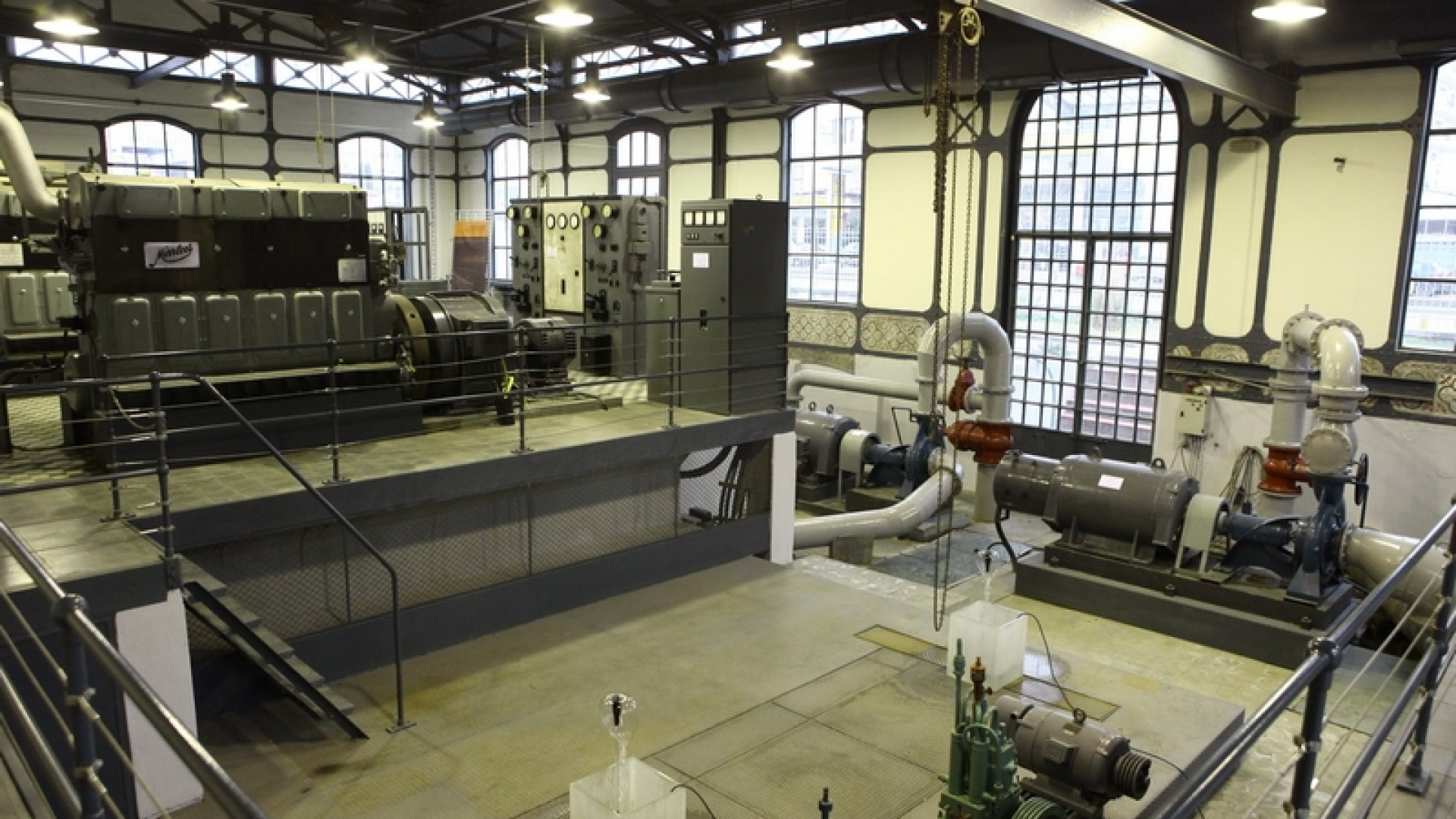
From the pumping station, water was distributed using large steam-powered pumps to major city reservoirs such as Vlatadon, Kassandras, Evangelistria, and later Kallithea. The complex originally consisted of three main buildings: the machine hall, the boiler house, and a coal storage building, along with the director’s residence.
Technologically, the site reflects the industrial innovations of the late 19th and early 20th centuries. It initially operated with steam engines, later upgraded with diesel engines and, after World War II, with electric pumps powered by generator sets. The station remained in continuous operation until 1978, making it one of the longest-functioning industrial facilities of its kind in Thessaloniki.
In 1984, the water company decided to transform the site into a museum, recognizing its historical and technological value. The buildings were officially declared a protected monument in 1987. Restoration works were carried out during the 1990s, and by 2000 the entire complex had been restored, including its original mechanical equipment and surrounding area.
Today, the Water Supply Museum functions as a living industrial heritage site. It preserves the original machinery and installations while presenting the history of Thessaloniki’s water supply system. Through exhibitions and educational programs, especially for students, the museum highlights the importance of water infrastructure and raises awareness about environmental issues such as water conservation and climate change.
Overall, it serves as a unique bridge between industrial history, technology, and public education in Thessaloniki.