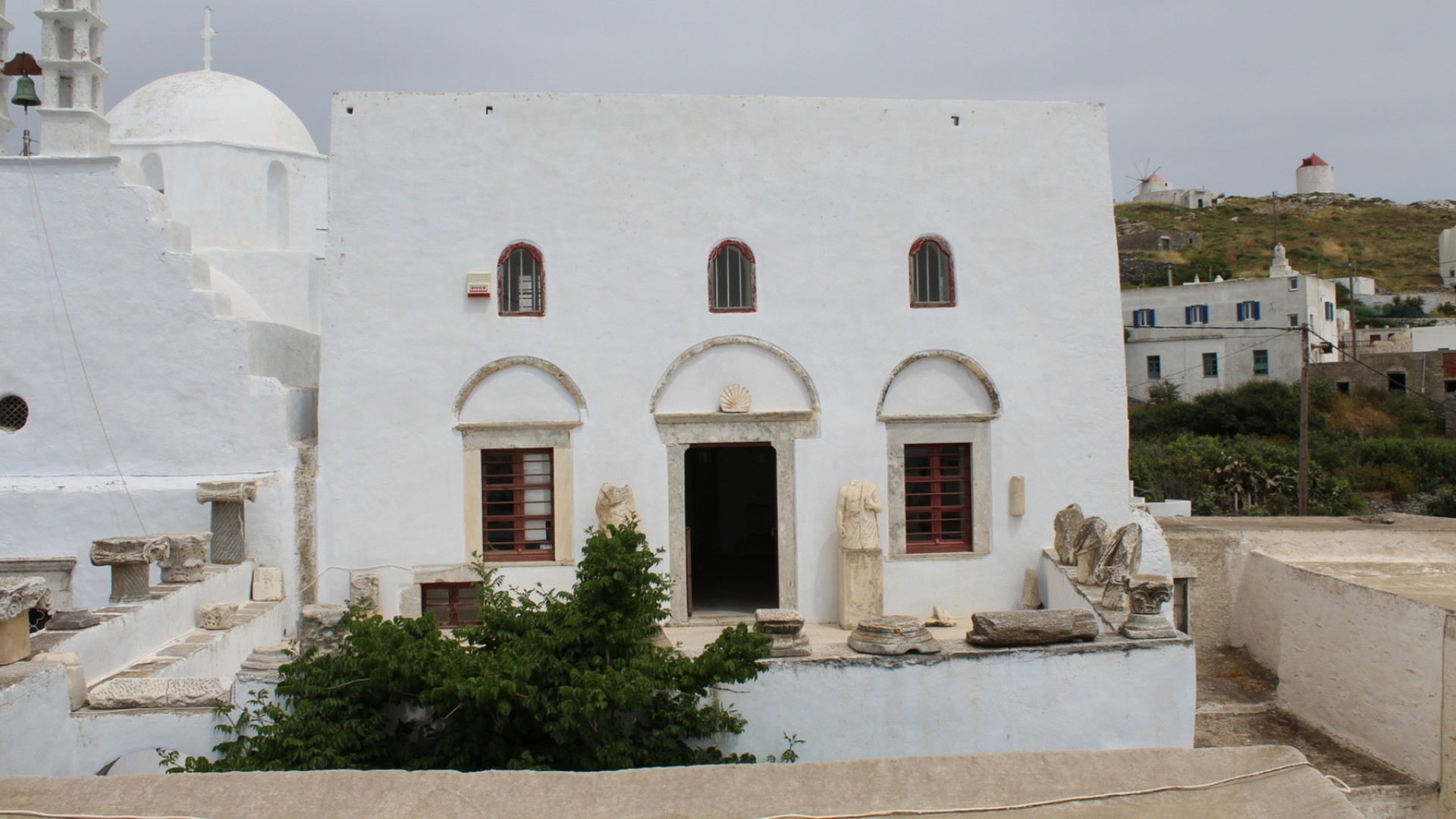
Archaeological Collection of Amorgos
The Archaeological Collection of Amorgos is a small but highly significant museum that preserves and presents the long historical identity of the island from the Geometric period (8th century BC) to the late Roman era (2nd century AD).
Despite its limited space, it offers an authentic overview of Amorgos’ cultural continuity through surface finds from the ancient cities of Minoa, Arkesini, and Aegiali, which together fill important gaps in the archaeological record.
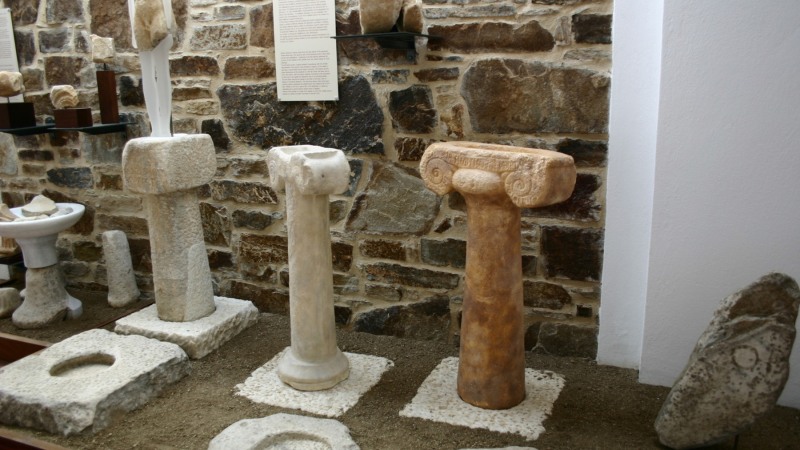
The collection is housed in a historic Venetian-era monument known as the Gavras Tower, a 16th-century building that itself forms part of the island’s heritage. The structure preserves architectural features such as stone columns, capitals, arched elements, and inscribed doorframes. It was restored through significant effort by local residents and craftsmen between 1972 and 1978, supported by donations and collective community work.
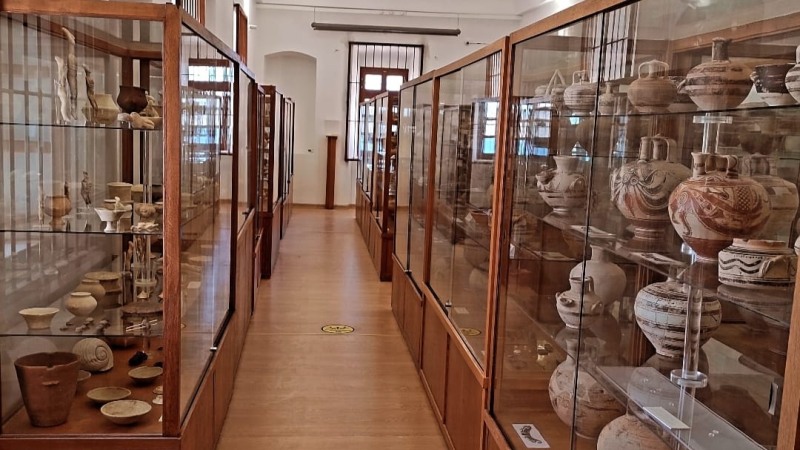
Inside the museum, visitors can see sculptures and reliefs dating from the Archaic period (6th century BC) to Roman times, along with smaller artefacts from excavations at Minoa. In the courtyard and surrounding spaces, architectural fragments, inscriptions, and larger sculptural pieces are displayed. Additional rooms contain earlier finds from the Late Neolithic and Cycladic periods (4th–3rd millennium BC), illustrating the island’s deep prehistoric roots.
Overall, the Archaeological Collection of Amorgos combines historical architecture with archaeological heritage, offering a compact yet meaningful journey through the island’s long and diverse history.