History and Folklore Museum Arnaia
The Historical and Folklore Museum of Arnaia is located in a stone-built narrow street near the central square of Arnaia and forms part of the settlement’s historic center.
It is housed in the Iatrou mansion, also known as “Giatradiko,” one of the most beautiful buildings in the village and one of the oldest surviving mansions in Chalkidiki. The building dates back to the second half of the 18th century or the early 19th century. It originally belonged to Konstantinos Katsangelos and later housed a folklore collection created by the Cultural and Educational Association of Arnaia. The museum has been operating since the summer of 1999 and today belongs to the Municipality of Aristotle.
The Giatradiko mansion is one of the most impressive and best-preserved examples of traditional architecture in Arnaia. It is believed to have been built by craftsmen from Epirus. The building stands on sloping ground and follows a simple yet distinctive architectural design. It has a Π-shaped floor plan and is a two-storey structure with a strong sense of traditional local style. The ground floor includes two main spaces: one without windows, likely used as a stable, and another room with its own entrance, connected internally to the upper floor by a staircase. The northwestern section of the building has a tower-like appearance, with small openings and arched elements at floor level.
The upper floor consists of two rooms and a characteristic architectural feature of the region known as the “hagiati,” a covered wooden veranda that runs along the main façade. The hagiati is supported by wooden beams and served as the central living space of the house. It was used for gatherings, hospitality, and summer living, while also supporting daily domestic activities. The wooden structures of the upper floor are carefully crafted and decorated with fine details, indicating that the mansion belonged to a wealthy family of Arnaia. The building has been described as a “work of art” and a landmark of the area, and its preservation has been officially supported by the Ministry of Culture.
The creation of the museum was driven by the need to preserve and promote the cultural heritage of Arnaia. This effort was warmly embraced by the local community, which contributed a large number of objects from private collections and family heirlooms. These include tools from agriculture, livestock farming, and beekeeping, as well as many items reflecting everyday life and the region’s historical and folkloric tradition.
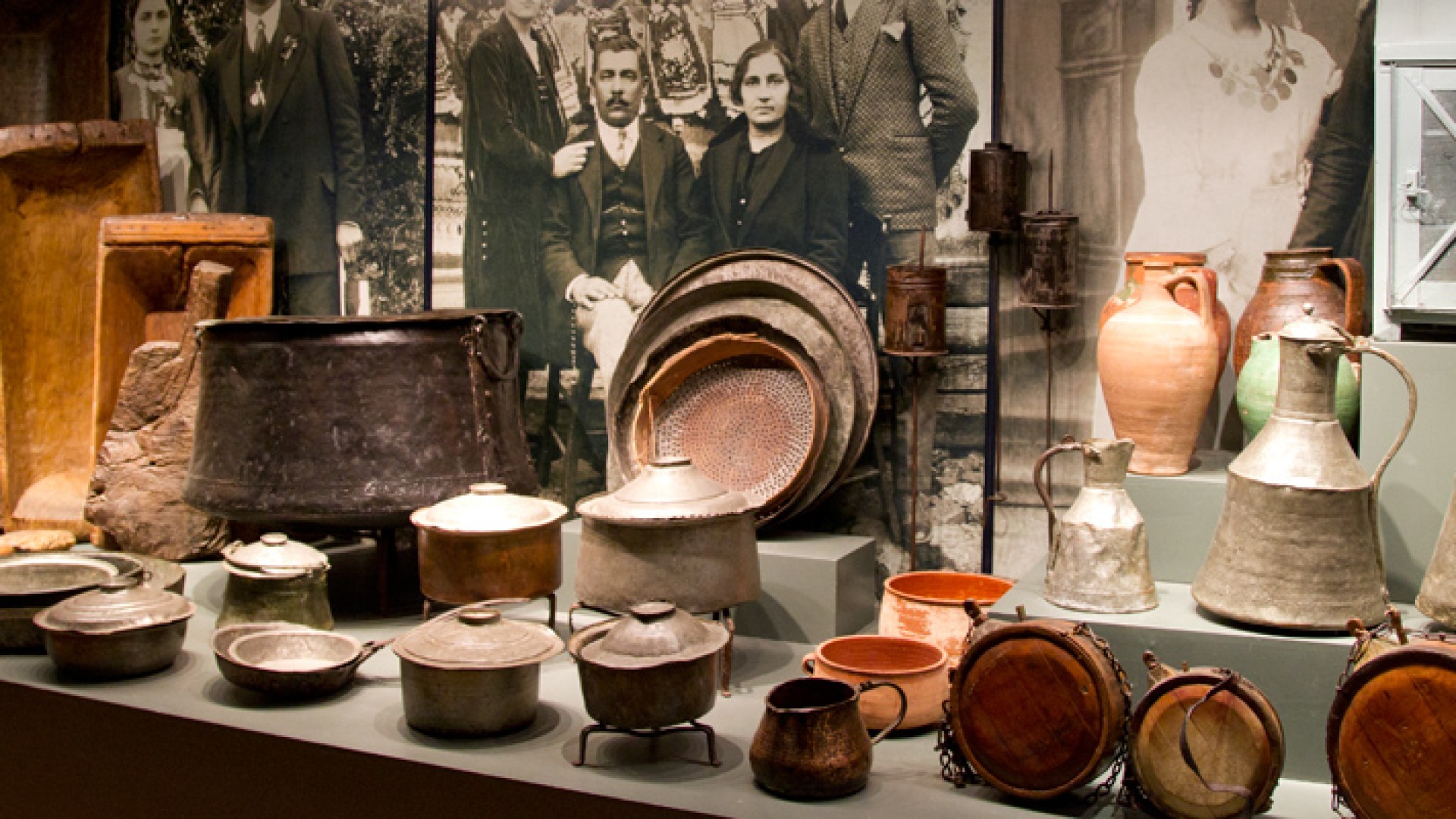
The museum’s collection is entirely based on donations from local residents. It offers a clear and well-organized presentation of the material culture of the village through time. The exhibits are displayed in wall-mounted cases throughout the mansion and are arranged into twelve thematic sections across the ground and upper floors. This layout allows visitors to gain a complete understanding of the collection without feeling overwhelmed by the exhibition space.
The thematic sections include objects from various aspects of daily life. On the ground floor, there are agricultural tools used for sowing, harvesting, and threshing, as well as equipment for bread-making such as millstones, dough troughs, and bread stamps. There are also beekeeping tools like hives and honey extractors, along with carpentry and construction tools such as moulds, files, and hammers. On the mezzanine floor, visitors can see woodworking and shoemaking tools, as well as items related to traditional coffee preparation and old café culture, including roasting and grinding equipment. The first radio that arrived in the village in 1941 is also displayed here.
On the upper floor, the exhibits focus on textile production and household life. These include a traditional loom, spindles, reels, and other weaving tools, as well as domestic utensils such as cooking pots, storage containers, cauldrons, braziers, and washing basins. A particularly notable exhibit is a 200-year-old fire pump inspired by the invention of Ctesibius (285–220 BC). The museum also places strong emphasis on historical photographs depicting village life in earlier times.
In the uppermost room of the mansion, a traditional “ontas” (reception room) has been reconstructed with authentic furniture and household objects typical of old Arnaia homes. The museum also offers film screenings about the history of the region and provides space for educational programs, helping visitors engage more deeply with the cultural heritage of the area.