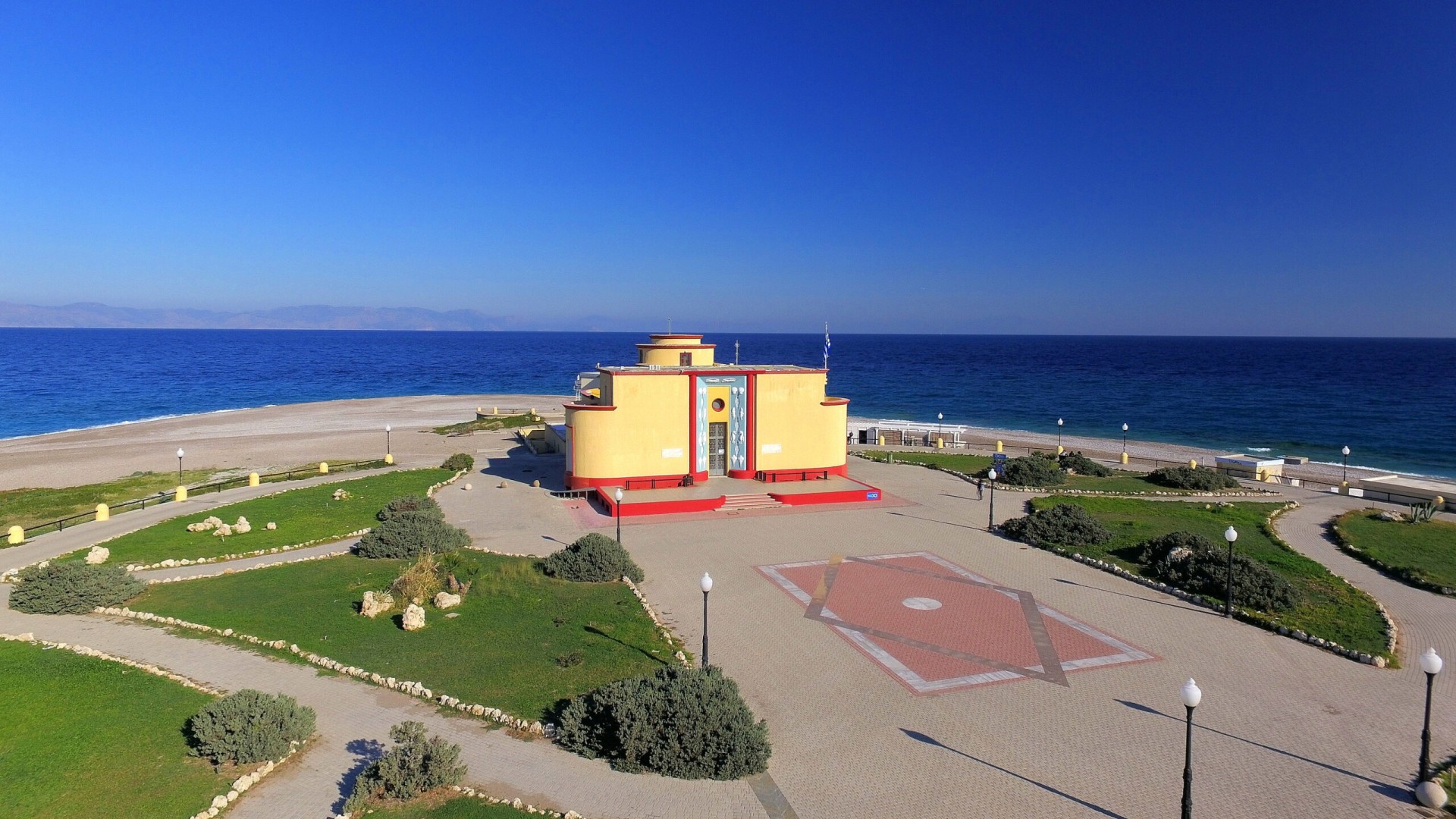
Aquarium of Rhodes
The Rhodes Aquarium (Hydrobiological Station of Rhodes) is an important scientific and cultural institution on the island, functioning as a public aquarium, research facility, and museum.
It operates under the Hellenic Centre for Marine Research (HCMR) and is one of the oldest hydrobiological stations in Greece.
The building was constructed in the 1930s during the Italian occupation of the Dodecanese and was designed by the Italian architect Armando Bernabiti. Its architecture combines Art Deco elements with maritime influences, featuring curved lines, round porthole-like windows, and a central cylindrical tower. The interior aquarium space is designed to resemble an underwater cave environment.
Today, the aquarium hosts a rich variety of marine life from the Mediterranean and the Aegean Sea, including fish, crabs, lobsters, octopuses, sea urchins, corals, sea turtles, and other species. In addition to its exhibition role, it actively participates in research programs and conservation efforts, such as the rescue and rehabilitation of injured marine animals and public awareness initiatives on marine ecosystem protection.
The Rhodes Aquarium stands as a unique blend of science, education, and environmental conservation, attracting visitors while contributing significantly to the study and preservation of marine biodiversity in the region.