Museum of Plaster Casts of the Aristotle University
The Cast Museum was founded between 1928 and 1930 by Professor Konstantinos Romaios, Professor of Classical Archaeology.
Its purpose is to provide students of classical art with the opportunity to closely study ancient works of art, mainly sculpture, through high-quality plaster casts.
The new exhibition in Hall I (“Christos Tsountas Hall”) was organized in the New Building of the Faculty of Philosophy by Professor G. Despinis between 1975 and 1982, while Hall II (“Konstantinos Romaios Hall”) was later arranged by the museum’s director, Professor Th. Stefanidou-Tiveriou.
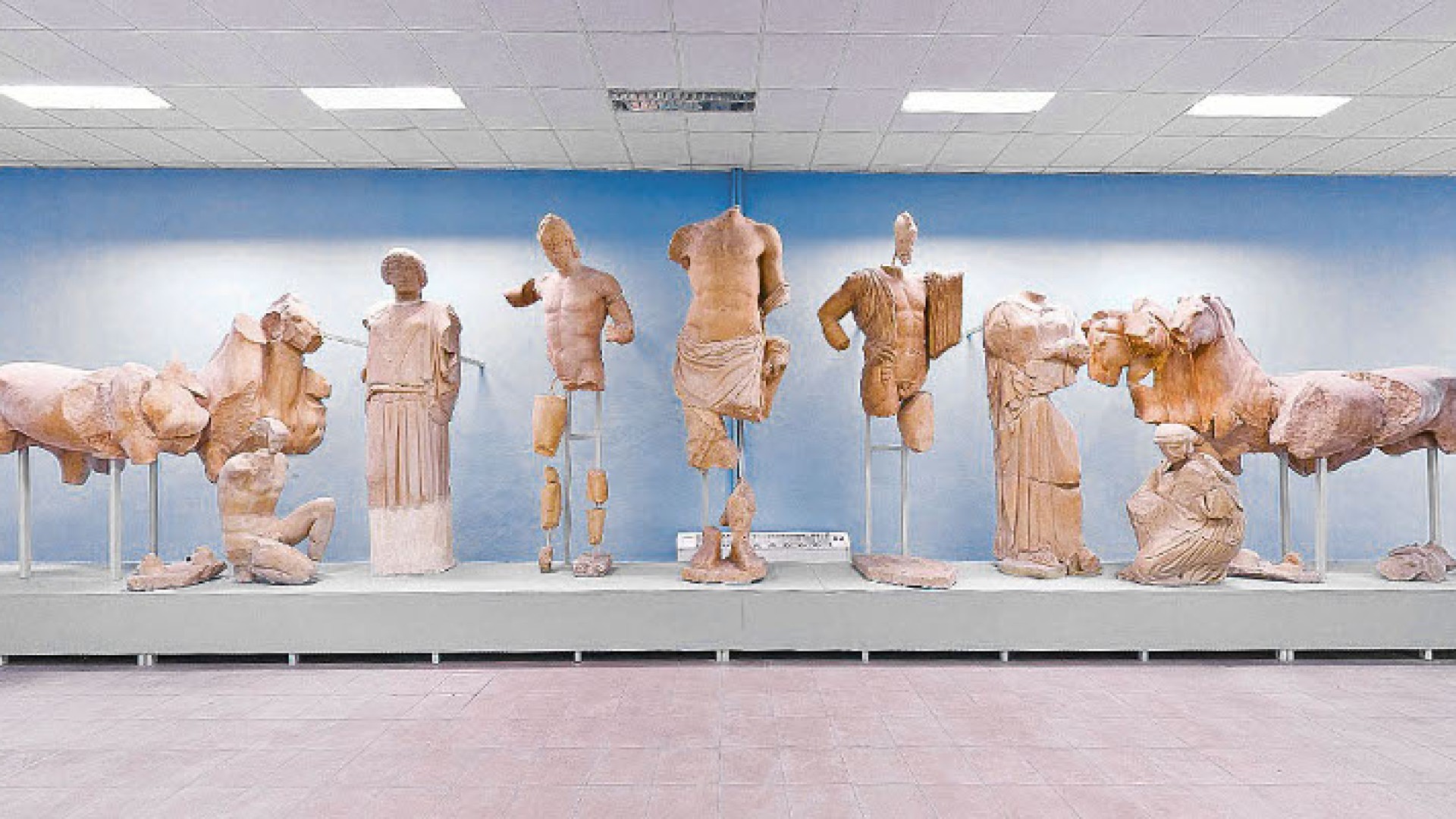
The museum is located in the basement of the New Building of the Faculty of Philosophy and houses approximately 700 plaster casts of ancient works of art, allowing students to study representative masterpieces of ancient sculpture. The originals span a wide chronological range, from the Minoan to the Byzantine period, and are kept in museums across Greece and Europe.
Among the most significant casts are those of the colossal Kouros of Sounion, the pedimental sculptures of the Temple of Zeus at Olympia, reliefs from the Parthenon frieze, and the Arch of Galerius in Thessaloniki, as well as plaster reproductions of Minoan and Mycenaean artworks.
In addition, the museum holds a notable collection of over 2,000 original ancient objects, including pottery, coins, and small-scale artworks, dating from the Geometric to the Byzantine period. Many originate from excavations in Macedonia, such as those at Karabournaki and Sindos.
The museum primarily serves educational and research purposes for university students, doctoral candidates, and researchers, while also offering guided tours and educational programs for the general public.