Museum of the Macedonian Struggle
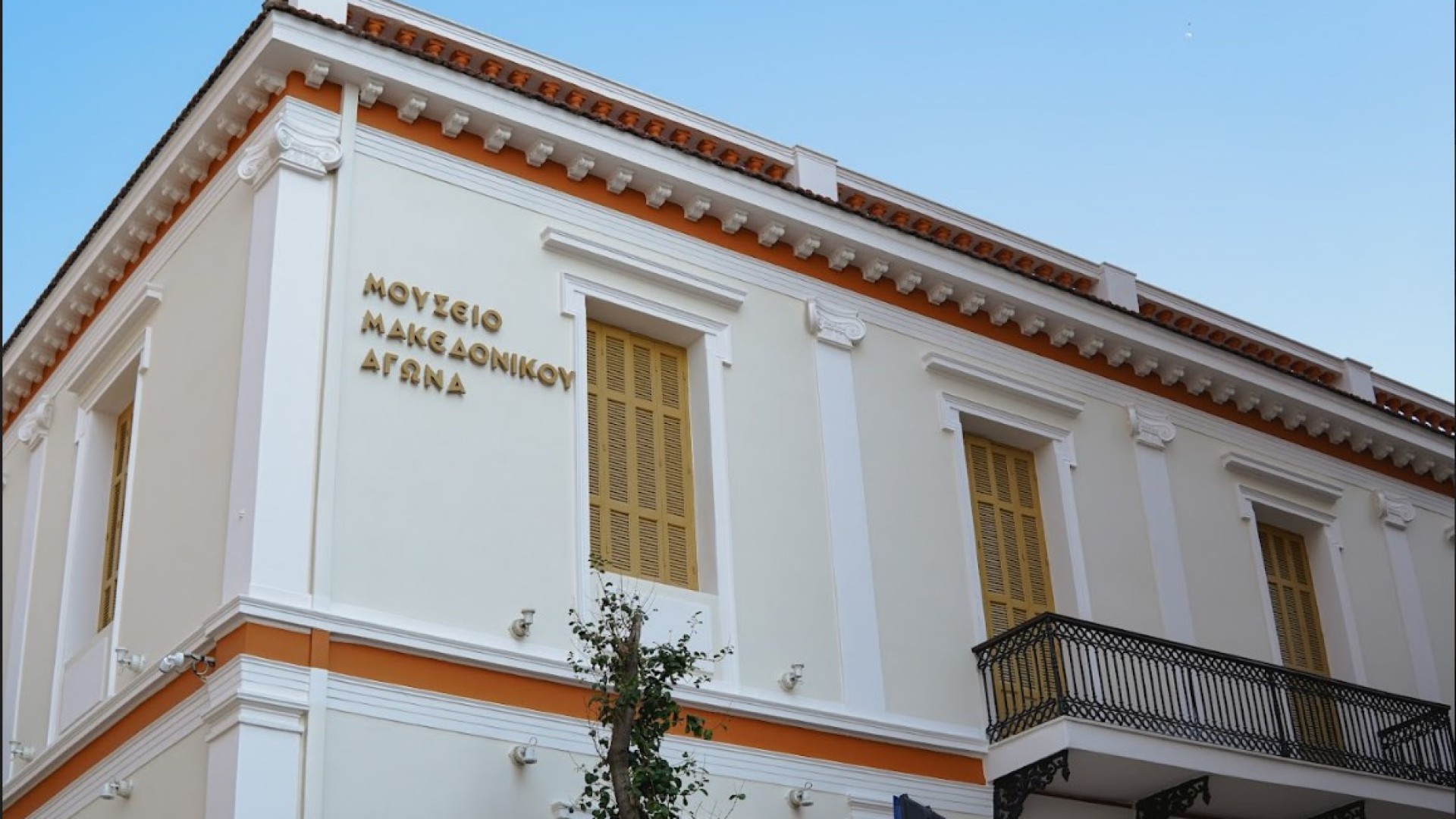
The Museum of the Macedonian Struggle in Thessaloniki is dedicated to preserving and presenting the history of Macedonia and the Macedonian Struggle during the late 19th and early 20th centuries.
Its origins are rooted in long-standing efforts dating back to the early 20th century, when the idea of establishing a museum dedicated to Macedonia’s history was first formally introduced. Although early plans emerged in 1917 under Eleftherios Venizelos, and later initiatives followed throughout the 1940s and 1960s, the museum eventually took its current form in the late 20th century.
The museum is housed in a historically significant neoclassical building designed by the renowned architect Ernst Ziller in 1893. Originally constructed as the Greek Consulate in Thessaloniki, the building played a crucial role during the Macedonian Struggle (1904–1908), serving as a center of Greek diplomatic and intelligence activity in the region. After the liberation of Macedonia in 1912, the building was repurposed for various public uses, including schools, banks, and humanitarian services, before being restored and transformed into a museum in 1982.
The institution aims to document, preserve, and promote the historical memory of Macedonia, with a particular focus on the Macedonian Struggle and the broader modern history of the region. Its exhibitions include archival documents, personal belongings, photographs, and historical artifacts that illustrate the political, social, and cultural developments of the 19th and 20th centuries.
In addition to its permanent exhibition spaces, the museum also supports research and educational activities through the Centre for Research of Macedonian History and Documentation (KEMIT). It organizes educational programs, exhibitions, and cultural initiatives that engage both students and the wider public.
Today, the Museum of the Macedonian Struggle functions not only as a historical archive but also as a living cultural institution, connecting the past with the present and contributing to the study and understanding of Macedonia’s modern history.