White Tower of Thessaloniki
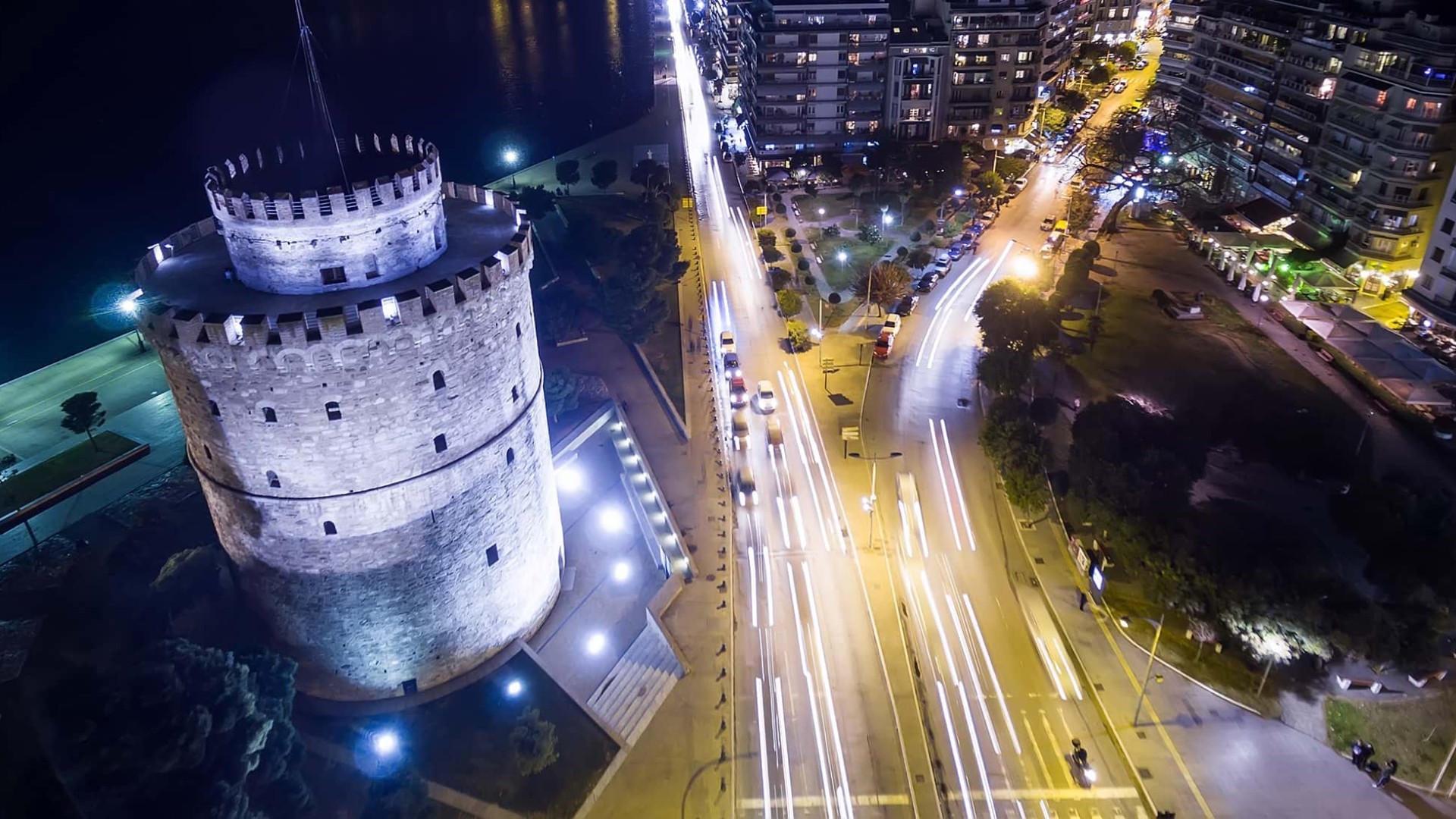
The White Tower is one of the most important monuments and symbols of Thessaloniki.
It was built in the 15th century, after the city was captured by the Ottomans in 1430, on the site of an earlier Byzantine tower that formed part of the city’s fortifications. For centuries, it stood as part of the sea walls and played a role in the defence of Thessaloniki, while during the Ottoman period it served various purposes, including as a prison.
Over time, the tower was known by several names, such as the “Tower of the Janissaries” and the “Blood Tower,” due to its use as a place of detention and executions. In 1883, it was whitewashed and renamed the “White Tower,” symbolising a new era for the city. Since then, it has become the most recognisable landmark of Thessaloniki.
The White Tower is cylindrical in shape, about 34 metres high, and consists of a ground floor and six levels. It is constructed from stone, bricks, and mortar, while inside there is a spiral staircase leading to the top, where visitors can enjoy a panoramic view of the city and the Thermaic Gulf.
After the liberation of Thessaloniki in 1912, the tower was used for various purposes, and in 1983 it was handed over to the Ministry of Culture. Today, it houses a permanent exhibition dedicated to the history of Thessaloniki from its foundation to the modern era, using multimedia and interactive displays.
The exhibition aims to “introduce” the city to both visitors and residents, highlighting its multicultural character and long historical continuity. The White Tower is not only a historic monument but also a living symbol of Thessaloniki’s identity, connecting the city’s past with its present.